
Airbnb Isn’t Booking It On Ads; Judges Are Judging Big Tech
AirBNB considers introducing ads (just not right now); antitrust enforcement is about more than shrinking Big Tech; and broadcasters want to get the ball rolling on sports again.

AirBNB considers introducing ads (just not right now); antitrust enforcement is about more than shrinking Big Tech; and broadcasters want to get the ball rolling on sports again.

Amid the glitz of TV upfront presentations, advertising executives take the stage to talk about things like new audience targeting capabilities or to ballyhoo new ad measurement partnerships. How, though, are we supposed to focus on brand lift statistics when we can all hear Lady Gaga belting a vocal warmup offstage?

Walmart is loving its ad business more every day; AI agents are coming to destroy everything; YouTube is trying to win over brands.

The CFPB backtracks on plans to bar data brokers from selling financial data; Jamie Lee Curtis takes on Mark Zuckerberg over fake AI ads; and Gas Station TV drives traffic to Applebee’s.

Marketing On Autopilot Companies that build AI-powered marketing software have been framing the technology as a friendly helper. Nothing to fear here, just an eager “copilot” ready to serve. The AI “copilot” that first comes to mind for most people is Microsoft’s generative AI chatbot of the same name. GitHub, meanwhile, which is owned by […]

Short-form video, infinite scrolling and hyper-targeted algorithms aren’t neutral mediums. They shape, and often compromise, the attention they harvest, creating compulsive habits that warrant serious reflection.

WPP’s GroupM is getting a new name; there’s no such thing as a TikTok ban at NewFronts; and Meta’s ad growth prospects might be plateauing.

LinkedIn launches a creator rev share program; AdSense comes to third-party AI chatbots; and the verdict in Apple v. Epic Games cracks down on Apple’s App Store fees.

Happy first IPO-aversary, Reddit. (And happy 20th birthday.) The market got you a present. Reddit’s stock soared nearly 18% in after-hours trading on Thursday thanks to a revenue beat in the first quarter.

PayPal embraces off-site media but says no to data sales; Google pivoted on cookies again, but what about the Google Ad ID?; and gen AI bots are blowing up publisher server costs.

Meta teased new ad optimization offerings as it touted solid Q1 results. It also hyped its AI agents and its launch of a standalone AI app, while hinting at monetization opportunities.

A long-awaited development: Advertisers will soon be able to see around three of the most important transparency blockers in PMax.

Transparency has become the currency of credibility in advertising. Larger holding companies and black box AI platforms must recognize that their opaque practices are no longer sustainable.

The programmatic “sustainability” and “waste” conversation has shifted. Plus, the 2010s called – they want Facebook back.

Call Yahoo one of the converted. Yahoo DSP launched a new Conversions API (CAPI) product, following in the footsteps of Meta and other platforms such as Snap, TikTok and Pinterest with their own CAPI tools.

Etsy sellers aren’t feeling great about the US tariff situation. Plus, X’s data licensing and subscription revenue is increasing.

Alphabet had another stellar earnings report. But neither its leadership nor investors ever mentioned the two landmark ongoing antitrust suits. Chrome’s reversal on third-party cookies also never came up.

When platforms choose to label any significant portion of an ad buy as “other,” it’s a deliberate decision to withhold information for the seller’s benefit and the buyer’s detriment.

Criteo dives into video ads; after 20 years, YouTube might be the world’s biggest media brand; Threads opens up for advertising.

Shopify checkout might be coming to ChatGPT; private equity builds a French ad tech stack; and how Meta turning off news in Canada is affecting news access ahead of this month’s election.

Monday was a busy day for antitrust attorneys in Washington, DC: It marked Day One of the the remedies phase of the Google search trial and the start of the second week of FTC v. Meta.

More competition between SSPs and ad servers should be a boon for publishers in the long term. But publishers will feel some growing pains if there is a sudden disruption in Google’s ad payouts or if their ad server fees increase.

What does the end of impulse shopping mean for advertising? Plus, Remember Google+? Meta sure hopes you don’t.

The Google antitrust ruling will have wide-reaching implications for the tech industry at large, not just the ad businesses therein. But in the meantime, it’s only natural to see programmatic veterans letting off a bit of steam.
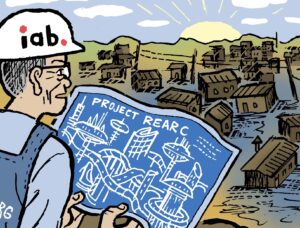
Earlier this year, Pinterest conducted reviews of five potential ad tech acquisitions. Plus, what do LLMs think is the best retail media tech for retailers, and why?

There’s a decision! On Thursday, Judge Leonie Brinkema published her long-awaited ruling in US v. Google, finding Google guilty of having monopolized two online advertising markets.
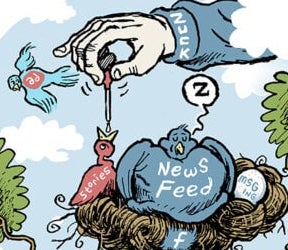
Do Google AI Overviews really bring exposure to more websites?; Meta considered an all-ad Instagram feed; and agencies are cautiously optimistic even as tariff concerns threaten upfronts season.

It’s important to have frank discussions with clients, explaining the need and value of brand safety. That way, marketers can make an educated decision on whether they truly need to pay for it.

Temu’s US ad spend grinds to a halt; Publicis posts a strong Q1; and creative personalization tech is back in vogue.

Many well-intentioned advertising standards efforts gather digital dust thanks to industry politics and competing interests. Here’s how the industry can stop sabotaging its own progress.
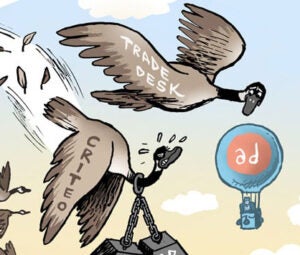
Criteo shares dropped by 20% Wednesday morning after the company reported shaky Q1 earnings and revised its guidance downward for the rest of the year.

On Wednesday, Josh D’Amaro led his first earnings call as the new CEO of Disney. The company closed last quarter with $25.2 billion in revenue, a 7% year-over-year increase. Disney Entertainment advertising revenue rose 5% YOY, but ESPN ad revenue was down 2% YOY, although subscription and affiliate revenue was up 6%.
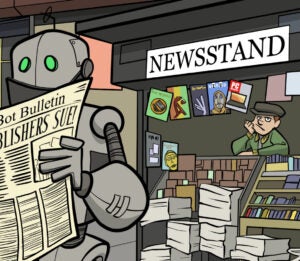
People Inc. previewed plans to downsize by focusing mainly on its key properties. The strategy makes sense considering its publishing portfolio has lost about two-thirds of its Google traffic.


At POSSIBLE 2026 in Miami, the ad industry was over the hype around AI.

OpenAI announced a CAPI, along with the public launch of its self-serve ads manager, as the latest features of its rapidly evolving ads business.
Google is launching Meridian Studio, an enterprise version of its Meridian media mix modeling platform and an updated open-source version of its GeoX tool for measuring incrementality across geos.