
Temu Ad Spend Goes To De Minimis; The Calm Before The Q2 Storm
Temu’s US ad spend grinds to a halt; Publicis posts a strong Q1; and creative personalization tech is back in vogue.

Temu’s US ad spend grinds to a halt; Publicis posts a strong Q1; and creative personalization tech is back in vogue.

Many well-intentioned advertising standards efforts gather digital dust thanks to industry politics and competing interests. Here’s how the industry can stop sabotaging its own progress.
Lyft is expanding its retail media business by decoupling its first-party data from its media. Plus, how will an economic downturn play out for influencers?

Although Olaplex is still in its “nascent days” when it comes to data-driven analysis, CMO Katie Gohman says understanding the digital marketing ecosystem is now a core part of how her team operates.

A German appeals court recently ruled that major social ad platforms may not suspend or deactivate accounts without notice. Plus, the Yahoo DSP business is potentially up for sale.

The creative on Snapchat has evolved a lot since those puking rainbow filters. On Tuesday, Snap released sponsored AI lenses, a new generative AI ad format that users can interact with.

Google maintains its AI overviews are a boon for web traffic. Plus, there’s more than one way to combat fake reviews.

CTV advertising has made great strides, but it still lags behind social platforms in one critical area: optimizing campaigns based on outcome data. Here’s how standardized conversion API integrations for CTV can help.

Forecasters expected tariffs would impact advertising growth projections. But that was before we knew exactly how steep these tariffs would be – and now that we do, it doesn’t bode well.

Does AI kill authenticity? Or is it just another evolution of content creation? And does it even matter? After all, consumers say they care about authenticity, but their actions don’t always match their words.

No punches pulled in another Senate hearing on Big Tech’s excesses; Nielsen’s lawsuits accusing competitors of IP infringement keep getting dismissed; and investors grow wary of Reddit’s closeness to Google.

2025 will be the first year YouTube wins at ad revenue. Plus, d’ya hear that? It’s the sound of the mobile ad tech ecosystem saying, “We told you so.”
Industry experts agree that the bot activity analyzed in the latest Adalytics report is among the easiest type of invalid traffic to spot.

An Adalytics report released Friday details numerous instances of brands serving ads to known bots that appear on the IAB Tech Lab’s International Spiders and Bots list and TAG’s Data Center IP List.

A unit of attention doesn’t serve as a useful indicator of interest or resonance among consumers. So what does? Well, consistency certainly helps.
Daily Mail’s ad-light subscription soars; YouTube Shorts takes another cue from TikTok; and MAGNA predicts an ad spend slump due to tariff-induced uncertainty.

Meta introduces new ad placements, promo opportunities and AI prompts; an influencer campaign prompts right-wing influencers to oppose RFK Jr.’s soda crackdown; and transcription platform Otter launches an AI assistant.

Operating a genetic testing business is difficult. Plus, YouTube has become the biggest platform for podcast consumption.

Alphonso shareholders won their lawsuit against LG Ads, clearing the way for an IPO. Then, as TikTok counts down the days until its stay of execution expires, Oracle might buy a minority stake.

Despite diverse hiring initiatives and programs to support women in the workplace, representation in ad tech is lacking. And given threats to women’s rights and the rollback of DEI efforts due to political pressure, the time to take action is now.

Companies are now leaning toward slick, scripted video series ok TikTok. Plus, expect any future OpenAI ads to be less than traditional.

What’s next after launching a retail media network? Becoming a social ad network, apparently.

Microsoft ad sales vet Rob Wilk joined Yahoo last year to lead revenue for the company’s advertising business with one main goal in mind: to evangelize Yahoo’s owned-and-operated properties. Most advertisers just aren’t aware of the inventory Yahoo has to offer – and that’s on Yahoo.
Oracle’s TikTok bid is a warmed-over Project Texas; Amazon’s ads biz has its sights set on Google; and gen AI search is a good traffic source for retailers, but bad for news pubs.

Omnicom and IPG have both received additional information requests from the FTC about their merger. Plus, publishers don’t know how AI overviews fit into their referral traffic.
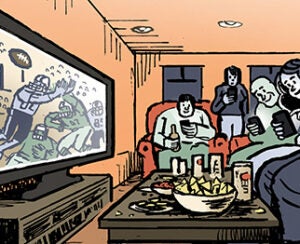
NBC, Fubo, Disney-owned ESPN and ad agency Mindshare weigh in on the creative flexibility offered on CTV and whether sports streamers really reach incremental audiences.

AI-equipped consumer products keep failing; why the newsletter boom might be nothing but spam; and retaliatory tariffs hit America where it hurts.
Just because curated PMPs and direct-to-DSP deals are trendy doesn’t mean they should be the focus of every publisher’s tech stack.

Based on the way advertisers deal with publishers, you’d think they were sworn enemies. Our failure to prioritize collaboration on the open web and build a positive value chain has been our collective downfall.

Canadian tech investment firm Redbrick has acquired Paved, a programmatic newsletter platform for publishers that specializes in native ad formats.

The Trade Desk CEO Jeff Green laid out the DSP’s plan for winning in a new world of advertising that, AI aside, would necessitate major changes in how marketers behave in the market today.
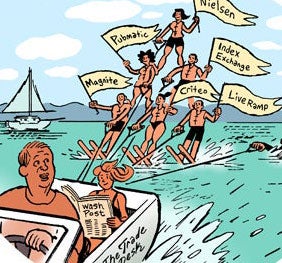
TTD confirmed that this CTV publisher’s errors would have made its UID2s useless for ad targeting. But TTD also said it wouldn’t have had enough information to flag the issue.
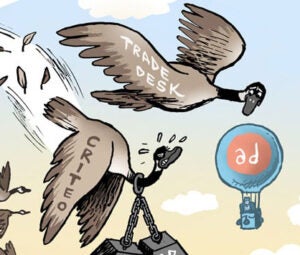
Criteo shares dropped by 20% Wednesday morning after the company reported shaky Q1 earnings and revised its guidance downward for the rest of the year.


On Wednesday, Josh D’Amaro led his first earnings call as the new CEO of Disney. The company closed last quarter with $25.2 billion in revenue, a 7% year-over-year increase. Disney Entertainment advertising revenue rose 5% YOY, but ESPN ad revenue was down 2% YOY, although subscription and affiliate revenue was up 6%.
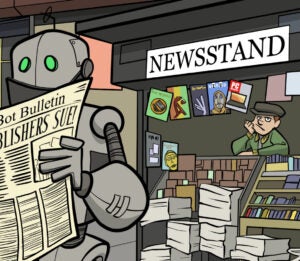
People Inc. previewed plans to downsize by focusing mainly on its key properties. The strategy makes sense considering its publishing portfolio has lost about two-thirds of its Google traffic.
At POSSIBLE 2026 in Miami, the ad industry was over the hype around AI.