
How Political Candidates Can Woo Swing Voters Ahead Of The Election
How, exactly, do campaigns know what issues to focus on? Companies like contextual ad platform GumGum are trying to help political buyers answer that question.

How, exactly, do campaigns know what issues to focus on? Companies like contextual ad platform GumGum are trying to help political buyers answer that question.
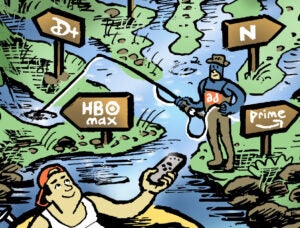
Winners and losers are emerging from the streaming melee. (Or at least the winenrs are.) Plus, CNN will begin testing metered content.

Data platform Quorum wants to serve publishers and advertisers at the same level as walled gardens can, but without all the walls.

Welcome to Week Three of the US vs. Google ad tech antitrust trial. Plus, ews publishers are turning to WhatsApp for traffic.

Getting an approved CTV ad creative ready for delivery is still a mostly manual process. Which is why NBCU is launching a new product to centralize different quality assurance checks and creative ad tech partners.

While CTV has emerged as a powerful and unique advertising medium, venue-based DOOH streaming is distinct and requires its own marketplace to fully realize its potential.

On Wednesday, Roku became the latest streaming company to unveil a self-serve ad platform. Roku Ads Manager, as it’s called, is part of Roku’s bid to reach new CTV buyer demand.
While there are plenty of reasons for political ad buyers to be cautious about CTV, streaming media has one major selling point: programmatic targeting.

Why streaming TV might adopt the cloud-usage model for content; MAGNA projects strongest ad market in two decades; and “go woke, go broke” gets proven wrong, again.

Adopting standards and interoperable IDs can benefit the entire ecosystem, enabling solutions that can help solve for omnichannel ROI and more effective tracking of ads across platforms.
TV and video measurement provider iSpot is fielding a lot of election season concerns from buyers as political ad spend increases in the weeks leading up to the 2024 presidential election.

Is there a secret society of socialists within programmatic? Probably not. Plus, rumor has it that The Trade Desk is building its own smart TV OS.

Advanced audience targeting is perhaps the most significant change in TV ad buying structures, says Alison Levin, NBCUniversal’s president of advertising and partnerships, on this week’s episode of AdExchanger Talks.

Viewers – and ad buyers – are giving FAST channels a chance. Still, the FAST channel market has a long way to go, says Michael Scott, VP and head of ad sales & operations at Samsung Ads.

The bottom is falling out of the mass multichannel TV bundle. Plus, Amazon crushed its first-ever upfront this year.

OpenX would like people to stop thinking about supply-side platforms as “dumb pipes,” thank you very much.

In today’s newsletter: Google Demand Gen is the industry’s latest over-attribution controversy; data from third-party brokers might not be worth it; and The Trade Desk launches a CTV operating system.

Relo Metrics first launched within contextual ad platform GumGum as GumGum Sports in 2017. But the GumGum sports division was spun off and reintroduced as Relo Metrics to better capitalize on demand for live sports marketing and integrations.
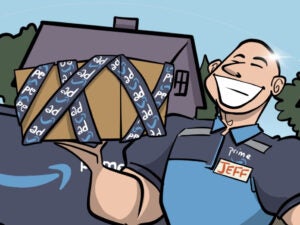
In today’s newsletter: Amazon stands out among Upfronts CTV rookies; Google reveals how much revenue its ad tech divisions make; and women hold more marketing leadership positions than men, but churn is worse for women.
Netflix shared no specifics regarding the spend commitments that came out of this year’s upfronts. The TV ad industry wants more.

Roku could start running ads every time you pause a blu-ray. Plus, the kickbacks required to play in the retail media market might eventually shut out all but the biggest brands.

With political ads flooding every channel, how can brands remain relevant and connect with their audience without adding to the noise?

Sierra Nevada is tapping Kargo’s latest ad offering for its recent CTV campaign aimed to raise awareness for a brand refresh. But there’s a catch: The new ad units aren’t traditional video assets.

ID bridging isn’t the problem. Buyers are objecting to unexpected, undisclosed manipulation of critical data in bid requests by sellers.

M&A is still hot in ad tech this summer. Plus, Netflix’s upfront results may sound promising, but the streamer still needs to grasp the finer points of the advertising game.

On Monday, FreeWheel announced the integration of Proximic by Comscore’s contextual audience data directly into its ad management platform.
Remember back when Netflix was anti-advertising? Plus, CTV is still struggling with low programmatic fill rates.

Ever since Nielsen was dinged for undercounting TV viewers during the pandemic, its competitors have been fighting to convince buyers and sellers alike to adopt them as alternatives. And yet, some industry insiders argue that alt currencies weren’t ever meant to supplant Nielsen.

Ecommerce tech has had a rough couple of years. Plus, VP Kamala Harris’ presidential campaign will spend $370 million on ads.

In today’s newsletter: Digital twins are marketers’ cool new AI tool; Netflix pulls a Prime Video and defaults lapsed subscribers to the ad-supported tier; and California compromises with Big Tech on two journalism bills.
The company is launching an accelerator program to help tech vendors pitch their solutions in a way that makes sense to advertisers.
TWC is building a monetization model that treats weather as both a contextual and an emotional signal, and it’s using AI sales agents to bring it to market.

Simon Property Group, the largest shopping mall operator in the world, is taking its biggest step yet into the world of data-driven advertising. On Thursday, the company launched Simon Media Network, its version of a retail media network.


TTD is introducing agentic AI workflow improvements and automated audience building, which are quickly becoming table stakes for programmatic platforms.

In the modern streaming landscape, everything old is new again. At least that’s the case for NBCUniversal, which is trying to bring back bundled distribution deals and appointment viewing.

OpenX CTO Joel Meyer, who was named Prebid’s new chairman, previews the org’s next phase and helping publishers navigate competing agentic protocols.