Hi, readers! Today’s dispatch comes to you after a long week of co-covering the TV upfronts with Associate Editor Victoria McNally.
Both of us spent the week bopping around New York City to check out the TV upfronts and determine what trends will influence TV ad spend over the next year. We covered the major media companies with presentations this week: NBCUniversal, Fox, Amazon, TelevisaUnivision, Disney, Warner Bros. Discovery, Netflix and YouTube – oh my!
So believe me when I say “performance” is the term that came up the most during nearly every upfront pitch. TV and video publishers have thrown that term in with nearly every type of product or partnership announcement lately as they strive to convince media buyers that TV campaigns offer more control and better results than the next guy.
Which is why publishers flexed their ad performance muscles at media buyers all week long in an effort to appeal to the biggest demands media buyers have during their upfront negotiations: flexibility and results.
Let’s dive deeper.
Performing for performance
Performance is the TV ad industry’s biggest craving this year. The pressure marketers are under to prove their ad budgets work pushes media buyers to increasingly prioritize performance marketing.
So this week, the main message media companies had for buyers is that the big screen on the wall is, in fact, a performance marketing channel. Here’s how performance came up in every upfront we attended:
-
NBCUniversal peacocked its Performance Insights Hub, which will fully roll out this year and comes with access to a long list of outcomes-based measurement and data providers.
-
Fox used its upfront stage to tout new outcomes-based reporting from roughly 20 data partners now available in its ad platform. Fox also cited the engaged viewers for high-production entertainment, including on Tubi, who are arguably more likely to take action after seeing a well-targeted ad.
-
Amazon, of course, leaned on performance as a competitive differentiator. Perhaps you’ve heard of its treasure trove of purchase data? Amazon also unveiled Dynamic TV Creative, which customizes the call to action that accompanies a shoppable ad based on where a customer is in their purchase journey.
-
TelevisaUnivision bragged about both the current iteration of its household graph and a new streaming marketplace meant to help brands reach their audiences across platforms.
- Disney: The Mouse House focused on its talent and IP, especially sports. Case in point: Disney bragged about next year’s Super Bowl airing on ESPN, and NFL Commissioner Roger Goodell even made an appearance. Turning to tech and data, Disney emphasized its AI-driven advertising and targeting capabilities that lead to – surprise! – better performance.
-
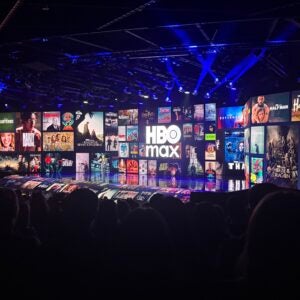
WBD announced a measurement and attribution dashboard to make it easier for buyers to optimize campaigns in mid-flight, rather than garnering insights retrospectively that are only applicable to future campaigns. WBD execs claimed this dashboard will help bolster TV’s emerging status as a performance marketing channel.
-
WBD also announced that it’s joining a cross-publisher measurement initiative spearheaded by OpenAP. The collaborative effort will consolidate impressions and outcomes data from multiple media companies. Underpinning the new solution is a conversion API. CAPIs have already emerged as the next phase of “performance TV.” Paramount, NBCUniversal and A+E are among the other publishers already on board.
-
Netflix dove deepest into ad tech during its live presentation. It also led with performance as its theme. Netflix teased programmatic pause ads and dynamic ad insertion while flaunting the Netflix Ads Suite and its recent tie-up with Amazon and Yahoo DSP.
-
YouTube used stats and case studies to prove to media buyers that its platform performs. During its presentation, it claimed a 200% spike in CTV conversions year over year (which must also be due in part to viewers spending more time watching YouTube on actual TV screens – as YouTube constantly reminds us). YouTube also was the most unique in its positioning of performance, asserting that it shouldn’t come at the expense of reach and relevance.
Zooming out
One theme of these various performance-related announcements – other than the overuse of the word “dynamic” – is data centralization. For marketers, having myriad data points accessible at once can rapidly speed up campaign analytics. The quicker buyers get their hands on useful insights, the more quickly those insights can influence live campaigns.
“By providing more immediate visibility into performance trends,” advertisers improve their odds of driving outcomes, David Porter, WBD’s head of advertising, research, data and insights, told me before WBD’s presentation.
Speed can certainly help marketers move the needle on the outcomes front – time is money, amirite? – but it can’t solve everything. When it comes to performance, certain trends are realistic now, whereas others will take longer to become mainstream.
Which trends, exactly, need a bit more time to marinate?
“Live shopping and outcomes-based guarantees are two,” according to a Nielsen spokesperson.
My two cents as to why: Viewers still aren’t accustomed to buying things straight from their TV devices (with an exception for home shopping TV), which is why attribution has been historically tricky.
That user friction is partly why it’ll take some time before the industry feels comfortable transacting based on outcome guarantees. John Kozack, TelevisaUnivision’s president of US ad sales and marketing, also told AdExchanger’s McNally that outcomes-based guarantees have potential but are not yet a reality.
Looking into the future, performance should take on a bigger role in campaign planning, not just in-flight optimization or post-campaign measurement.
“Innovation on this front will expand to include more solutions that can help marketers better plan, measure and understand the impact of different outcomes metrics,” according to Nielsen.
For now, the priority for buyers and sellers is wringing as many useful analytics from TV campaigns as possible – and as quickly as possible.
ICYMI: Check out our videos recapping Day One, Day Two and Day Three of upfront week.
What do you think? Have any thoughts or tips? Hit us up at alyssa@adexchanger.com and victoria@adexchanger.com.