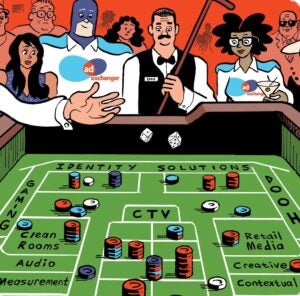

In 2011, three media devices captured 87% of consumer attention. Today, that figure has dropped to 65%, according to McKinsey. The fragmentation isn’t slowing down; it’s accelerating. Streaming services, social media, podcasts and gaming now compete for eyeballs, making traditional media planning feel like navigating with an outdated map.
Yet amid this chaos, one leading channel is emerging, commanding over four hours of consumers’ attention daily: connected TV.
The CTV era isn’t coming; it’s here. With 119.8 million connected TV households representing 89% of US homes and $38 billion in ad spend projected for 2026, the question is no longer whether to invest. It’s how to harness CTV’s full power. The most effective advertisers will be the ones who implement full-funnel solutions that drive awareness, consideration and conversion on CTV.

Full-funnel sounds simple. Executing it isn’t.
The biggest challenge in CTV is activation. Connecting the dots across fragmented media remains manual, costly and constrained by creative. Brands that crack this challenge treat CTV not as a single touchpoint but as a connective tissue across the funnel.
The most effective CTV strategies layer sequentially, building awareness at scale, then narrowing toward consideration and conversion through retargeting and contextual relevance. This means pairing broad-reach placements with performance-oriented formats and tracking tangible actions like website visits, app downloads or purchases to close the loop.
Audience quality matters as much as raw reach. CTV’s premium, lean-back environment attracts engaged, high-intent viewers – a fundamentally different context than the scrolling environments of social or mobile. That attention quality is what makes full-funnel sequencing viable on the surface, rather than just aspirational.
Fire TV illustrates what this can look like in practice. Reaching over 100 million affluent and educated individuals across US households, it combines high-visibility placements like the Feature Rotator and Streaming TV ads with actionable tactics like landing pages that include click-to-buy experiences. This enables brands to move a viewer from awareness to conversion within a single surface. The results back it up. According to a recent Amazon study, when Fire TV pairs with Amazon ad products like Prime Video, it delivers 177% incremental reach, a 412% increase in detail page view rate and a 495% increase in purchase rate. These strategies can be always on or used to support tentpole moments – like a PC brand that ran a Fire TV campaign over Prime Day and found success with 70% of customers being new to brand.
Automation closes the loop
As advertisers deepen their CTV expertise, they expect programmatic execution. According to eMarketer, over 90% of CTV display ad spend transacts this way.
The most sophisticated CTV strategies take that into consideration. They start with the outcome (i.e., awareness, consideration or conversion), then let automation do the work of identifying the right inventory, scoring bid opportunities and optimizing toward the consumers most likely to convert. Machine learning removes the manual guesswork that has historically made full-funnel CTV execution so resource intensive.
First-party data is the fuel that makes this work. Trillions of browsing, buying and streaming signals can now be applied across both guaranteed and auction-based CTV deals, closing the gap between what advertisers know about their audience and where they can actually reach them.
Amazon DSP puts this into practice. Advertisers can now transact their entire CTV campaign programmatically, applying first-party signals across CTV, streaming TV and premium publishers on the open internet, with Performance+ using machine learning to score every bid opportunity against campaign goals.
Creative barriers are falling
Creative production has long been a hidden barrier on CTV, with 37% of advertisers citing a lack of time to produce video, according to HubSpot’s Video Marketing Report.
That’s changing.
For example, the Fire TV Feature Rotator is now more accessible. Advertisers without video assets can work with account teams to use generative AI tools, including Creative Agent, to generate high-quality video. Those with existing video but no background image can use Amazon’s AI tools to automatically produce the display image and headline needed.
The future of CTV isn’t just more reach. It’s smarter relevance and measurable performance. While CTV may initially have been perceived as an awareness vehicle, technology has evolved. CTV is now firmly positioned as a full-funnel driver. Advertisers who recognize and act on this shift will reap the reward.