
Here’s today’s AdExchanger.com news round-up… Want it by email? Sign up here.
A Slow Slide
WPP reported lackluster Q2 results during its earnings call on Friday.
The agency holding company saw a “shortfall” in the US, accounting for about 37% of WPP’s biz, which “took us a little bit by surprise,” CEO Mark Read told investors. Like fellow agency holding company IPG, WPP attributed the slowdom to tech sector struggles.
It’s not all bad news, though. GroupM, WPP’s media buying arm, grew by 6.1%, and programmatic and CTV advertising spurred “double-digit” growth for GroupM’s performance division, Nexus, Read says.

WPP is also doing more with AI. Back in May, it teamed up with Nvidia to launch a generative AI platform. It already uses AI for creative campaigns, personalization (such as personalized birthday songs for a Cadbury ad in India) and performance benchmarking and optimization.
The People Demand It!
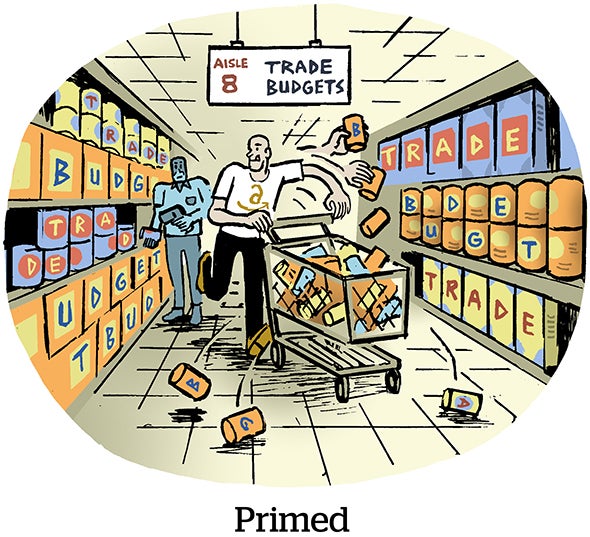
Amazon is folding its grocery delivery service Amazon Fresh, the Amazon.com warehouse network and Whole Foods into one online shopping cart and delivery system, Bloomberg reports.
People will now be able to purchase items only carried in Whole Foods, only stocked nearby in an ecommerce warehouse or only available through Fresh via any of those channels and with one delivery when it previously had required two or three.
Amazon frames the change as a user experience solution, but really it’s a matter of demand. Amazon has advertiser and product demand that its grocery biz doesn’t meet.
PepsiCo, Coca-Cola and many other massive CPG brands would gladly spend more – much more – to make sales happen with Amazon.
The problem is that Amazon’s actual grocery footprint comes down to Fresh Stores, which are a dud, and Whole Foods, which is relatively niche. Whole Foods is big on wholesale and indie brands that are sustainably or organically sourced.
These are the ways, big and small, that advertising wheedles its way into different judgment calls. Sort of like how The New York Times folded its sports desk but added a Formula 1 beat to meet sponsor demand.
What Recession?
The storyline for the past year has been that a near-recession is slowing down ad spend. But, lately, the doom and gloom has dissipated.
The Federal Reserve no longer predicts a recession, and Goldman Sachs dropped its projected odds of a recession happening within the next year from 35% to 25%.
So how much has advertising slowed? Not much, actually, reports Marketing Brew.
A survey by investment bank William Blair found that most ad budgets weren’t cut, and respondents say spending rose during the first half of the year.
Publicis and Omnicom both saw their revenue rise in Q2, up 7.1% and 3.4%, respectively. Meanwhile, YouTube’s ad revenue is up 4% after two quarters of decline, and Meta’s jumped 11%.
Madison and Wall’s Brian Wieser forecasts ad spend will grow roughly 8% this year, noting that recent declines were largely due to unsustainable crypto brands dropping out of the market.
But Dentsu, a semi-outlier, is less optimistic, predicting merely 3.3% growth. It says ad budgets that were slashed at the end of last year have yet to come back.
Counterpoint: Digiday reports that digital ad revenue is still down for Gannett, but digital subscriptions are a bright spot.
But Wait, There’s More!
Google wins key limitations to prosecutors’ antitrust claims, but still faces DOJ and state suits over search contracts. [Bloomberg]
The fear that studios will make digital replicas of actors to reuse virtually is real. The practice is already widespread. [NYT]
Apple hit 1 billion paid subscribers across its apps. [Axios]
Google and Meta are creating so much new short-video ad inventory that it’s causing big price drops. [Insider]








