
Recapping Revelations From US v. Google, The Ad Tech Antitrust Trial Of The Century
As the ad industry awaits Judge Leonie Brinkema’s decision in US v. Google (ad tech edition), get up to speed quick with AdExchanger’s in-depth coverage.

As the ad industry awaits Judge Leonie Brinkema’s decision in US v. Google (ad tech edition), get up to speed quick with AdExchanger’s in-depth coverage.

For all intents and purposes, 2024 is already over. Which means now is a fine time to see how far CTV advertising has come by looking back at some of this year’s most-read stories on AdExchanger.

Curation is a reaction to programmatic’s worsening queries-per-second problem, says Permutive’s Joe Root. DSPs are biased toward impressions that have an identifier attached, so SSPs are using curated deal IDs as a stand-in for third-party cookies.
Meta’s privacy policies are uniquely impenetrable. Plus, Google once thought Apple would likely expand its ad business to third-party apps.

Despite CEO Jeff Green’s denials, the rumors turned out to be true: The Trade Desk has spent the last three years quietly building its streaming OS, called Ventura, to compete with the likes of Roku, Amazon’s Fire TV and Google’s Android.
Live video threw sports broadcasts for a loop – and the losses are only just being tallied. Plus, media buyers are dealing with a surge of AI-generated, made-for-advertising websites

The deal is a “platform investment,” in which Inverness Graham sees Alliant as a foundation to build on, potentially through further acquisitions.

“It’s hard not to be bullish about CTV when it’s both our largest channel and our fastest growing,” said The Trade Desk Founder and CEO Green during the company’s earnings report on Thursday.

If the DOJ wins its ad tech antitrust case against Google, it shouldn’t force a breakup, says Arete Research’s Richard Kramer, who proposes this novel solution instead: Google should spin out its network business into a public interest corporation with no hidden fees.

The “set-jetting” phenomenon means TV advertising and, more specifically, CTV advertising is a natural fit for travel brand Expedia promote its service.

Ari Paparo’s Marketecture acquires another ad-tech publication; Spotify is launching an SSP; and CPG brands turn to “chaos packaging” to stand out among the crowd.

At Tuesday’s Prebid Summit, a panel of publisher and pub tech execs shared tips for how publishers can get the most out their flooring strategies.
By applying Adelaide’s Attention Unit scoring, buyers can target low-, medium- and high-attention inventory via TTD’s self-serve platform.

Google isn’t perfect. But it offers convenient, cost-effective advertising tools that millions of small businesses use to find customers, grow and succeed. If the DOJ breaks up the company, it will also break those tools.

The US v. Google antitrust trial is over, but nobody’s done with the drama. Plus, Charter just struck a deal with NBCUniversal.

Chrome Privacy Sandbox adds support for deal IDs and extends Protected Audiences’ lifespan to 90 days; Google’s ad tech antitrust trial could open YouTube to DSPs other than DV360; and former Kubient CEO charged in accounting fraud scheme.

The TV newsletter Lowpass is back with another barn burner. Plus, some more proof that social media can impact your health.
In the process of the investigation into Google, the Department of Justice unearthed a vast trove of separate evidence. Some of these findings paint a whole new picture of how Google interacts and competes with its main DSP rival, The Trade Desk.
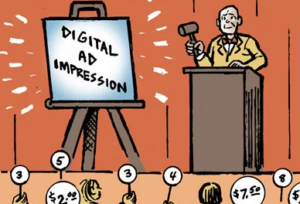
On Thursday, the US district court in Alexandria, Virginia boarded a time machine back to April 18, 2019 – the day of a tense meeting between Google and publishers.
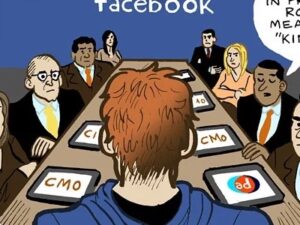
Is advertising to kids on social media as bad as advertising cigarettes to kids? Plus, DuckDuckGo doesn’t want Google’s scale to go away.

OMD Worldwide Chief Media Officer Ben Hovaness, thinks the advertising world might be thinking about the open internet wrong way, right down to the terminology we use to describe it.

Confidential matching – which uses a TEE built on Google Cloud infrastructure – will now be the default setting for all uses of advertiser first-party data in Customer Match.
Day three of the Google ad tech-focused antitrust trial in Virginia was like a guided tour of arcane auction mechanics.

Is there a secret society of socialists within programmatic? Probably not. Plus, rumor has it that The Trade Desk is building its own smart TV OS.

In today’s newsletter: Google Demand Gen is the industry’s latest over-attribution controversy; data from third-party brokers might not be worth it; and The Trade Desk launches a CTV operating system.
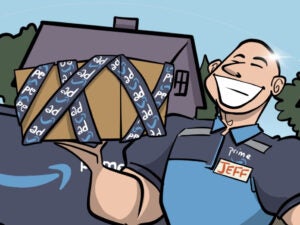
In today’s newsletter: Amazon stands out among Upfronts CTV rookies; Google reveals how much revenue its ad tech divisions make; and women hold more marketing leadership positions than men, but churn is worse for women.

Admiral, a startup that first got its start with ad block recovery tools, announced the close of a $19 million growth equity and debt funding round on Wednesday.

In today’s newsletter: Walmart’s hottest growth drivers are ads and subscriptions; why The Trade Desk’s UID 2.0 could be regulators’ next target; and how the growth of CTV content fortresses is preventing breakout streaming hits.

The Trade Desk delivered another smash earnings report. Meanwhile, Unified ID 2.0, the open-source identity initiative, has “reached a critical mass of adoption,” CEO Jeff Green told investors.

Recent moves by major ad tech players prove the industry doesn’t actually need cookies. But Chrome’s cookie pivot doesn’t clarify what will happen to the 1% of its audience that’s already cookieless or what will become of plans to deprecate the Android Ad ID on mobile.