
Meta Takes The Cake
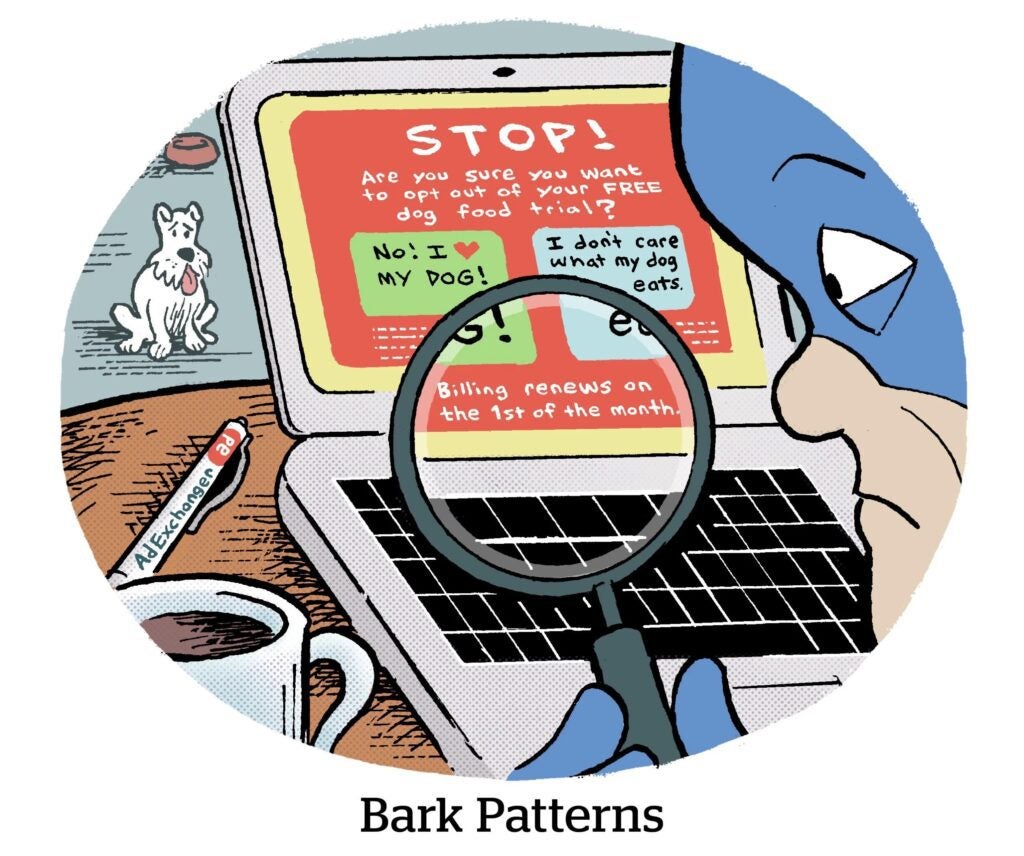
“Privacy policies aren’t exactly picture books,” writes Justin Sherman, CEO of Washington, DC-based research firm Global Cyber Strategies, in Tech Policy Press.
But, according to Sherman, Meta’s privacy policies are uniquely impenetrable.
Understanding what data Meta collects and how it uses that data “is made even more challenging by the way Meta incomprehensibly lays out its privacy policy language,” he writes.

Meta spans Facebook, Instagram, WhatsApp, Oculus and the Llama AI model, and its policies and disclosures are broken into “probably hundreds of indigestible pieces, scattered across numerous websites and pages,” he adds.
One privacy policy document on Facebook includes links to 168 other web pages and pop-ups. Clicking through them all leads to labyrinthine policies on other sites. In some cases, users must log in to read the policies.
Stricter enforcement of the FTC Act’s Section 5 protections against deceptive business practices could be a viable solution to the problem. Indeed, the FTC has cited FTC Act violations in recent actions against Meta.
“We’re long overdue for better laws, regulations and technology practices,” Sherman writes.
What’s Inside The Apple?
A document unearthed in the DOJ’s ad tech antitrust suit against Google outlines what Google, in 2022, internally referred to as “Operation Black Walnut,” a prospectus for a potential Apple Advertising launch and in-house Apple search engine, reports Business Insider.
It’s an interesting document, in part, because it reveals how much the big tech companies must speculate about Apple’s motives.
Apple was (and is for the time being) Google’s biggest partner, in a sense. Google pays Apple more than $20 billion per year for iOS search queries.
The cross-functional teams involved in Operation Black Walnut thought Apple would likely expand its ad business to third-party apps, probably via a built-in SDK.
If Apple’s mobile network expansion took off, “the next big expansion would be to monetize Safari web – across Apple devices – macbook and iphone and to all media formats,” according to the report.
Buried elsewhere in the DOJ’s exhibits is a brief aside in an email chain about Google’s discord with The Trade Desk on the Chrome Privacy Sandbox. A Google exec recounted that Dave Pickles, who was then TTD’s chief technology officer, told her: “We hired Apple’s privacy lawyer. He said, ‘Don’t bother talking with them.’”
What NBC Is Thankful For
Linear TV is outdated.
But one century-old tradition, the Macy’s Thanksgiving Day Parade, still flexes its ratings. The Macy’s parade had a TV audience of some 30 million in 2023, putting it alongside NFL broadcasts and far outpacing other live shows, including the Academy Awards, The Wall Street Journal reports.
Those numbers are good enough for Macy’s to triple its annual rate up to $60 million per year over the next 10 years to lock in the broadcast with NBC.
The parade has become less profitable, per the Journal, as Macy’s and NBC spend more on celebrity fees and production costs. However, one factor justifies its price tag: inertia.
People turn on the parade on Thanksgiving morning and pretty much leave the channel on. NBC follows the Macy’s parade with the National Dog Show, which it produces end-to-end and is more profitable. And the parade broadcast is a feeder into Thanksgiving NFL games, which NBC is also in on.
If NBC loses the Macy’s parade, it gives up pole position on one of the year’s biggest days of TV, advertising and shopping.
But Wait, There’s More!
Brightcove, which makes software to create and monetize videos, agreed to be taken private by Italian mobile app operator Bending Spoons for $233 million. [The Information]
Advertisers bet on Walmart’s retail media business as it steps out of Amazon’s shadow. [Digiday]
Charting the tech companies backing AI startups. [Sherwood]
Roku will soon build its FAST channel content into Google TV. [The Verge]
You’re Hired!
Hearst Magazines names TikTok brand strategy vet Sherri Chambers as chief marketing officer. [WWD]






