
Here’s today’s AdExchanger.com news round-up… Want it by email? Sign up here.
Make It Make AdSense
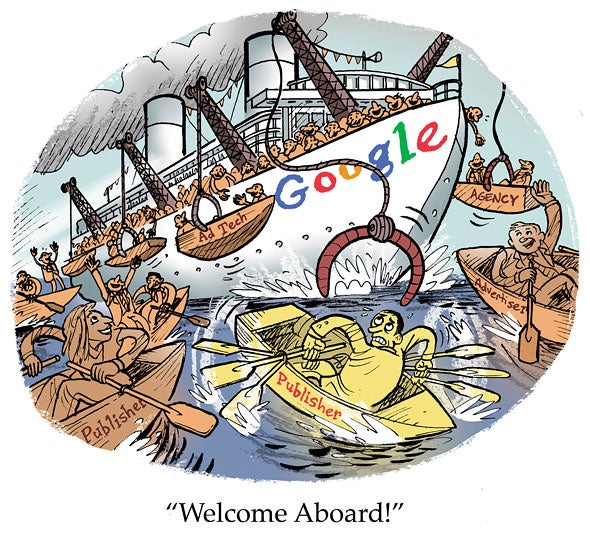
Google AdSense publishers are in crisis, as their RPMs (revenue per 1,000 impressions) have collapsed since late February, Search Engine Roundtable reports.
The official Google support forum has been flooded with hundreds of complaints of RPMs dropping between 60% and 90%.
It’s been difficult to untangle what’s going on, though. The problems affect many publishers over a weekslong span and with no clear-cut diagnosis.

One diagnosis could tie the publisher revenue downturn to recent changes in search traffic, which increasingly goes to Reddit, Pinterest and other media that cut contractual deals with Google Ads.
Some site operators said Google support flagged them for invalid traffic, which coincided with a ranking update in March that targeted low-quality sites but doesn’t cover declines among high-quality sites.
Many publishers attest in these forums that their overall impressions haven’t decreased, only the monetization. It isn’t search traffic, in other words, but the ad tech.
If traffic isn’t down, another logical leap is that the RPM decreases stem from a change to AdSense’s revenue model. Google is changing AdSense from pay-per-click to an impression-based model. Those changes were scheduled for sometime early this year (ahem).
But Google promised the AdSense change from CPCs to CPMs wouldn’t adversely affect publisher income. Make of that what you will.
How ’Bout Them Apples?
Apple is fighting a two-front war with antitrust suits in the UK and the US.
On Friday – the same day Apple lost its bid to throw out a UK lawsuit over app store fees – it asked a California judge to reject Epic Games’ request to hold the tech behemoth in contempt of court, Reuters reports.
Allegedly, Apple is violating a Supreme Court injunction that requires it to let app developers inform users about payment options outside the App Store. If developers get users to purchase apps, subscriptions or in-app rewards via an online browser rather than through the app itself, developers should avoid Apple’s 30% commission fee.
But, according to Epic, Apple bars certain apps from suggesting payment alternatives. Apple also only dropped its commission fee for bigger developers to 27% (and still charges a 3% payment processing fee).
Apple’s new terms go against the court’s intent to make Apple’s API more accessible to developers, Epic argues.
Epic Games also has some back-up on this one. Meta, Microsoft and Match Group all filed notices to the Oakland District Court judge overseeing the case echoing Epic’s allegation that Apple is acting in “clear violation” of the court’s order.
Miss The Forest For The Trees
After launching last week, Sherwood Media received attention primarily because it’s part of a trend of businesses – in this case, the investment app Robinhood – hiring journalists for their own news and content operations.
But Sherwood deserves attention instead for how its site is built with a post-SEO mindset, according to Ernie Smith at Tedium.
For decades, sites have been published and designed primarily for search engines, not in the interests of readers or publishers themselves.
Recipe sites are a common example, since recipes always come at the end of an ad and keyword-laden write-up. But many more things publishers do, from site design and layout to editorial decisions, are all at the behest of Google Search. They reprint unreported stories to pluck SEO traffic from an original source. They abandoned their homepages in favor of article and product pages, because that was the search engine’s priority.
Instead of betting on search and social, publishers should bet on themselves, Smith writes.
“The newsletter was the first step on our journey away from the SEO treadmill,” writes Smith. “Sherwood, and sites like it, will be the second step.”
But Wait, There’s More!
To keep viewers, Disney plans a new streaming concept: old-style TV channels. [The Information]
Advertisers weigh up inventory options as Meta’s bugs worsen. [Digiday]
Maryland passes a state privacy bill that is broader, stricter and more easily triggered than many state privacy laws. [JD Supra]
Gopuff will allow brands to sell on their own sites and use its service for delivery. [release]
Investors are becoming more wary of AI. [TechCrunch]
Some ex-TikTok employees say the company worked closely with its China-based parent despite claims of independence. [Fortune]
You’re Hired!
XR Extreme Reach adds Kevin Arrix, former DISH Media SVP, as chief growth officer. [release]
Spotter hires Adobe and Microsoft alum Ivo Manolov as CTO. [Variety]









