
Senior Editor
James covers the intersection of commerce, media and advertising technology.

James covers the intersection of commerce, media and advertising technology.

Now that on-demand delivery service Gopuff has an ad platform business, it’s become an unlikely springboard to help creators promote and distribute their brand ventures.

Almost one year ago, the W3C created a small sub-group called the Private Advertising Technology Community Group (PATCG). And, against the odds, the PATCG has made theoretical progress on a number of key ad tech and privacy logjams in the past year.

The conventional wisdom in Washington DC is that half or more of political ad budgets during an election year are spent in the final 45 days before the election. We’ve rounded that final bend and are now in the home stretch to the midterms, and programmatic companies are like race horses chomping at their bits.

Data clean rooms and regulation could be topics on The Big Story any week this year. But despite the tsunami of news coverage on both topics, each remains largely unknown or misunderstood.

Roughly a year ago, Snowflake launched its Media Data Cloud, a suite of solutions built specifically to serve businesses with media and advertising needs. Fast forward 11 months, and Snowflake is spiking the football with a Data Cloud “world tour” to tout its offering.

Bill Michels knows programmatic data. For the past couple years, he’s led The Trade Desk’s entire product group. Now, he’s headed to Moloco, where he’s starting as general manager of the company’s retail media business unit.

“We realized that there was a whole universe of travel consumer that was applicable to a number of non-endemic categories as well,” said Adam Ochman, TripAdvisor’s global head of brand head of marketing solutions and co-leader of the new Wanderlab in-house creative studio.
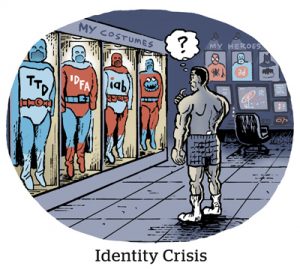
Salesforce quietly introduced a new app in its App Exchange on Wednesday that was developed by The Trade Desk as a way to convert CDP identity data to Unified ID 2.0 (UID2) IDs. “The evolution of ad tech and martech is toward more and more first-party data being stored in cloud databases and in CDPs,” said Ben Sylvan, The Trade Desk’s GM of data partnerships.

Jeff Clark began at Walmart in 2017, before Walmart Connect was Walmart Connect, and before even Walmart Media Group prior to that. But whatever you call it, Walmart is homing in on a major opportunity in the booming retail media category. Clark, who’s now Walmart Connect VP of product, product marketing and analytics, is focused […]
Walmart Connect has gotten a lot more Connect-y of late. Now the retail media platform is striking partnerships to measure social commerce on TikTok and Snap, CTV ads on Roku and live-shopping content with companies Firework and TalkShopLive. The Walmart ad business has had bursts of new partners since it settled on The Trade Desk […]

Assistant Attorney General Jonathan Kanter, who leads the Department of Justice Antitrust Division, is pressing a tougher interpretation of American antitrust law to meet the requirements of a new digital economy. “We have all seen that in digital markets, monopolies self-sustain,” he said.

Vertical video won the user-generated content wars long ago. If you see someone filming with their phone in landscape, they probably have a hotmail email address, too. Snapchat and Instagram may have shifted the way most people (or at least, most young people) take photos and videos, but it took TikTok to shift the way YouTube and its advertiser base use the Google platform.

Merkle’s retail and consumer goods group has become a testbed for multiple other verticals. Although people tend to think of retail advertising from the perspective of grocery store chains and major CPG brands (Walmart, Target, Kroger and the brands they carry), these days the “retail media” category includes a host of new entrant: Best Buy, Marriott, Lyft, Uber, craft goods store Michael’s.

Kroger Precision Marketing, the grocer’s advertising and data business, announced an expansion into CTV and video inventory channels. “It’s critical to … move into these channels that are increasing with respect to where advertisers are investing their dollars,” Kroger SVP Cara Pratt told AdExchanger.

IAB Europe’s litigation with Belgium’s data protection authority (DPA), which began in February with a ruling over the legality of IAB Europe’s Transparency & Consent Framework (TCF), will drag on for another year at least. This week the Belgian appeals court deferred specific questions in the case to the Court of Justice of the European Union. The appeals court will not deliberate until these questions are answered.

Call it the rise of TikTokalytics. A group of young attribution and analytics startups, the newest wielding particular talent on TikTok, have inherited the Earth from multi-touch attribution (MTA) companies.

For CPG brands, valuable business lines and data access can come from unlikely sources. One such example is the Tide laundromat franchise business. Selling laundry detergent and opening laundromat franchise locations may not seem like a cutting-edge marketing tactic … but it’s arguably more exciting than anything happening in the metaverse right now.
There’s a storm brewing and wildfires are raging. We’re not talking about hurricane season or climate change, though, but rather the fallout for ad tech from the macroeconomic downturn and privacy lawsuits, including the FTC’s recent complaint against Kochava which challenges the programmatic data-selling model writ large.

Commerce and retail media suddenly became an incredible tailwind for online advertising. But anyone banking on retail media networks to power programmatic growth for years to come needs a reality check, writes AdExchanger Senior Editor James Hercher.

Bill Watkins, a 9-year Pinterest veteran in sales who was named CRO this year, says the company is focusing on three main pillars: its creator ecosystem, facilitating shopping and ad-based monetization.

The programmatic payment gap is a well-known issue. In the latest OAREX half-year payment report released this week, late payments are back on the rise, although to a lesser degree than in 2020.

In the past few weeks, a litany of the biggest US food, beverage and consumer goods brands, among them many of the world’s biggest advertisers, disclosed tepid quarterly revenue and lower year-over-year sales, which were more than offset by price increases so the overall revenue was up. And their investors are anxious to see durable profits and stronger relationships with retailers at a time when brand-to-retail relationships have become more complicated.

The 2022 Inc. 5000 list was published on Tuesday, and although its purpose is mostly for marketing (companies pay for inclusion, after all), it is a useful benchmark for tracking the startup ecosystem.
Advertising may be just a fraction of Walmart’s overall revenue – but it’s a nerve center for growth. One might wonder why advertising and other businesses that appear marginal to Walmart’s current revenue makeup, such as third-party online marketplace sellers and subscription memberships, are front and center for the company right now.

If you’re a site analytics tools and your name isn’t “Google” or “Adobe,” there hasn’t been much room to grow. Launching a startup to compete against Google’s army of engineers was considered impossible. But that’s starting to change, in part because of an upcoming forced migration to GA4, a new version of Google Analytics, and also because of privacy pressures on GA in Europe.

Vizio has walked a tricky tightrope since launching its advertising business in late 2019. But after a tough first year on the market, with Vizio down by more than half over the past 12 months, the company is seeing the improvement it needs from the platform side of its house.

Attribution and analytics are an absolute dumpster fire right now, as governments around the world, not to Apple and Google, are tightening their data privacy rules. But one person’s trash is another person’s treasure. And that’s certainly the case with analytics.

The Trade Desk has been hammering the same messages about tailwinds in quarterly earnings calls the past couple years: hyping the CTV business first and foremost, along with the retail media segment and a dash of Google-bashing for good measure. The company’s investor call on Tuesday adhered to the trend.

France’s data protection regulator, the CNIL, just hit Criteo with some not-so-très-bien news. The CNIL is planning to recommend a fine of $65 million against Criteo for alleged GDPR violations, the company announced in an SEC filing on Friday. The filing is very thin on detail. For example, it’s not even clear what practice or […]
In the face of a potential global recession on top of a horrendous year for ad tech stocks, companies have to find comfort in the small victories. Wednesday was one such victory for Criteo, despite a few troubling trends.