
Senior Editor
James covers the intersection of commerce, media and advertising technology.

James covers the intersection of commerce, media and advertising technology.

The Thanksgiving to Cyber Monday online shopping bonanza was in full effect this year. But it’s hard to make judgements about whether this season is helping buoy retailers and brands as in years past

Advertisers of all stripes are rethinking their ad measurement and attribution strategy. But the burst of new incrementality testing models, in-housing programs, multitouch attribution and media mix modeling efforts haven’t exactly led to a renaissance of understanding how measurement works.

Every major social network is trying to make livestream video shopping happen. And don’t count out the Amazon-owned game-streaming platform Twitch, which hosted its third “Pog Picks” live shopping event the days before Thanksgiving.
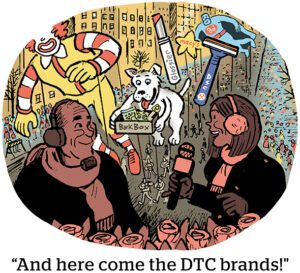
Founded in 2016, the male grooming company Manscaped started out primarily as a performance marketing engine. The products were simply a way for the brand to use its expertise in social media marketing and direct-to-consumer dynamics. Fast-forward six years, and Manscaped has broadened beyond one product and mobile performance marketing. In addition to launching a […]

Walmart and Target each had a similar warning for investors when they reported earnings this week. The two major US retailers expect a modest Q4 and spoke of early signs that consumers are dramatically changing their shopping patterns (yet again).

Between Wednesday and Friday of last week, practically every independent ad tech company (The Trade Desk, Magnite, Criteo, Viant, System1, Tremor and PubMatic to name but a few) had a much-needed bump up in its share price. Can it last?

We’re halfway through the football season, but streaming sports is just kicking off. The Amazon Prime “Thursday Night Football” show began in September and it represents the first time that the NFL is streaming games without a linear broadcaster alongside.

Facebook’s ad platform is still misfiring and ad buyers are resorting to desperate measures, including a pay-for-access fee scheme that led to the firing of multiple Meta employees. Plus: It’s ad tech earnings week … and the category isn’t doing too hot.

The Trade Desk’s revenue machine is still running strong. But with an economic downturn on the horizon, investors are pressing for TTD’s areas of optimism to translate into bottom line results.

The Facebook advertising platform has been beset by glitches and miscues all year. But advertisers who hoped that the bugginess would sort itself out by the holiday season are only discovering coal in their stockings.

The third quarter wasn’t a good one for Roku, which shared belt-tightening plans in expectation of worse results to come during the all-important upcoming holiday season. That’s what happens when advertisers get nervous and hit the brakes.

If you think of livestream shopping in the US as a revolution, it’s a dud. But if you view it as a livestream shopping evolution, real progress is being made.

Ocean Spray is assembling its cross-channel campaigns for the holiday season – and just producing and managing the video assets alone requires Santa’s Workshop-levels of effort and cross-team collaboration. But fragmentation is both a challenge and opportunity, according to Melanie DiBiasio, the brand’s associate director of media and martech.
Call it a Halloween special. Our apparition of a guest this week, an anonymous ad tech Twitter personality, is staying beneath the invisibility cloak. “I’m not senior enough to get away with running my mouth,” says the @HumanPropensity account operator who goes by corndog.
The ad tech hits keep coming this earnings season. The latest is Criteo, which reported total revenue of $446.9 million in Q3 2022, down from $508.6 million last year, while net profit in Q3 dropped from $24.2 million in 2021 to $6.5 million.

Google Analytics began 2022 with an important goal to migrate its entire customer base onto Google Analytics 4 (GA4). Universal Analytics (UA), the longtime baseline analytics service, was to sunset by October 2023. UA was set for shutdown next year, but Google Analytics announced on Thursday that the company will push that deadline to July 2024.
The Alphabet C-suite faced a tougher grilling than usual during its quarterly earnings report on Tuesday. YouTube had a YoY decline in revenue for the first time since Alphabet started disclosing YouTube ad revenue two and a half years ago – and likely for the first time ever since YouTube was acquired.

The Amazon Marketing Cloud, which emerged from beta last year, is at the beating heart of Amazon’s advertising ambitions. Amazon touted the product, which is its answer to a homegrown data clean room, at its Amazon Ads unBoxed conference in New York City on Wednesday.

Ad analytics startups have been springing up lately. The latest example is Memorable AI, a creative testing startup that raised $2.75 million earlier this month, including stakes from MediaLink CEO Michael Kassan and from programmatic vet Brian O’Kelley.

Reach for the stars: That’s the lesson from Procter & Gamble’s quarterly earnings report on Wednesday. Its new measurement approach, which is oriented around the reach metric, is behind a reduction in media spend.

Uber formally organized a new segment of the business called Uber Advertising on Wednesday. Uber also introduced a new ad offering called “journey ads” that allow brands to target Uber riders based on their destination.

The data clean room category is like wet cement right now. And Snowflake is writing its name everywhere. On Monday, Snowflake announced an investment in OpenAP, an advertising identity data company co-owned by Comcast’s NBCUniversal, Fox, Paramount and Warner Bros. Discovery.

“When you enter those [agency] doors, you are you coming into an office of all media professionals – media planning, media strategy, custom content makers, research – where everybody eats, sleeps and breathes media,” said Aaron Sobol, Unilever’s head of media investment and partnerships. On the brand side, however, the in-house media team is comparatively small and sits “inside of a relatively small marketing community, inside of a very, very large company.”
Multitouch attribution has fallen into disrepair. Facebook and Google platform attribution is a mess. User-level tracking is going the way of cigarette smoking during a pregnancy. So, what’s left for digital advertisers who need to bring performance measurement back to their media plans? Incrementality testing, it seems. “I was a little bit skeptical as to […]

Now that on-demand delivery service Gopuff has an ad platform business, it’s become an unlikely springboard to help creators promote and distribute their brand ventures.

Almost one year ago, the W3C created a small sub-group called the Private Advertising Technology Community Group (PATCG). And, against the odds, the PATCG has made theoretical progress on a number of key ad tech and privacy logjams in the past year.

The conventional wisdom in Washington DC is that half or more of political ad budgets during an election year are spent in the final 45 days before the election. We’ve rounded that final bend and are now in the home stretch to the midterms, and programmatic companies are like race horses chomping at their bits.
Data clean rooms and regulation could be topics on The Big Story any week this year. But despite the tsunami of news coverage on both topics, each remains largely unknown or misunderstood.

Roughly a year ago, Snowflake launched its Media Data Cloud, a suite of solutions built specifically to serve businesses with media and advertising needs. Fast forward 11 months, and Snowflake is spiking the football with a Data Cloud “world tour” to tout its offering.

Bill Michels knows programmatic data. For the past couple years, he’s led The Trade Desk’s entire product group. Now, he’s headed to Moloco, where he’s starting as general manager of the company’s retail media business unit.