
FreeWheel is Streamlining Its Streaming Hub With New Tools For Publishers
FreeWheel thinks the best way to simplify streaming video is by fostering more direct connections between buyers and sellers.

FreeWheel thinks the best way to simplify streaming video is by fostering more direct connections between buyers and sellers.

Erez Levin, a former Googler and current outspoken consultant, on why the digital ad industry should transact on media quality signals like attention instead of optimizing to outcomes and other flawed attribution models.

AI is being embedded in tools, tagged in decks and tossed into internal sprints. But for agencies, publishers, brands and platforms, there’s still no shared definition of success.

The programmatic “sustainability” and “waste” conversation has shifted. Plus, the 2010s called – they want Facebook back.

It’s knives out for The Trade Desk’s take rate as competitors slash the demand side’s margin and pile on the incumbent during a moment of rare vulnerability.
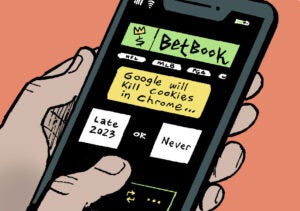
Google isn’t a regulator. From an attorney’s point of view, its decrees don’t carry the force of law, and that’s what lawyers are concerned with: the law.

Alphabet had another stellar earnings report. But neither its leadership nor investors ever mentioned the two landmark ongoing antitrust suits. Chrome’s reversal on third-party cookies also never came up.

Enjoy this weekly comic strip from AdExchanger.com that highlights the digital advertising ecosystem …

When platforms choose to label any significant portion of an ad buy as “other,” it’s a deliberate decision to withhold information for the seller’s benefit and the buyer’s detriment.

Google’s SSP and ad server businesses have been ruled monopolies. And Google Chrome isn’t going to change its third-party cookie opt-ins, further preserving third-party cookies. Go inside this momentous news.
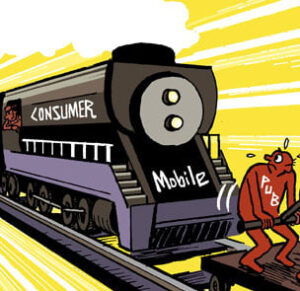
Criteo dives into video ads; after 20 years, YouTube might be the world’s biggest media brand; Threads opens up for advertising.
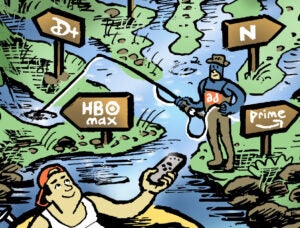
On Wednesday, Magnite announced plans to merge Magnite Streaming, its ad exchange and SSP, with SpringServe, its ad server and mediation platform, into a single unified product.

If the court ultimately orders Google to spin off AdX or DFP, the result would be a fundamental rebalancing of power across the digital advertising supply chain. For marketers, the implications are just as significant.

More competition between SSPs and ad servers should be a boon for publishers in the long term. But publishers will feel some growing pains if there is a sudden disruption in Google’s ad payouts or if their ad server fees increase.

The wave of ad tech headlines in recent weeks represents a long overdue moment of reckoning for companies who (still) hold disproportionate control over publishers’ website traffic and revenue potential.

What does the end of impulse shopping mean for advertising? Plus, Remember Google+? Meta sure hopes you don’t.
Temu pulled back on its US ad spend this week, as tariffs loom. Plus, in France, the ATT prompt was deemed anticompetitive and, as a result, will likely need to be changed.

The Google antitrust ruling will have wide-reaching implications for the tech industry at large, not just the ad businesses therein. But in the meantime, it’s only natural to see programmatic veterans letting off a bit of steam.
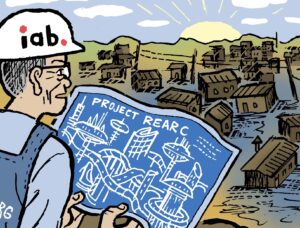
Earlier this year, Pinterest conducted reviews of five potential ad tech acquisitions. Plus, what do LLMs think is the best retail media tech for retailers, and why?
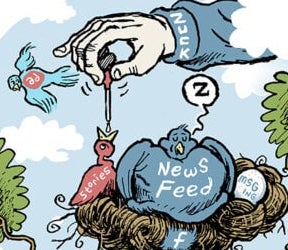
Do Google AI Overviews really bring exposure to more websites?; Meta considered an all-ad Instagram feed; and agencies are cautiously optimistic even as tariff concerns threaten upfronts season.

Firsthand is a startup founded by two OG ad tech entrepreneurs that describes itself as an “AI-powered brand agent platform.” But what the heck is an “AI-powered brand agent platform?”

Temu’s US ad spend grinds to a halt; Publicis posts a strong Q1; and creative personalization tech is back in vogue.

In 2017, Mediaocean CEO Bill Wise predicted the demise of supply-side platforms. The category survived, but he’s sticking to his theory that pureplay SSPs are a thing of the past. Plus: An update on Mediaocean’s $550 million Innovid acquisition and Wise’s counterpoint to recent criticisms of The Trade Desk.

Many well-intentioned advertising standards efforts gather digital dust thanks to industry politics and competing interests. Here’s how the industry can stop sabotaging its own progress.

You know that old saw about how regulators aren’t technical and don’t understand how online advertising works? Yeah, that’s not a thing anymore.
The rest of the world is still preparing its tariff countermeasures. Plus Google has started inserting links to new Google searches into AI overviews.

A German appeals court recently ruled that major social ad platforms may not suspend or deactivate accounts without notice. Plus, the Yahoo DSP business is potentially up for sale.

A lot of F-bombs got dropped on stage at the Coalition for Innovative Media Measurement’s (CIMM) summit in New York City earlier this week. And no, probably not the F-bomb you’re thinking of.

Agencies around the globe weigh in on principal-based buying; live sports are king, but new sports like F1 are having trouble gaining traction; and Adobe gets roasted by Bluesky’s artist community.
Programmatic bidding algorithms aren’t always aligned with campaign goals, so agencies are relying on AI tech to create algorithms tailored to their campaigns instead.

Can a good sales presentation offset the impact of a very bad news week? That’s a question for Meta, which collected two guilty verdicts in court this week for failing to protect children and creating additive products.

Meet Clamor, a new social listening product that pulls cultural insights from online conversations in real time. Clamor helped Manscaped freshen up its marketing, including for this year’s Super Bowl.

Hotel chain Red Roof is using Zeta’s new voice-activated AI agent to guide its campaign creation, deployment timing and audience development.


Brave’s chief of ads Jean-Paul Schmetz on competition in the search and browser markets, the fallout from the Google Search antitrust ruling and whether AI search will help smaller upstarts compete with Big Tech.

Walmart and Vizio announced at NewFronts that unified account logins are coming to smart TVs using Vizio’s operating system.

The age-old question for streaming TV advertisers is, how to target the viewers they want while reaching the scale their businesses need. The quick-serve restaurant operator CKE, which owns Carl’s Jr. and Hardee’s, sought an answer in a case study with Attain and Amazon Ads.