
The Non-Walled Non-Garden; Clip And Dip
Some accuse The Trade Desk of becoming a walled garden; short form video clips are the only way to go viral; and a new startup touts “micro-dramas.”

Some accuse The Trade Desk of becoming a walled garden; short form video clips are the only way to go viral; and a new startup touts “micro-dramas.”

When The Trade Desk sneezes, ad tech catches a cold.
The Trade Desk continued its shaky 2025 earnings schedule when it reported Q2 results on Thursday.

Change can be bumpy. From The Trade Desk’s Solimar-to-Kokai transition to Nielsen’s transition to its Big Data + Panel offering, we go inside customers’ challenges with these two transforming platforms.
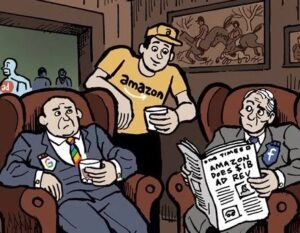
The Amazon DSP vs. The Trade Desk rumor mill; How SharkNinja has stayed sharp; Why nothing beats organic.

The Trade Desk on Thursday announced its first native app built for use with a separate cloud or data warehouse. It’s called the Connector App on Snowflake.

The Trade Desk is adding a new retail tool to its data marketplace toolkit – or a new element to its periodic table, if you will.

For The Trade Desk, about 90% of campaigns using structured deal IDs via private marketplaces don’t scale at all. Fixing this frustrating deal ID failure rate was the impetus for a new product called Deal Desk.

The Trade Desk released OpenSincera on Tuesday, a free API integration that posts ad impression data on publishers and tech vendors.

If you felt a strange gust around 5 p.m. ET on Thursday, it was probably just the cumulative sighs of relief across Wall Street as The Trade Desk shook off its Q4 blues with a better-than-expected first quarter earnings report.
It’s knives out for The Trade Desk’s take rate as competitors slash the demand side’s margin and pile on the incumbent during a moment of rare vulnerability.
Programmatic algorithms optimize for performance, which can leave digital media companies floundering. Inside programmatic’s pursuit of “premium.” Plus: an ad tech acquisition forged on matchmaking buy-side and sell-side IDs.

Streaming TV advertisers are still unsatisfied with the level of transparency from publishers in the ad buying process. So Rain the Growth Agency created its own way to get more transparency into CTV buys.

Jeff Green, CEO of The Trade Desk, calls it like he sees it. And he doesn’t see a future for Google monetizing the open internet via its SSP and ad server business.
M&A started off with a bang in 2025. T-Mobile bought Vistar Media, and The Trade Desk bought Sincera. With a special guest from LUMA Partners, Conor McKenna, we explore the rationale for these ad tech acquisitions.
“It’s hard not to be bullish about CTV when it’s both our largest channel and our fastest growing,” said The Trade Desk Founder and CEO Green during the company’s earnings report on Thursday.

In the process of the investigation into Google, the Department of Justice unearthed a vast trove of separate evidence. Some of these findings paint a whole new picture of how Google interacts and competes with its main DSP rival, The Trade Desk.

The Trade Desk delivered another smash earnings report. Meanwhile, Unified ID 2.0, the open-source identity initiative, has “reached a critical mass of adoption,” CEO Jeff Green told investors.

E.W. Scripps becomes the first CTV publisher to adopt OpenPass, The Trade Desk’s single sign-on product for user authentication.

The Trade Desk is focusing beyond the overall “open internet” and on what CEO Jeff Green calls the “premium internet.”

“I know you’re going to ask me specifically about Privacy Sandbox, because nearly everyone else does,” The Trade Desk CEO Jeff Green said on the company’s Q4 earnings call.

There are no new DSPs out there. Nobody’s investing in the category. Google, Amazon and The Trade Desk won, and there’s no point trying to become another omnichannel DSP for everything. That isn’t true, mind you.
Last quarter, The Trade Desk reported revenue growth of 25% YOY at $493 million and profit up from $16 million in Q3 2022 to $39 million this year. But the good topline results were washed out as investors reacted to The Trade Desk’s pessimistic guidance for Q4.

As third-party cookies disappear, advertisers can rely on retail data to target consumers, said The Trade Desk’s Ben Sylvan at Night Market’s eCommFronts event in New York City last week.

Comscore’s programmatic ad targeting division, Proximic, unveiled new audience segments for political advertisers to help them reach people based on what they watch and the political campaigns they’ve already seen.

Snowflake, The Trade Desk and Narrative are going to market with a new cloud-based data marketplace approach.
The Trade Desk continued its run of growth, reporting Q2 total revenue of $464 million, a 23% jump from last year.

While other ad platforms, including Google and Meta, saw spend declines, The Trade Desk beat the ad market again by growing 24% year over year in Q4.

AppLovin wants Unity – but only if Unity calls off its planned acquisition of ironSource. Why doesn’t AppLovin want ironSource? And how is Apple’s ATT driving consolidation in mobile ad tech? Listen in. Plus: The Trade Desk claims to benefit whenever a regulator starts investigating Google.

“The Sell Sider” is a column written by the sell side of the digital media community. Today’s column is written by Bob Walczak, CEO, MadTech Advisors. The future is cookieless. This we all know. But the industry faces a long road ahead before cookieless audience targeting becomes the norm. Sure, context and cohort targeting provide […]