
Hey Google, What’s The Chrome User Choice Mechanism Going To Look Like?
It’s been more than two months since Google said it would forego third-party cookie deprecation in favor of a user choice mechanism. But it hasn’t shared any details yet.
It’s been more than two months since Google said it would forego third-party cookie deprecation in favor of a user choice mechanism. But it hasn’t shared any details yet.

It’s a wrap on the US v. Google antitrust case, at least for now. Then, behind the IP infringement claim on the OpenRTB spec that ruffled feathers at the IAB Tech Lab.

Google isn’t perfect. But it offers convenient, cost-effective advertising tools that millions of small businesses use to find customers, grow and succeed. If the DOJ breaks up the company, it will also break those tools.

A web crime ring that sold Facebook account service tickets collapses in dramatic fashion; how US antitrust precedent could inform the DOJ/Google ad tech trial; and more publishers turn to paywalls as the open web shuts its gates.

Competing agendas are limiting the tools publishers have at their disposal in ways that aren’t always primarily motivated by user privacy. Here are five things about privacy in digital media that should keep publishers up at night.
Hear what the ad tech industry is saying about Google’s antitrust trial. Then, a rundown on how the election is playing out for political advertisers and news publishers.

Let’s clear the air. The Federal Trade Commission does not hate advertising, says Samuel Levine, the agency’s consumer protection chief. But the FTC does have a few suggestions for the ad industry.

The FTC’s got a new report on the data collection practices of large social media and video platforms. Plus, Amazon has its own “Shark Tank.”

Has the Federal Trade Commission been overstepping its bounds? Yes, according to newly appointed Republican FTC Commissioner Melissa Holyoak.

The FTC’s latest staff report has strong message for social media and streaming video platforms: Stop engaging in the “vast surveillance” of consumers.
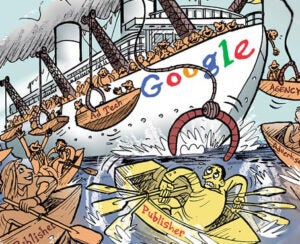
Publishers were encouraged to see the DOJ highlight Google’s stranglehold on the ad server market and its attempts to weaken header bidding.

Two of the EU’s biggest Big Tech antagonists are set to resign; a GAM breakup could usher in post-ad-server programmatic; and how Google kept Prebid separate from the IAB Tech Lab.

Someone will eventually need to make a Netflix-style documentary about the Google ad tech antitrust trial happening in Virginia. (And can we call it “You’ve Been Ad Served?”)

It might be surprising to learn the government fights against monopolies the same way now as it did in the late 19th century – partly because the laws haven’t needed to change all that much.

The discovery process in the lead-up to Google’s ad tech antitrust trial has unearthed nuggets of information that aren’t directly related to the case, yet are no less fascinating.
What do Hercule Poirot, Ben Bernanke, Star Wars and C.S. Lewis have in common? If you’re an ad tech nerd, you’ll know the answer immediately.

The IAB’s annual advertising outlook has mostly rosy news. Plus, can sludge videos be wielded for good – or, at least, for effective political organizing?
In today’s newsletter: Google paid $445 million in rebates in 2018; publishers across the ideological spectrum blame brand safety for hurting the media biz; and Mark Zuckerberg apologizes to Congressional Republicans for Meta’s content moderation.

The publication still makes most of its on-site digital revenue from programmatic. But it’s doubling down on direct-sold custom content, especially when it comes to video and social media.

There’s a decent amount of overlap between many US state privacy laws – but there are also many significant differences. Take the Maryland Online Data Privacy Act.

Publishers are in the business of selling their readers’ attention to advertisers. But in response to consumer preferences and regulatory pressure, publishers should reposition themselves as champions of data dignity.

In today’s newsletter: Walmart’s hottest growth drivers are ads and subscriptions; why The Trade Desk’s UID 2.0 could be regulators’ next target; and how the growth of CTV content fortresses is preventing breakout streaming hits.

With a landmark ruling potentially forcing Google to change its business practices, who is actually likely to steal some of its search market share? And what should marketers do about it?

The trajectory of digital advertising remains unchanged. There are plenty of signs that the investments advertisers have made in cookie alternatives are already paying off.

Not only will hashing data not anonymize it, but regulators, including the Federal Trade Commission, consider hashed identifiers to be personal information.

The decision by WFA leadership to succumb to Elon Musk’s pressure is disappointing and dangerous – but it presents an opportunity to rethink our industry’s broken approach to brand safety, writes Arielle Garcia.
Google is a monopolist. We bring on a guest that’s both a lawyer and a CEO of a search ad business to offer his perspective on the antitrust ruling, and what happens next for Google in light of this decision.

ChannelMix is InMarket’s fifth deal within as many years.

Recent moves by major ad tech players prove the industry doesn’t actually need cookies. But Chrome’s cookie pivot doesn’t clarify what will happen to the 1% of its audience that’s already cookieless or what will become of plans to deprecate the Android Ad ID on mobile.

In today’s newsletter: The DOJ sues TikTok alleging COPPA violations; Disney wraps a competitive upfronts season as it faces stiller competition for streaming ad budgets; and more than $107 million was spent on ads for AI products in the first half of this year.

Media measurement provider Measured launched an MCP integration that allows brands to ask ChatGPT, Claude, Gemini and other AI platforms how their media is performing.

Roku unveiled its new home screen, which includes new features designed to further personalize the home screen experience for each viewer.

Email targeting in CTV has a credibility problem as buyers and sellers question whether one-to-one identity even fits a channel built for broader reach.


How does Spotify translate quirky Wrapped labels, like “divorced dad hipster,” into ad audiences? And is AI-generated content safe for brands? Spotify’s Global Head of Ad Product Katie English weighs in.

Although tides of ad revenue flow based on the ratings of certain tentpole TV events, a new crop of scammers now operate illicit sports livestreaming rings, and there’s almost nothing broadcasters can do about it.

At AdExchanger’s Programmatic AI conference, media experts discussed how the rise of AI-generated content is changing the industry’s understanding of “premium” content.