Here’s today’s AdExchanger.com news round-up… Want it by email? Sign up here.
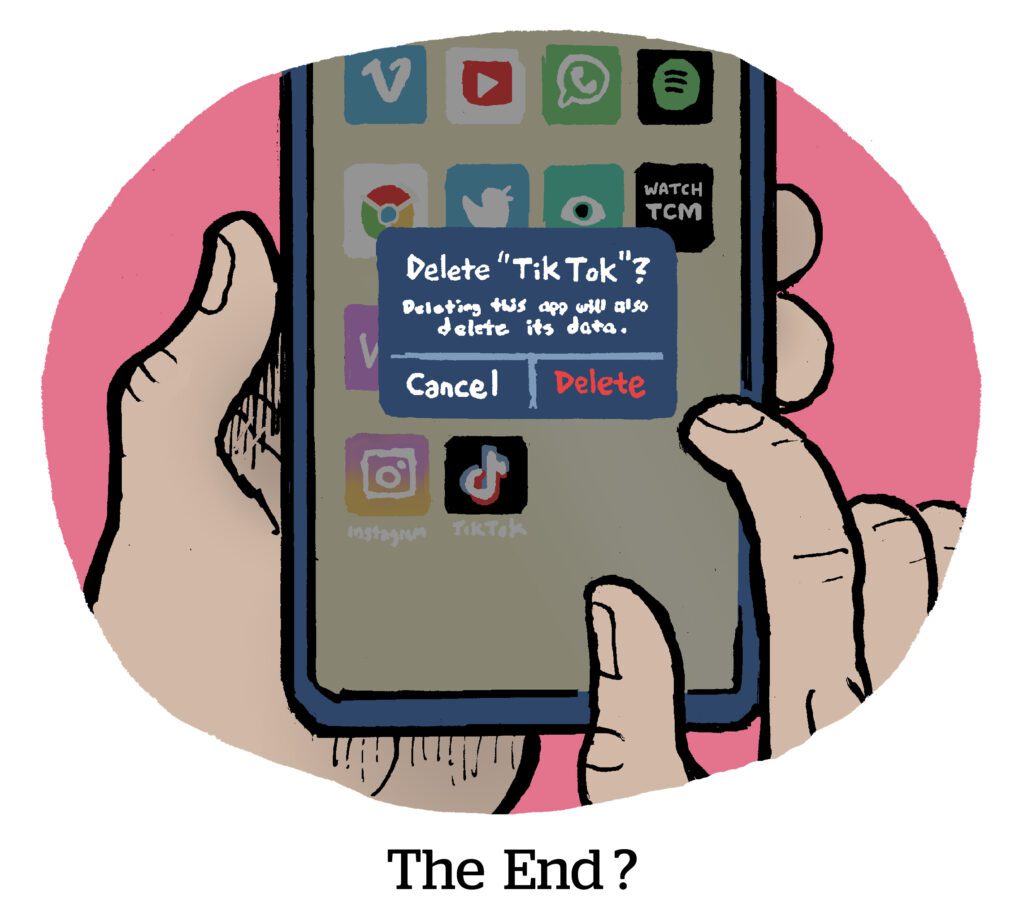
Tick, Tock, Tick, Tock … Boom
The New York Times homepage dubbed it a “US Foreign Aid Package.”
CNBC crammed all the angles into one headline: “Biden signs Israel, Ukraine, TikTok bill into law.”
In American politics, the conventional wisdom is that no major legislation is signed during an election year. Nobody wants to deliver a win for their opponent when the race is on.
But one major bill managed to sneak through Congress and was promptly signed by President Joe Biden into law. This bill accomplished the impossible by conglomerating three spending priorities with appeal to both parties (Ukraine, Israel and Taiwan military aid) and adding in a requirement that Bytedance, the Chinese company that owns TikTok, must divest from TikTok or face a national ban. This brings a quixotic group of bipartisan backers.
The foreign aid is the consequential part, from a world history point of view. The potential divestiture or removal of TikTok from US app stores, however, has major second-order effects for data-driven marketing.
“Many who sponsored the bill admit a TikTok ban is their ultimate goal,” says TikTok US CEO Shou Chew in a video response.
TikTok, meanwhile, will challenge the law in court.
Out-Foxed
Foxtrot, a trendy grocery chain with 33 stores, is calling it quits.
But Foxtrot isn’t just another indie grocery store – it’s a testing ground for potential breakout food and beverage startups.
“There are very few retailers willing to roll the dice on a new brand with unproven sales, track record, margins etc.,” Paul Voge, CEO and co-founder of DTC sparkling water brand Aura Bora, tells Ad Age.
Foxtrot was of the same age and temperament as its digital-native brands, says Becca Millstein, co-founder and CEO of the DTC darling tinned fish brand Fishwife. “It shared our mindset of real nimbleness and creativity and fast growth, which is somewhat unique to startup culture.”
First, DTC marketers lose Facebook and Instagram to skyrocketing CPMs and a haywire platform. Now, they lose Foxtrot.
For Graza, an olive oil brand that’s now a huge hit in traditional grocers, Foxtrot was the first retail distributor, too, says co-founder and CEO Andrew Benin.
Longstanding retailers are adept at extracting margin from brands and payments for every ounce of value in marketing. Foxtrot, on the other hand, would “celebrate [Graza] on digital platforms” to bring free value, Benin said.
The Struggle Is Real
IPG is making another loop on the struggle bus.
The agency holding company lost a big agency of record assignment with an unnamed telco client late last year, which had a knock-on effect for its growth (or lack thereof). The client is “looking to rapidly drive change within their organization,” CEO Philippe Krakowsky told investors during IPG’s first-quarter earnings call on Wednesday. “That’s a decision that we understand.”
Digital specialty agencies like Huge, R/GA and MRM are also underperforming. And they have no turnaround in sight.
But it’s not all bad news. The holdco’s media business, health care marketing and PR agencies (Golin got a callout for double-digit percentage growth) had a strong Q1. Also, “elevated expense for severance in Q1” should pay off later in the year. All in all, IPG is still forecasting 1% to 2% organic growth for 2024.
As for Google’s third cookie deprecation delay, the industry’s issue du jour, IPG is playing it cool.
“I don’t see it as a particularly dramatic development,” Krakowky said.
But Wait, There’s More!
If Britain is so bothered by China, why do these .gov.uk sites use Chinese ad brokers? [The Register]
Why Cava’s bid for brand awareness means prioritizing streaming ads. [Digiday]
Threads now has more daily active users than X. [Business Insider]
The MRC releases its updated standards for invalid traffic measurement. [MediaPost]
Dare Obasanjo: The Humane AI pin – a case study in poor strategy and poor execution. [blog]
“It’s been here”: Why women’s sports aren’t just a moment. [Axios]
You’re Hired!
The IAB appoints Cintia Gabilan as VP of its media business, Arlene Mu as assistant general counsel and Nadine Karp McHugh as executive in residence. [release]
Yieldmo announces Lindsey DiGiorgio as its new CMO. [release]