
Here’s today’s AdExchanger.com news round-up… Want it by email? Sign up here.
The Revolut-ion
Only last week, this newsletter noted the shift in fin tech and credit companies entering ad data sales.
The latest to the trend is Revolut, a fin tech business catering to travelers and global spenders.
“We could become a media [business] … a place where you have an audience and data about the audience and you monetize this,” Revolut’s head of growth Antoine Le Nel tells the Financial Times.
Revolut could be earning a “proper chunk” of its overall revenue from targeted advertising.

“We know how [users] navigate inside the app, we know some of their interests that they have because they’ve clicked on this and that,” says Le Nel.
He’s not speculating, either. Revolut hired Inam Mahmood, former head of ecommerce partnerships at TikTok UK, and reportedly two dozen others to develop a media business. The internal goal is to earn 300 million euros ($374 million) by 2026.
The consumer ambitions that go with advertising are even tougher to achieve.
“We want people to have a daily routine: You check your Instagram, you check your emails and you check your Revolut,” Le Nel says. “We want to be part of your daily routine.”
Toppled By Temu
Temu is still in the ad industry spotlight after spending tens of billions on a barrage of Super Bowl, search engine and social media ads.
Now, some marketers are blaming Temu’s shameless ad spending habits for a spike in the cost of advertising on Meta’s platforms, Digiday reports.
Recent MediaRadar data suggests the Chinese ecommerce platform spent more than $46 million on social advertising between January and March this year, with 98% of that budget going to Facebook.
As a result, several media agencies say Meta’s CPMs are skyrocketing for their clients. Classic supply and demand, baby.
Some agencies are raising minimum spends with Meta to help stand out or are looking at other channels, but outspending Temu is an impossible game to play.
But despite anecdotal accounts of brands losing in head-to-head CPM battles with Temu on Meta, not everyone is convinced it’s affecting Meta’s CPMs broadly. Temu’s ads “are likely competing at the long tail of impressions,” says investor and analyst Eric Seufert, where there is less competition anyway.
Searching For A Scapegoat
Google Search has become an ad-infested shadow of its former self.
This wasn’t supposed to happen, since Google purportedly separates its ads and search businesses.
But Ed Zitron argues in his Where’s Your Ed At? newsletter that the degradation of the Google Search user experience was caused by Google Ads encroaching on its territory.
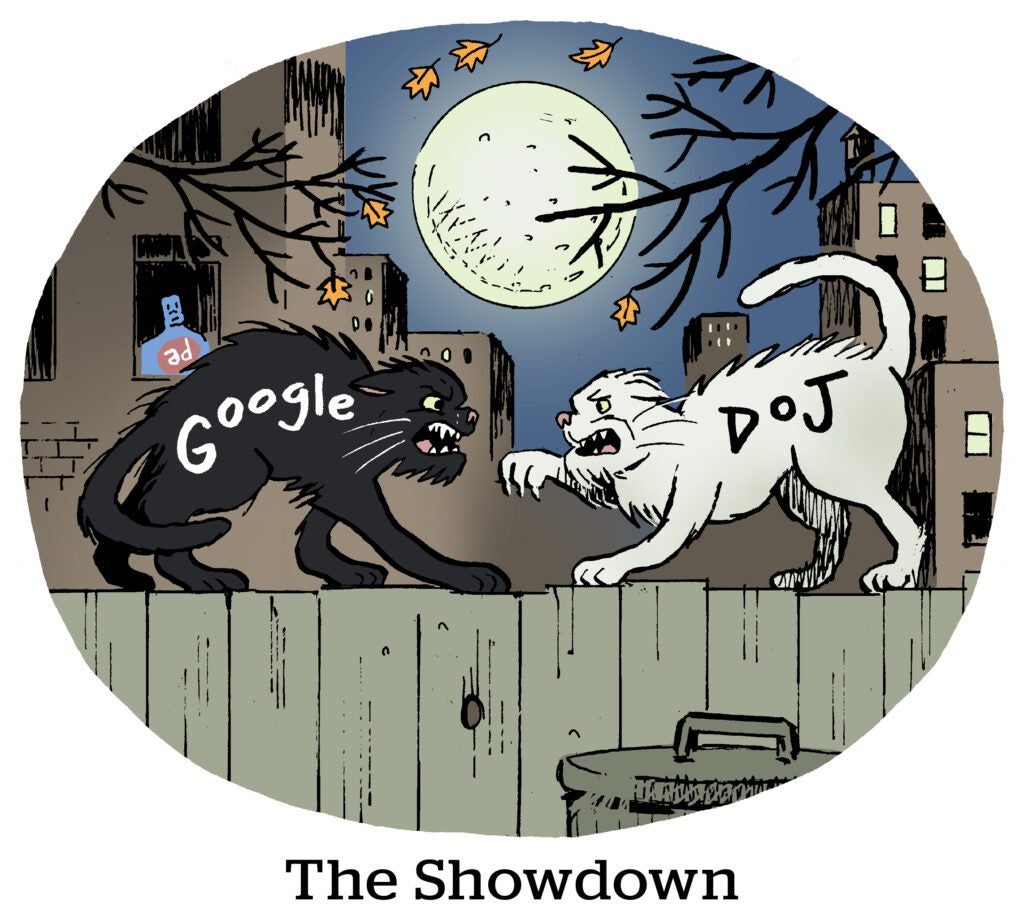
Internal company emails released as part of the US Department of Justice’s antitrust case against Google support that argument.
Search’s transformation began with a “code yellow” alarm in February 2019 by Google Ads’ Jerry Dischler and Prabhakar Raghavan in regards to revenue performance.
Then-head of search Ben Gomes responded that Search couldn’t meet the ads team’s query growth goals and that he was worried Search was “getting too close to the money.”
But the ads team intervened with some “heroic RPM engineering,” leading to Raghavan replacing Gomes as head of search in 2019.
Raghavan previously led Yahoo’s search division from 2005 to 2012, during which Yahoo saw its share of the search market gobbled up by Microsoft Bing.
It’s another case, Zitron argues, of the “rot economy” squeezing the life (and revenue) out of a once-beloved consumer tech product.
But Wait, There’s More!
It’s not your imagination: Captcha’s bot tests are getting harder. [WSJ]
How ad buyers are advising clients on a possible TikTok ban or sale. [Adweek]
President Joe Biden’s former disinformation czar Nina Jankowicz launches a nonprofit to combat critics of disinformation research. [NYT]









