
Senior Editor
James covers the intersection of commerce, media and advertising technology.

James covers the intersection of commerce, media and advertising technology.

Brands are getting back to basics. They’re rethinking their packaging and trying to figure out how they fit into the new world of retail store shelves. And while they are getting more data-driven, the data is not necessarily for advertising.

In the world of online advertising on big walled-garden platforms – Meta in particular – October through November truly is the season of giving. Of giving advertisers ulcers and panic attacks, that is.
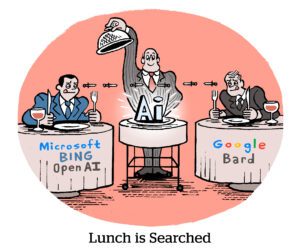
Google hit some impressive revenue benchmarks in Q3. But investors seemed to only have eyes for AI.

Just in time for holiday shopping, AdExchanger Talks is taking a dive into the world of ecommerce with Mike Ryan, the head of ecommerce insights at search and commerce consultancy Smarter Ecommerce.

The story of how Prebid.org came to be – and almost didn’t – is an important one for the industry.

Here’s an uncomfortable question for any data-driven advertiser: Is there a good way to measure and attribute marketing campaigns?

In its sales pitches, hands-on-keyboard sessions and during conversations with ad tech vendors and Amazon sellers, Amazon consistently combined its content fortress with AWS and its investments in AI and machine learning.

“I always said, I think we need to change our title, because it’s not the old school shopper marketing,” said Anne Martin, director of shopper marketing for Mondelez International, which owns Oreo, Ritz, and a variety of other snacks.

Perhaps you’ve noticed – How could you not? – that there is massive competition among the largest ecommerce retailers to be the quickest, cheapest option online. But the mid-tier of ecommerce marketplaces are suffering.

Legislative drama notwithstanding, it’s time to look at TikTok Shop as a first potential sign that live online shopping in the US can be, well, a thing.

An unusual dilemma has programmatic vendors and ad tech platforms worried about a flurry of potential patent infringement suits.
For fashion company Perry Ellis, the development of a strong first-party data strategy has also meant a ground-up rethinking of the company’s email marketing.
Most retailers are long past withholding their shopper data from programmatic tech. They prefer the low-hanging fruit. But was that a good decision?
In the process of the investigation into Google, the Department of Justice unearthed a vast trove of separate evidence. Some of these findings paint a whole new picture of how Google interacts and competes with its main DSP rival, The Trade Desk.

Pacvue has promoted COO Rahul Choraria to chief executive.

Wonderful hadn’t done an out-of-home (OOH) marketing push in more than 15 years. That is, until a week ago, when it began a campaign across six major markets to promote its new no-shell pistachio packs.

Over the past month alone, there was a major Google Search ranking bug, a calamitous data breach involving Google Ads and Google Merchant Center and outages across Google Ads, the Analytics API outages and Google Merchant Center.

In the past year, Baby product and mattress brand Newton Baby has put all its media channels through a new testing regime for incrementality. It was a revelatory experience.

History can be a burden for a brand, if it means that company is too set in its ways to pivot and try new things. Just consider e.l.f. Cosmetics, the digitial-first, social-native brand that made good.

Digital-native brands need to figure out how to win in retail shelves. They’re finding it difficult, to say the least.

“There are billions of additional screens outside of mobile phones,” says Dan Page, TikTok’s global head of partnerships and new screens. “We want to be in all of them.”

The Trade Desk delivered another smash earnings report. Meanwhile, Unified ID 2.0, the open-source identity initiative, has “reached a critical mass of adoption,” CEO Jeff Green told investors.

Many of Publicis’ fastest-growing and most strategic business units – including CitrusAd, Profitero, Epsilon and Conversant – earn a large chunk of their revenue from other agencies. Is that a problem?

In the crosshairs this time: media sellers with masses of user-generated content, including movie and video review forums with unmoderated comment and discussion sections.
A major Google glitch caused unencrypted customer and product info to be shared between Google Merchant Center accounts for at least two weeks.

Amazon’s Advertising Services segment is delivering the dough. It generated $12.8 billion last quarter, up by a cool $2 billion year over year.
Q2 was relatively ho-um for Criteo. Its revenue ticked up by just 1%, although the company did move from a net loss of $2 million in the year-ago quarter to a $28 million profit.

In the past couple of weeks, many of the world’s biggest CPG and grocery store brands have reported their latest earnings. One thing is clear: CPG brands are under pressure by retailers to squeeze their margins, lower prices and spend more on ads.

What do Pepsi, Ulta Beauty and AB InBev have in common? A year ago, they were Moat clients. Now they’re in DoubleVerify’s camp.

For some, Chrome’s news that it’s keeping third-party cookies was a moment of vindication. But was it a cruel blow to partners that tested the Privacy Sandbox in good faith?