
Comic: Attribution Meltdown
Enjoy this weekly comic from AdExchanger.com that highlights the digital advertising ecosystem …
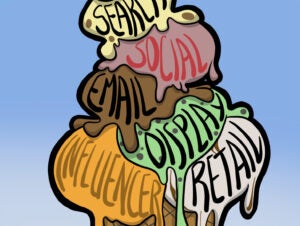
Enjoy this weekly comic from AdExchanger.com that highlights the digital advertising ecosystem …
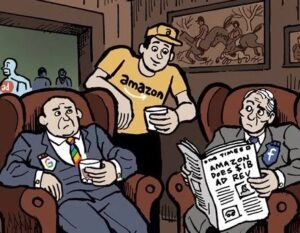
Amazon locked in two more publishers for its AI shopping engine; AI companies are working on web browsers now; and platforms have a hard time telling AI from reality.

Generative AI tech is hurting publisher search traffic, but it’s also helping pubs optimize their ad sales efforts. The head of publisher ad tech solutions for AWS explains how AI is transforming how advertisers value media and the implications for publishers large and small.

YouTube accounts are uploading recent Hollywood movies, racking up views while advertisers (and sometimes creators) remain in the dark. Plus: Could Cloudflare’s AI bot blockers provide a salve for digital media’s traffic declines?

AI Overviews are even dinging Google Search ads’ traffic; WPP downgrades its earnings forecast; and Google’s AI competitors launch their own web browsers.

Have agency holdcos put too many eggs in the AI basket?; Temu has come back to us now at the turn of the tariff tide; and Cloudflare wants to help sites from getting scraped.

Where would the New York Times be without its recipes?; Cannes Lions deals with controversy; and Netflix wants to get ultra-personal with its ads.

Sometimes it takes an outsider to point out the obvious: There was a lot of talk about AI in Cannes, but where is the real ad tech innovation?

Enjoy this weekly comic from AdExchanger.com that highlights the digital advertising ecosystem …

Despite publicly hyping AI, advertisers remain privately skeptical; AI aims to replace agencies, but tech complexity makes them more valuable partners; and Americans aren’t paying for news.

US Bank CMO Michael Lacorazza on the brand’s novel use of AI: Creating avatars of key target customers to capture insights and inform ad creative.

What’s behind the drop in CTV CPMS; the UK CMA sets its antitrust sights on Google Search; and gen AI job cuts decimate another marketing department.

Instead of trying to reduce AI hallucinations, AI startup Springboards is leaning into them, intentionally generating inaccurate, absurd outputs to spark creativity.

After a reenergizing week at the Cannes Lions festival, here are six observations on how our industry is changing to meet its new challenges.

From Cannes Lions, our editorial team discusses the mix of perspectives on the ad industry’s application of AI: the opportunity, the hesitation and the predictions of how it will disrupt marketing.

Charlotte Maines, Head of Fire TV, Alexa, and Tablets at Amazon, joins AdExchanger to discuss how AI is revolutionizing content discovery, advertising, and the connected home. From personalized recommendations to voice-powered engagement, she reveals how Amazon’s ecosystem is driving immersive brand experiences. Discover how AI and cross-device innovation are shaping the future of streaming and […]

AI app marketplace Dappier ensures that chatbot responses using Benzinga’s data link back to the original source, and it also shares revenue from ads placed in these responses.

Expect more ad agency holdco consolidation in the next year; people are starting to talk like ChatGPT; inside the weirdness of matching political funds.

With no-click generative AI search gaining steam, here’s how publishers can thrive when search traffic disappears.
The Amazon DSP vs. The Trade Desk rumor mill; How SharkNinja has stayed sharp; Why nothing beats organic.
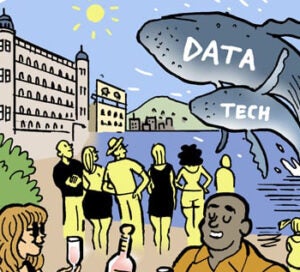
Content aggregators are winning while actual journalism suffers; users say they hate Meta bringing ads to WhatsApp, but Meta’s research says otherwise.

Economic uncertainty provides the perfect scenario for demonstrating marketing’s essential role in driving growth, resilience and adaptability. Here are actionable strategies CMOs can take to thrive amid market volatility.

YouTube finds new ways to crack down in ad-blockers; the Better Business Bureau takes swipes at AI marketing; and Gen Z only trusts digital-native brands.

If journalists don’t decide the best use of AI in journalism, then AI firms will decide for them, says Christian Broughton, CEO of The Independent,

The past two decades have left publishers struggling to effectively compete with “easy buttons” from tech giants and UGC behemoths. The ad tech industry must proactively support publishers with solutions tailored to their needs.

Enjoy this weekly comic from AdExchanger.com that highlights the digital advertising ecosystem …

Meta changes up its strategy for tackling improper AI advertising; ICE is proving bad for business; and agencies are worried about their jobs.
On Thursday, French AI start-up Olyzon (pronounced “all eyes on” – more on that in a bit) announced $5 million in additional seed funding led by US-based venture capital firm Cassius Capital.

Open Intelligence is WPP’s Media’s new solution to help advertisers make sense of their data and use it in more ways, with a longer-term goal of decentralizing data.

Marketing Cloud Next is designed to automate manual tasks and bring enhanced personalization to customers’ communications with brands through the use of agentic AI.

Paramount is merging the ad tech stacks behind Paramount+ and Pluto TV, releasing a new performance product, offering more control over ad placements and introducing dynamic ad insertion in live sports.

The IAB’s Connected Commerce event in New York City this week felt to me like the retail media industry’s first sit-down explanation to a child who is now a “big kid” and must act accordingly.

Meta is simplifying its CAPI setup and teaching its pixel new tricks, including adding an AI-powered feature that automatically pulls in data from an advertiser’s website.


TelevisaUnivision is the latest TV publisher to join the self-serve trend that’s rising in popularity across connected TV advertising. Its streaming inventory is now available to buy through fullthrottle.ai’s self-serve platform. The collaboration includes an ad bidder designed to improve both targeting and measurement.

Law firm Keller Postman is leading mass arbitration suits against Google, seeking advertiser damages for alleged monopoly overpricing. The total available pot is a quarter-trillion dollars.

Opal launched Gem, a new AI solution, to help large brands unify the layers of media and tech within their organizations.