
Here’s today’s AdExchanger.com news round-up… Want it by email? Sign up here.
Shop ’Til You Drop
Instagram will shut down the ability to tag items and direct people to a sale during a livestream, TechCrunch reports.
The feature had been available since 2020 and was part of Meta’s overall push into more direct payments after its third-party pixel and SDK networks were unmoored by Apple ATT. Merchants and brands can also still run storefronts on Instagram or Facebook.
But this isn’t Instagram’s only recent shopping-related pullback.

Last month, Instagram also got rid of the Shop tab entirely. The tab, which sat alongside the home feed and explore section, had been a key component of Instagram’s aggressive move into ecommerce. Its removal eliminates a big click generator.
And as a further hit to creators on the app, the Reels video section has been diminished, too. Rather than having its own bar at the top – one of the first things every user sees upon opening the app – Reels will be moved to the side near the “compose post” button. It’s a big demotion.
But, really, at this point, any publisher or influencer who doesn’t take it with a grain of salt when Meta tells them to go all-in on a new video format probably isn’t cut out for this.
Don’t Rate The Player, Rate The Game
The Super Bowl audience measurement numbers are in – and the measurement providers don’t agree, Ad Age reports.
The disparities are due in part to some companies not accounting for out-of-home viewing, but also as a result of differing methodologies.
Legacy ratings provider Nielsen reported that 113 million people watched at least part of the Super Bowl, including household and out-of-home viewing, while iSpot claimed an average audience of 118.2 million, roughly 4.5% higher than Nielsen.
Some context: iSpot has benefited perhaps more than anyone from broadcasters looking for alternatives to Nielsen. Last year, NBCUniversal chose iSpot as its measurement partner after an extensive search for a not-Nielsen currency. ISpot has consistently clocked superior ratings for other TV tentpole events.
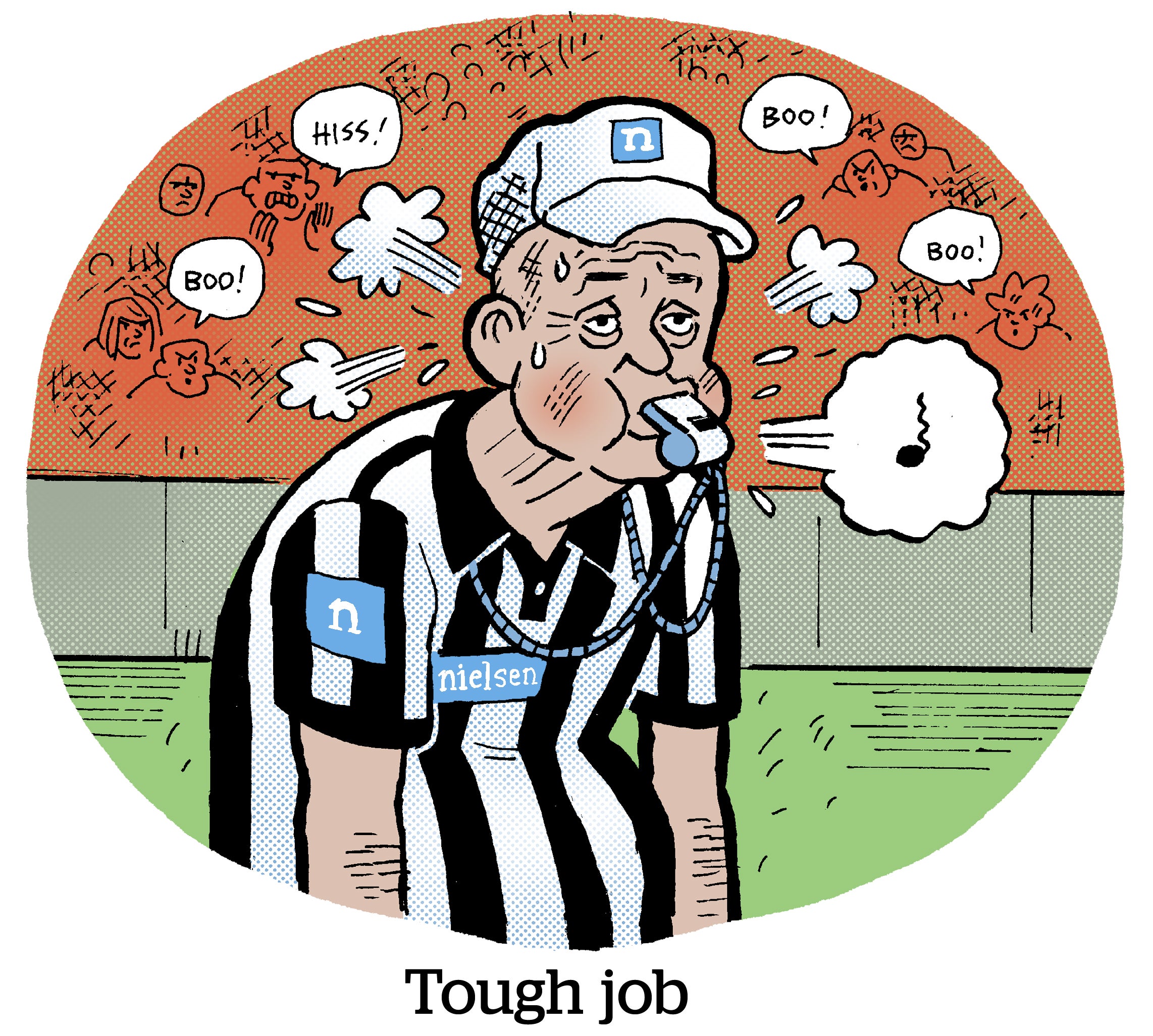
The jury’s still out on which measurement provider’s numbers hold up as the most accurate representation of audience totals. But you can bet that iSpot constantly reminds programmers that it generally shows higher numbers. Nielsen has the less enviable task of pitching its value prop as the tough (but fair?) referee.
On Spec
Criteo is reportedly shopping itself to potential buyers, so Digiday had some fun speculating on the possibility of one potential exit in particular: The Trade Desk.
Criteo and TTD are the two major programmatic demand sources for the open web, not counting the Google DV360 DSP.
The Trade Desk is deeply penetrated with agencies, whereas Criteo doesn’t have as close of ties with agency folks but would bring lots of direct brand and merchant relationships.
They’d also fit nicely together because The Trade Desk does more upper-funnel or premium branding work for Fortune 1,000-type companies, and Criteo is a down-funnel conversion specialist. Peanut butter, meet jelly.
“Criteo would bring enhanced retail media capabilities, a strong European footprint and powerful complementary delivery infrastructure,” muses Ebiquity Group Chief Product Officer Ruben Schreurs (whose view on the matter, full disclosure, might be skewed by a bet with a certain AdExchanger editor).
But it’d be a tough sell. The Trade Desk has only ever acquired one company, Adbrain, a 20-person cross-device graph provider, and that was way back in 2017.
Criteo has some pretty tasty assets, though, including IPONWEB, which, as Digiday points out, “happens to power pretty much every ad tech company in some way, shape or form.” Then again, IPONWEB was founded in Moscow. Although it ditched its Russian operations, The Trade Desk may not be willing to take on the potential risk.
But Wait, There’s More!
The EU is set to investigate Amazon’s $1.7 billion purchase of iRobot, maker of the Roomba. [FT]
Cortex Media: Forecasts for an ad spend “slowcession” and what may be the slowest upfront season event. [MediaPost]
Why content on Snapchat has become less profitable for some news publishers. [Digiday]
Praveen Seshadri: The maze is in the mouse – what ails Google and how it can turn things around. [blog]
You’re Hired!
Aniview hires Greg Smith as general manager for North America. [release]
This post has been updated to clarify that iSpot’s Super Bowl measurement is inclusive of out-of-home viewership.







