

“On TV & Video” is a column written by the sell side of the digital media community.
After this exclusive first look for subscribers, the story by AdExchanger’s Allison Schiff will be published in full on AdExchanger.com.
Jukin Media trawls the social universe for the most shareable video content from everyday people that it can find, from grandmas playing the drums to kids drinking milk in a funny way.
After Jukin acquires the copyright, these clips end up on news shows, lifestyle programs, in ads and on streaming platforms. Jukin has licensed social video snippets to everyone from Google to Holiday Inn Express to the Got Milk campaign and paid out more than $25 million in royalties to video creators since 2010.
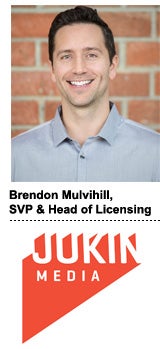
“We’re like Getty Images for user-generated content,” said Brendon Mulvihill, SVP and head of licensing at Jukin, which posts its content on Instagram, Facebook, TikTok, YouTube and Snapchat.
But Jukin also owns and operates four 24-hour streaming channels – The Pet Collective, People Are Awesome, FailArmy and WeatherSpy – which are distributed across ad-supported streaming platforms, including Pluto TV, Peacock, The Roku Channel, Samsung TV Plus, Vizio WatchFree, Xfinity and Xumo.
Its channels generate more than 7 million hours of watch time a month with an average session length of more than 50 minutes.
Mulvihill spoke with AdExchanger.
AdExchanger: What exactly is Jukin Media and what services do you offer?
BRENDON MULVIHILL: We’re a digital media business built on social video and user-generated content. We scour the world for the best UGC and social video we can find on all platforms, we acquire it from the individual folks posting it – as in we get the copyright – and that content then powers two parts of our business.
One is our digital media business through our brand channels which exist on Facebook, Instagram, YouTube, OTT and other digital and linear video streaming platforms.
The other is our licensing business, where we provide clips as raw assets to third parties for their creative work, anything from TV clips shows, like Tosh.0 or Ridiculousness, to daily news shows.

What is Jukin’s distribution strategy?
It’s all about native distribution. All of the content we create is specific to the platform and the audience on that platform. What we put out on TikTok is different from Snapchat and different again from Pluto or Xumo.
What’s an example of that?
Format length. On Facebook, we’re usually talking about a three-minute video, say a compilation of clips. On YouTube, it might be eight to 10 minutes. And for VOD, it could be a 22- to 30-minute format.
How do you monetize your content on ad-supported streaming platforms?
Most of them sell advertising against our content, including YouTube, Facebook, Pluto and other OTT platforms. There are also programmatic ad mechanisms we can tap into. We built our own programmatic ad stack and we monetize through various exchanges and through direct relationships.
We have a direct sales team, we have sponsorship opportunities and we have custom content opportunities with various channels.
How do you work with advertisers?
We provide content to brands and agencies for their creative work, whether that’s a six-second digital spot or a 60-second broadcast spot. They have a vision and a concept that involves authentic user-generated content, and we either pull clips from our extensive library of content or we go out there and find that content for them as a service. We also work with some brands and agencies on an ongoing basis to help fuel their social media.
What value can advertisers get out of user-generated video content?
Over the past five years, we’ve seen a steady increase in advertisers using UGC and social video in their creative as they’ve become more comfortable with it. But then we entered a moment back in March where it became a necessity to use something other than produced content.
People really wanted to know how others were handling what was going on in the world, and the best way to do that is through the content that regular people are shooting every day. That’s the key to storytelling. The word “authenticity” gets overused, but the fact is that you don’t get the same glimpse into people’s lives through the glossy lens of a producer as you do from UGC.
What do you say when an advertiser asks you to find something that’s going to go viral?
User-generated content exists on a spectrum. There’s some viral content that there is no way to manufacture; moments that are captured, passed around and generate a groundswell of views, like Ocean Spray and DoggFace on TikTok.
Not everything can be that. But the reality is that there is a tremendous amount of content shot by everyday people that doesn’t get millions of views, but that might actually be more beneficial and valuable to a brand because of the specific story it’s telling. The concept of a viral moment can be dependent on what a brand is trying to accomplish.
This interview has been edited and condensed.
Follow Allison Schiff (@OSchiffey) and AdExchanger (@adexchanger) on Twitter.








