
PODCAST: AdExchanger Talks
Why Scripps Is All In On Women’s Sports
Scripps CRO Brian Norris explains why the broadcaster is leaning into women’s and local sports – and how that shift is reshaping the media plan.

Scripps CRO Brian Norris explains why the broadcaster is leaning into women’s and local sports – and how that shift is reshaping the media plan.

Brands don’t feel secure enough to lock in huge CTV deals outside of live sports. So what happens to all of that nonsports content spread out across streaming channels?
Nextdoor isn’t ruling out AI data licensing, but it has concerns; NBCU touts sports and streaming as drivers of its record Upfronts; and Scholastic follows kids and parents to YouTube.

AI Overviews makes dodgy product recommendations because it scrapes marketing copy; discrepancies in TV ratings hamper upfronts negotiations; and why mar tech companies are building software fortresses.
TV dealmaking has shifted to “always-on” models; “activation” is a classic bit of ad jargon; ChatGPT is sending more traffic to publisher.
Now that all the dust and confetti has settled after the upfronts, negotiations between marketers, agencies, networks and streamers are only just getting started.

Amid the glitz of TV upfront presentations, advertising executives take the stage to talk about things like new audience targeting capabilities or to ballyhoo new ad measurement partnerships. How, though, are we supposed to focus on brand lift statistics when we can all hear Lady Gaga belting a vocal warmup offstage?

If Netflix’s most recent upfront presentation is any indication, the third time must be the charm.
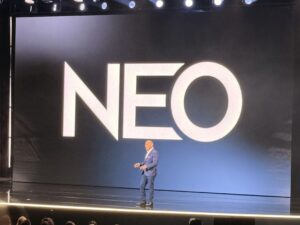
At Warner Bros. Discovery’s upfront presentation in New York City on Wednesday, Ad Sales co-presidents Ryan Gould and Bobby Voltaggio announced the launch of not one but two ad solutions: NEO and DemoDirect.
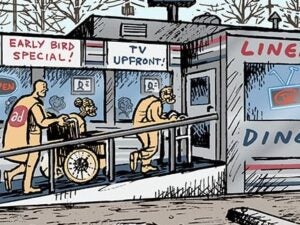
Ever since 2020, TV upfront rates have declined; inconsistent metrics mean inaccurate results; plus, Roblox is touting its strong hold on its viewers’ (er, gamers’) attention.

Contextually relevant pause ads were just one of three new formats that Amazon unveiled in advance of its upfronts presentation on Monday.

Does a connected TV DSP need lower take rates? Inside the battle among DSP’s to take on The Trade Desk’s dominant market position. Plus: an on-the-ground report from the TV Newfronts.
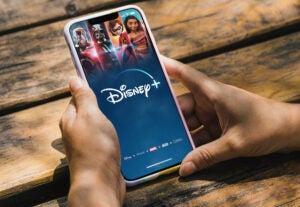
Disney had a good quarter, with revenue on the rise and streaming on the brain. Its DTC division, which houses its streaming business, is also growing and remains profitable.

According to Google, DV360 now reaches 98% of CTV households in the US and represents 5 billion hours of ad-supported watch time per month – roughly 40% more than The Trade Desk and 90% more than Amazon’s DSP.
Emarketer is predicting tariffs could lead to a $2.78 billion to $4 billion decline in linear TV upfront spending, but CTV spending will be flat to up. Emarketer analyst Ross Benes unpacks these findings. Plus: At the Possible conference, optimism reins.

At VideoAmp’s “Vampfront” presentation on Tuesday, I couldn’t help but be reminded of my favorite pop culture vampire stories (in a good way).
Netflix shared no specifics regarding the spend commitments that came out of this year’s upfronts. The TV ad industry wants more.

Upfront negotiations might take longer than normal this year. Plus, Meta is already in hot water with the EU’s new digital regulations.

Amazon is the king of retail media, but others are growing into worthy contenders. Plus: Movies aren’t making many upfront deals.

Here’s today’s AdExchanger.com news round-up… Want it by email? Sign up here. Demolishing Demos TV networks are used to making big advertising pitches about their role in the zeitgeist and their reach among younger audiences. They have splashy celebs, and they’re the ones who know the youngs. Or knew the youngs, rather. In the upfronts this […]

Views of Shorts on CTV devices more than doubled last year, people watch more than 1 billion hours of YouTube daily on their TVs – and other fun facts from YouTube’s Brandcast event.

During Disney’s upfront event on Tuesday, just hours after Amazon’s, the Mouse House couldn’t hold back on pitching its content and advertising prowess. Sports was a big highlight.

Actors, musicians, dancers and comedians vouched for the value of NBCU media in between flashy performances and trailers during the programmer’s TV upfront. But about advertising, NBCU execs barely made a mention.
Will data dazzle media buyers at this year’s TV upfronts? Plus: Why recent changes to Google search results have decimated traffic for some digital publishers – and rewarded others.

Here’s today’s AdExchanger.com news round-up… Want it by email? Sign up here. Bill Rush Congress is scrambling to pass new children’s online privacy laws by Friday. The IAB and other organizations are voicing their opposition. Since late last week, senators have proposed three bills as amendments to the unrelated Federal Aviation Administration (FAA) Reauthorization Act, a […]

NBCUniversal’s upfront pitch centers on advanced audiences, attribution and the fact that it built Peacock with advertising features baked in, rather than retrofitting it to support an AVOD model (unlike newer entrants to the ad-supported streaming competition).

TV buyers predict that streaming publishers will heed their demands for greater flexibility, more programmatic execution and improved measurement during this year’s upfront season.

From a data-fueled TV upfronts to recent changes in streaming pricing, ad load and bundles, the TV industry is making progress under pressure. Plus: Google’s third-party cookieless plan and new AI features.

Streaming is arguably the TV industry’s most powerful growth engine, but it’s still far from a mature business. Which is why programmers took ad tech off the backburner during their upfront presentations this year.

This year, TV upfront spend will likely be softer, and buyers will be slower to make long-term commitments. Consider it a plateau.