
Inside Criteo’s Three-Pronged Strategy For Retail Media Success
Criteo’s Brian Gleason shared how it is working with agencies to capitalize on curation and measurement opportunities in retail media and CTV.

Criteo’s Brian Gleason shared how it is working with agencies to capitalize on curation and measurement opportunities in retail media and CTV.
Chinese advertisers and ecommerce companies have become a force in American shopping. What happens now?

This year, expect ad tech consolidation to center on the biggest growth opportunities in advertising: retail media, connected TV and addressing the gaps in measurement.

The first half of this decade has left publishers reeling from a pandemic jab and an AI uppercut that rearranged our reality and knocked us to our knees. Here’s how pubs and their ad tech partners can punch back in the years ahead.

Lauren Newman, a news publishing and affiliate marketing vet, has high hopes for commerce media to turn things around.

Brick-and-mortar retail is blowing it – and their efforts were on full display at the NRF’s Big Show in New York City last week.

Pinterest’s main focus is making it easier for users to buy through its platform. “We’re all in on shopping,” CRO Bill Watkins told AdExchanger.

2024’s most popular guest columns offer a snapshot of an industry in flux – and one that’s grown cynical due to repeated promises of unrealized change.

The IAB gave us new retail media standards for Christmas. But will the industry actually adopt them? Plus: how AI will be used in advertising in 2025.

Achieving consensus on the definitions for even baseline retail media metrics required a tough 18-month slog. Unfortunately, this was the easy part.

After more than three years as SVP of retail media at Albertsons, Kristi Argyilan is taking a ride over to Uber to lead its advertising business.

The in-game advertising market’s stagnation is both unsurprising and frustrating. The onus is on the gaming industry to make gaming an essential channel for advertisers, rather than a nice-to-have.

What is incrementality testing? “I’ve been doing more interviews with journalists lately and realize I need a better answer to this question,” says Haus Head of Strategy Olivia Kory.

Retail media and tech platforms now represent a return to agency scale dynamics. The proposed Omnicom and IPG merger is the latest example.

Publishers expect the agencies will eliminate tech redundancies as they consolidate, which could compel pubs to shed redundant tech themselves. The merger could also entrench principal-based buying, which may not be a bad thing.

“It’s going to be harder for [indie agencies] to compete,” said Rob Rivenburgh, the CEO of Mars United, who also now leads the Publicis Commerce global group.

Curation is a reaction to programmatic’s worsening queries-per-second problem, says Permutive’s Joe Root. DSPs are biased toward impressions that have an identifier attached, so SSPs are using curated deal IDs as a stand-in for third-party cookies.
Retailers should always have a shopper-first mentality – and sometimes that may mean having to deprioritize their retail media business.

Personalization and customization are great, but when marketers go overboard with targeting, they don’t cast a wide enough net to attract new customers and foster growth, says JP Jansen, SVP of marketing and CMO for North America at Mars Pet Nutrition.

Here are 12 essential tips to help advertisers optimize their retail media investments and thrive in this fierce new arena, based on insights from the ANA’s Retail Media Networks Fair.

Forrester released its first SSP wave since 2014 last week, and there’s a surprise. The research firm ranked Google – whose sell-side ad tech platform is facing federal antitrust charges – as a mere challenger.
Brands are getting back to basics. They’re rethinking their packaging and trying to figure out how they fit into the new world of retail store shelves. And while they are getting more data-driven, the data is not necessarily for advertising.
Walmart’s latest data play: an app for unlocking barricades on store shelves; training generative AI may rely more on scraping big-name sites than previously thought; and tracking the issues that mattered most to Trump and Harris, based on ad spending.

The programmatic open marketplace is designed to sustain the business models of ad tech, agencies and consultancies, rather than serving the interests of advertisers, audiences and media owners. It cannot be fixed. It must be rebuilt.
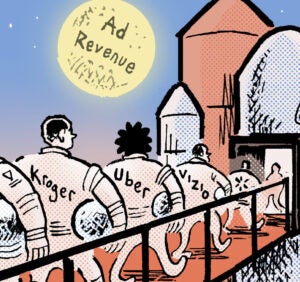
Airbnb gets one step closer to launching a retail media biz; Google shakes up its ad tech executive team; and streamers struggle to balance ad and subscriber revenues.

“I always said, I think we need to change our title, because it’s not the old school shopper marketing,” said Anne Martin, director of shopper marketing for Mondelez International, which owns Oreo, Ritz, and a variety of other snacks.

HUMAN plans to build a deterministic ID from its tracking of more than 20 trillion digital signals per week across 3 billion devices, which will aid attribution for ecommerce.
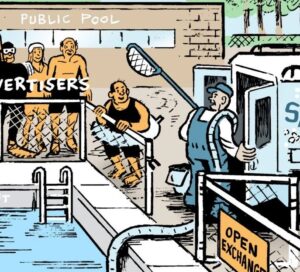
Here’s today’s AdExchanger.com news round-up… Want it by email? Sign up here. The Crusts Are Off The growth of online groceries and retail media puts new pressure on false advertising. It is not a coincidence that false advertising lawsuits have risen sharply. For one thing, claims made on packages on a store shelf or in a […]
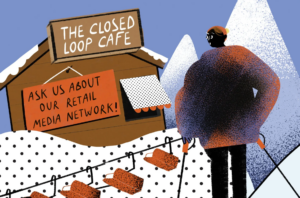
Most retailers are long past withholding their shopper data from programmatic tech. They prefer the low-hanging fruit. But was that a good decision?

Pacvue has promoted COO Rahul Choraria to chief executive.