
TikTok (Still) Wants To Make Social Shopping Happen; Robots Disobeying Rules
TikTok may be doubling down (again) on Shop; bots are scraping content they’re banned from; and Walmart is allegedly selling counterfeit products.
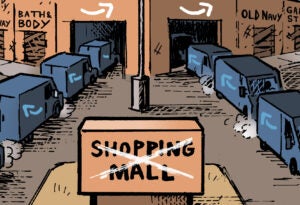
TikTok may be doubling down (again) on Shop; bots are scraping content they’re banned from; and Walmart is allegedly selling counterfeit products.
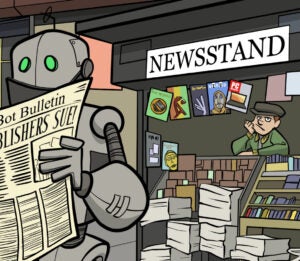
Amazon teases an AI licensing marketplace for publishers; not every country is fine with targeted gambling ads; and YouTube’s ad revenue share isn’t enough for its entrepreneurial creators.

“Performance CTV” oversimplifies how television actually drives value, and the focus on performance all but guarantees that campaign results will be misinterpreted.
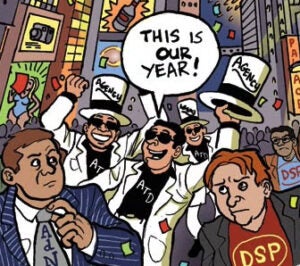
Retailers court luxury goods to compete with Amazon; indie agency Tombras acquires Opinionated; and talk of an AI bubble dominates discussion at Davos.

Fraud is eating into retail profits. A new startup called Pinch AI just launched with $5 million in funding to fight back.
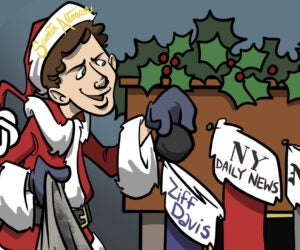
Publishers have been losing 20%, 30% and in some cases even as much as 90% of their traffic and revenue over the past year due to the rise of zero-click AI search.
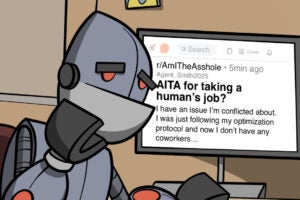
Private equity finds ecommerce publishers aren’t worth what they used to be; Salesforce rethinks its faith in agentic AI; and CBS News accidentally encourages people to pirate its content.

Inside Coca-Cola’s pivot from TV advertising to influencer marketing; Netflix inks another exclusive video podcast deal with iHeartMedia; and Madison & Wall predicts slow US ad spend growth in 2026.
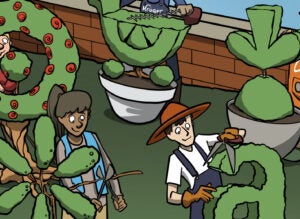
Instacart tried dynamic pricing for groceries; AI companies aim for an open-source agentic AI standard; and Tinder digs into users’ camera rolls for data.

Walmart’s AI shopping deal with ChatGPT might ding its retail media biz; the MRC shares updates on which platforms won and lost accreditation; and kids’ sports streaming is becoming a real media channel.

Principal-based buying isn’t inherently bad. When incentives are aligned, clients get more precision and speed than traditional agency models often allow. The issue isn’t the mechanism; it’s the incentives.

Marketing has long struggled to prove itself as a growth engine. What if agentic AI isn’t the threat many fear but the breakthrough marketing always needed?

Product review site HouseFresh bounced back from losing 91% of its Google traffic last year. Here’s how it’s pivoting in response to stiffer affiliate marketing competition and zero-click AI search.

While Reddit’s ad business is ascendent, it’s still working on a strategy for getting the most out of its generative AI deals.

Hearst has seen improvements in addressability between 30% and 200% since introducing AURA, its AI-powered ad targeting solution, last year.

Transparency has become the currency of credibility in advertising. Larger holding companies and black box AI platforms must recognize that their opaque practices are no longer sustainable.

Proof keeps piling up that gen AI makes marketing creatives lazy; Google stops serving ads to parked domains, prompting questions as to why those domains were ever monetized; and a resurgent David’s Bridal thinks it can reach profitability this year.

Audience suppression may be the missing link between annoying a consumer and building a lasting relationship.

The Google PMax whisperer releases his latest annual report; publishers brace for more disruptions from Google search updates; and stolen content is the least of Wikipedia’s gen AI concerns.
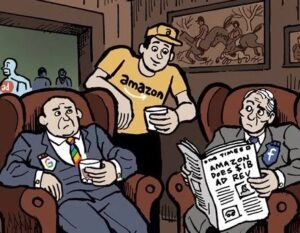
Oracle’s TikTok bid is a warmed-over Project Texas; Amazon’s ads biz has its sights set on Google; and gen AI search is a good traffic source for retailers, but bad for news pubs.
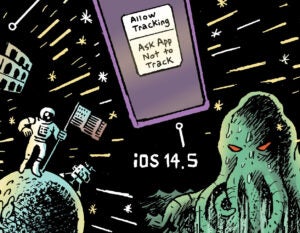
Amazon’s ad tech ambitions are crowding out Amazon specialists; EU regulators have concerns about Apple ATT; and Google says breaking it up could threaten national security.

TVs are officially the most popular device for watching YouTube; Google’s lead generation comes under fire; Temu tests a “half custody” distribution model to counter import tariffs.

Criteo’s Brian Gleason shared how it is working with agencies to capitalize on curation and measurement opportunities in retail media and CTV.

Pinterest’s main focus is making it easier for users to buy through its platform. “We’re all in on shopping,” CRO Bill Watkins told AdExchanger.
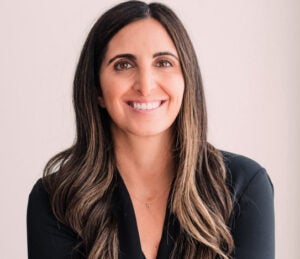
What is incrementality testing? “I’ve been doing more interviews with journalists lately and realize I need a better answer to this question,” says Haus Head of Strategy Olivia Kory.
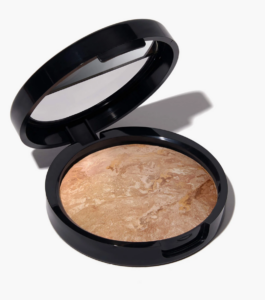
AS Beauty has been using the enterprise version of Shopify Shop Campaigns to acquire new customers and only pay for those that convert. Shop Campaigns went GA for all merchants on Wednesday.

This year, Black Friday stretched on for days and days. And the retail holidays is evolving in other ways, as online shopping takes over.

Black Friday ecommerce continues to surge, mainly on mobile; social platforms pull optimization features for health and beauty brands; and Google’s antitrust lawyers subpoena info about rival AI search startups.
Ad revenue grew 56% YOY even without some of Reddit’s shiny new ad products, including generative AI creative tools and in-comment ads, being fully integrated into its platform.

Despite Chrome’s cookie deprecation turnaround, a comprehensive CAPI strategy remains crucial for brands advertising on Meta, LinkedIn and Snap – yet many advertisers are dragging their feet. Why the reluctance?