

It’s the most wonderful time of the year – and also one of the most expensive from an advertising standpoint.
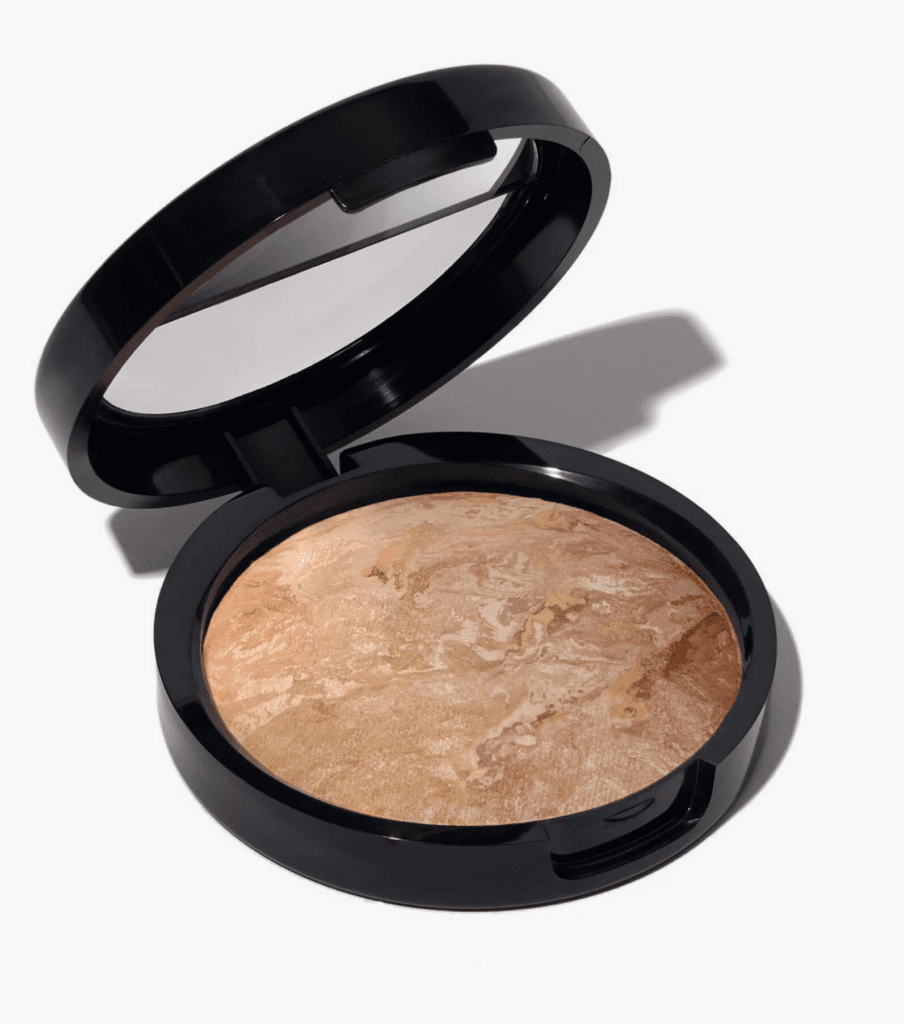
But just because it’s pricey to acquire new customers during the holiday season doesn’t mean brands should pull back, said Scott Kramer, VP of growth at AS Beauty, a holding company for luxury cosmetics and skin care brands, including Laura Geller Beauty, Bliss, Julep Beauty, Cover FX and Mally Beauty.
“Growth is a flywheel, and we need to keep fueling it,” Kramer said. “We can’t only rely on our repeat customers.”
The trick is to strike a delicate three-way balance between engaging loyal customers and reactivating those who haven’t taken action in a while – “file dwellers,” as Kramer calls them – while simultaneously attracting new customers as efficiently as possible.

Efficient CAC is a beautiful thing
But efficiency is about more than just trying to find new customers at the lowest-possible price.
AS Beauty thinks about its customer acquisition costs (CAC) “very strategically,” Kramer said, which means calculating a new customer’s lifetime value (LTV) and retention rate.
Still, he said, it’s difficult to get an accurate picture of overall CAC on many of the platforms where he spends a lot of his ad budgets.
Take Meta, for example. It’s easy to give Meta $1 and say, “Get me some customers.” But it’s usually not clear whether these customers are new or returning, Kramer said, which is really important to know.
The message or offer that Laura Geller Beauty, for instance, shows to a repeat customer with a high LTV is and should be very different from the message it would show someone who’d never purchased one of its products before.
“It’s just hard for these systems to segment out past customers,” Kramer said. “If we want our media spend to be purely focused on new customer acquisition, we have to do a lot of optimizations and make a lot of changes to our campaign structures.”
Talking Shop (Campaigns)
Roughly two years ago, AS Beauty started using what was then a new customer acquisition feature within the Shopify platform called Shop Campaigns that allows merchants to specifically target new customers, including with offers to multiply their Shop Cash balance.
Shop Cash is a rewards program for customers using Shopify’s Shop app, which is a free app for product discovery, making purchases using Shop Pay and tracking packages.
With Shop Campaigns, merchants input their desired return on ad spend, their daily budget and the CAC they’re willing to pay, which remains fixed. Shopify manages all the campaign optimization, including creative, targeting and placements. Ads run in Shopify’s app, and there’s also the option to do campaign extension across Meta and Google.
On Wednesday, Shopify made Shop Campaigns available to all of its merchants in the US and Canada. Before, only Shopify’s larger enterprise customers – brands like AS Beauty’s Laura Geller – had access to the tool.
“We refer to Shop Campaigns as like autopilot for customer acquisition,” said Andrius Baranauskas, Shopify’s director of product and advertising and the product leader in charge of the Shop Campaigns rollout. “You set the price, and off we go.”
For Kramer, whose job involves making constant and minute calibrations across ad platforms, the set-it-and-forget-it aspect is appealing.
If he wants to change the spend levels or the CAC target for one of his brands, he said, he only has to do it once through Shopify rather than having to do it manually for 10 or 20 different campaigns across multiple platforms.
Who cares about clicks?
As long as AS Beauty is efficiently hitting the CAC targets it sets for its brands, it’s willing to spend big on advertising, even during the holidays.
“If we can hit our target, we’ll max it out to the point where we’re getting as much volume as we can,” Kramer said. “We don’t want to leave money on the table or look back later and think, ‘We really should have spent twice as much.’”
But there’s also a built-in safety net with Shop Campaigns, which operates on a cost-per-conversion model, meaning that merchants only pay for new customers that convert.
“Our merchants don’t care about buying clicks or impressions – they want to grow their business,” Baranauskas said. “They care about the number of customers they have and they care about growing their orders, and we had that in mind when we were building this product.”
As of November, AS Beauty has been able to attribute just over $2 million in sales across its portfolio to new customers acquired through Shop Campaigns, which represents a 140% year-over-year growth rate.
“As more people use the Shop app for checkout, they get more access to Shop Cash and inherently look for ways to spend it,” Kramer said. “And because none of this has to live on our site, it’s an easy thing for us to turn on and not have to worry about.”








