Fallout from MediaMath’s bankruptcy is landing squarely on publishers, and they’re fed up.
With MediaMath unable to honor its financial commitments, SSPs – including PubMatic, Magnite and Wunderkind – are moving ahead with plans to recoup revenue paid to publishers from deals conducted on MediaMath’s DSP, AdExchanger confirmed.
However, some SSPs, including GumGum, Colossus SSP, Index Exchange and Google Ad Manager, told AdExchanger they won’t pursue clawbacks, citing potential harms to publishers.

Sequential liability
Because of the real-time nature of programmatic advertising, ad impressions are bought and served before any payment is made by the advertiser to the publisher.
SSPs typically lay out the money for these ad buys in advance, then are reimbursed later on by the DSP that sold the inventory after the DSP is paid by the advertiser or its agency.
But SSPs almost always include sequential liability clauses in their contracts with publishers. These clauses state that the SSP is not responsible for making payments to the publisher if an upstream partner (like a DSP, an agency or the brand itself) does not honor its commitment to pay for ad inventory purchased on the publisher site.
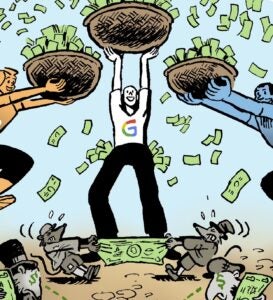
When MediaMath declared bankruptcy, it left several SSPs holding the bag for unfulfilled payments.
In the bankruptcy filing, Magnite and PubMatic were listed as the two entities to which MediaMath owed the most debt. Magnite is owed $12.6 million, and PubMatic is owed $10.5 million.
Claws out
In light of these large debts, it’s not surprising that Magnite and PubMatic would be pursuing clawbacks. Plus, as publicly traded companies, they have to answer to investors regarding lost revenue.
Several other creditors named in the filing, including Sonobi, OpenX and TripleLift, did not respond to requests for comment. Microsoft’s Xandr declined to comment.
“Our agreements generally provide that we are not required to pay publishers when we have not received payment from the DSP purchasing inventory,” a Magnite spokesperson said. “Accordingly, and where applicable, we are withholding or adjusting payments to these publishers until we determine what, if anything, we may recover through the MediaMath bankruptcy proceeding.”
Wunderkind did not respond to a request for comment, and PubMatic declined to confirm anything, but publishers that work with both SSPs confirmed that they are pursuing clawbacks.
One of these sources took issue with how quickly PubMatic decided to go this route.
“[PubMatic was] by far the first mover to signal a clawback, prior to any real effort to make publishers whole,” they said. “[That] left many publishers annoyed, since the SSP is supposed to be managing risk with DSP relationships as part of the partnership.”
Absorbing costs
But not all SSPs are leaving publishers on the hook.
“Our intention is to always be able to pay a publisher partner, and we account for potential outcomes like partner bankruptcy,” said Adam Schenkel, GumGum’s EVP of global platform strategy and operations.
SSPs need publishers to thrive, Schenkel added. And many of the smaller publishers they work with, including those that serve underrepresented communities, can’t easily absorb hits to their ad revenue.
Google will continue to pay publishers “as we always do,” a company spokesperson told AdExchanger.
All accounts will be paid without interruptions, said Direct Digital Holdings’ Colossus SSP in a statement provided to AdExchanger.
And a memo sent to Index Exchange customers on Tuesday said the company will be “paying all affected publishers in full.”
Passing the buck
Given the refusal of some SSPs to take on losses, MediaMath’s bankruptcy is prompting publishers to reconsider their contractual relationships and insulate their businesses from similar incidents.
“Sequential liability should not be part of any agreement between a publisher and an SSP,” said one publishing executive.
However, the same source noted that it’s often not worth fighting these clauses if the lost revenue would be minimal. MediaMath was not a significant source of revenue for any of the publishers interviewed for this story.
Another executive suggested SSPs and publishers could purchase insurance to protect against missed payments by upstream partners, though that would likely be cost-prohibitive for most publishing companies.
Insurance probably isn’t a practical solution for SSPs either, said GumGum’s Schenkel.
“We have looked at trade insurance over the years, but it’s expensive and comes with limitations: at-risk partners are often not covered, caps are put on some partners, and the partners covered in full are the ones that would never go bankrupt, like Google,” he said.
The spirit of partnership
The nuclear option would be to sever ties with SSPs that refuse to absorb lost revenue. But publishers agreed this would not be practical, especially if the SSP provides value in other ways.
SSPs have other options to make publishers whole, such as temporarily adjusting their take rates to offset losses in the spirit of partnership, said one publishing exec.
The most practical solution, according to publishers, is for SSPs to take more responsibility for evaluating DSPs. Publishers must also demand that SSPs provide more transparency into the financial health of DSPs and payment delays.
“We regularly evaluate the financials of our partnerships: who is paying on time, who is requesting to change payment terms and why, and what we’re hearing [from our finance teams] and the industry,” Schenkel said. “With MediaMath, we had favorable terms from the start, and while they wanted to renegotiate for longer payment terms, we never did.”
Ultimately, publishers want more accountability from SSPs.
Going forward, said one publisher, “I would want to know that PubMatic and Magnite’s accounts receivable teams got a lot stricter with their DSPs and are not holding floats like this with others.”