
This Company Says It’s Found A Way To Balance Automation With Human Control
Making Science recently launched an AI tool that helps advertisers optimize their marketing campaigns while maintaining creative control.

Making Science recently launched an AI tool that helps advertisers optimize their marketing campaigns while maintaining creative control.

Critics say the FTC’s deal with OMG/IPG prohibits agency practices that don’t exist. And it distracts from legitimate concerns about brand safety news blocking and principal media.

Häagen-Dazs launched its new “Slow” campaign earlier this year, hoping to strike a chord with a diverse array of consumers across platforms.

On Wednesday, AI-powered audio intelligence platform Sounder launched a new version of its brand suitability and contextual targeting tool for podcasts that can understand the nuances of Spanish-language audio content.

The FTC approved the Omnicom-IPG merger, but with a brand-safety caveat: The agencies cannot create agency-level blocklists of any media that’s political or ideological. With Ad Fontes CEO Vanessa Otero, we unpack the consent order’s ramifications.

Pub tech SaaS startup Swivel wants to make ad ops much less manual and time-consuming with an AI-driven yield optimization tool designed by people who used to build ad servers.

In a world where privacy regulations are tightening and third-party cookies are increasingly unreliable, first-party data has emerged as a cornerstone of modern marketing strategy.

US Bank CMO Michael Lacorazza on the brand’s novel use of AI: Creating avatars of key target customers to capture insights and inform ad creative.

With a growing array of platforms and channels competing for consumer attention, advertisers have been increasingly looking for ways to understand which ads and placements drive engagement and sales – not just engagement and sales that would have happened anyway but true incrementality.

After a reenergizing week at the Cannes Lions festival, here are six observations on how our industry is changing to meet its new challenges.

Fragmentation was on the list of hot topics at Cannes 2025. Allison Schiff, Managing Editor of AdExchanger sat with MiQ’s Tom Richards to learn how MiQ is unifying the complex programmatic landscape for advertisers with MiQ Sigma, a conversational AI agent that transforms hours of manual work into moments of strategic insight. Discover how MiQ […]

From Cannes Lions, our editorial team discusses the mix of perspectives on the ad industry’s application of AI: the opportunity, the hesitation and the predictions of how it will disrupt marketing.

When it comes to the red-hot retail media sector, history doesn’t have to repeat itself. Here’s how to add accountability and transparency to a space where those attributes are sorely lacking.

Last year, Linkedin launched its first beta test into the CTV ad buying space. Now, the product is finally generally available in the US and Canada.

LGBTQ brands seek new revenue streams as many advertisers pull back on Pride month this year due to public backlash and the current administration.

Economic uncertainty provides the perfect scenario for demonstrating marketing’s essential role in driving growth, resilience and adaptability. Here are actionable strategies CMOs can take to thrive amid market volatility.
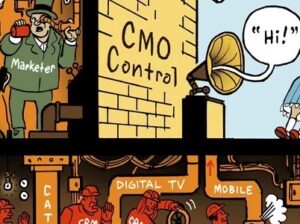
CEOs fear their marketing has lost the plot; WhatsApp introduces ads; Meta’s making its users feel unsafe.

Despite the heightened economic uncertainty this year and the continued slowdown of traditional media’s growth, global advertising revenue is still trending upward, according to Magna’s latest global ad forecast.

If there’s one safe prediction heading into Cannes this year, it’s that AI will be everywhere: in panels, on yachts and splashed across every DOOH ad within a 10-kilometer radius of the Croisette. But behind the noise, something real is happening. We are witnessing a strategic shift. AI is evolving from a shiny object into a performance engine that helps marketers uncover hidden audiences and iterate faster while delivering relevance at scale.

Marketers having to justify their budgets is nothing new, but macroeconomic anxiety is making the stakes feel higher.
For proof of the uncertainty facing marketers in 2025, look no further than the industry’s ping-ponging projections for ad spending. WPP Media’s revised forecast is just the most recent example.

Kepler’s new tool, Kip AIR, was created in response to the rise of AI shoppers. Now, brands need to tailor their marketing not just to humans but to AI.

Spanish airline Iberia has gone fully self-serve by adopting Flight Control, Clinch’s tool that allows advertisers to manage the entirety of their campaigns. Flight Control provides real-time data and improved ad personalization.

Can the IAB Tech Lab’s Trusted Server initiative really help restore publishers’ ownership of monetization and wrestle back control from Big Tech and walled gardens?

Classify is entering a crowded space of AI-powered contextual curation offerings. But the company is already teasing some high-profile integrations thanks to its network of well-connected advisors.

Tony’s Chocolonely is now a national grocery brand. Which means it’s needed to add paid media to its marketing repertoire at last.
The modern marketing landscape is being rewritten in near real time. While economic uncertainty may tempt brands to retreat into the comfort of walled gardens, the truth is more nuanced, especially regarding data and identity solutions.

A peek into fintech app Betterment’s nimble growth marketing strategy amid tariffs turbluence, with CMO Kim Rosenblum.

Former Goodway Group CEO Jay Friedman shares hot takes on everything from curation (“absurd”) to brand safety (“botched”).
Recorded live on the Programmatic IO stage in Las Vegas, the editorial team recaps the trends that dominated our conference: marketers adopting AI and finding truth through measurement.

Ad agency holding companies are among the most adaptable businesses out there. In recent years holdcos like Publicis, WPP and Omnicom-IPG have stretched our notions of what an agency business even is exactly.
Audience preferences are constantly evolving. So why not ads that evolve in real time, too? No, really.

MyFitnessPal has just announced the launch of a data-driven advertising business that draws on its wealth of user-provided meal planning, fitness and nutrition data.


Smartly is acquiring INCRMNTAL, an incrementality measurement startup founded in Tel Aviv in 2019 that focuses on causal lift rather than user-level tracking.

Viant reported its Q4 and full-year 2025 earnings on Wednesday evening and investors appeared pleased.

AI agents are moving fast, but MadConnect says ad tech’s slow, messy plumbing still needs an overhaul before agentic marketing can really work.