
Here’s today’s AdExchanger.com news round-up… Want it by email? Sign up here.
News It Or Lose It
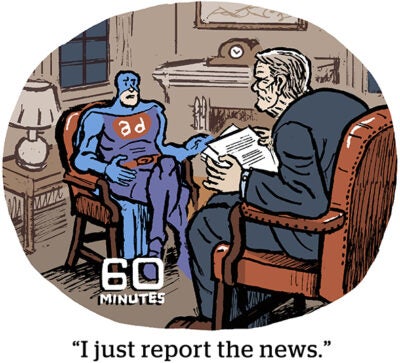
Influencer journalism is a dangerous trend, according to Jessica Lessin, editor-in-chief of The Information.
“Long term,” Lessin writes, “the current obsession with treating journalists like influencers isn’t healthy for journalism.”
For one, so-called “elite reporters” generally don’t abide by the same firewalls or church-and-state rules as traditional newsrooms. And while Substack is great, “we need smart influencer journalists to dissect and analyze and report,” Lessin says.
Measuring the impact of journalistic work needs to go far beyond the number of new newsletter subscribers, and publishers risk pursuing dead-end metrics or a slippery slope to sub-par standards if they focus too much on the numbers.
Although columns serve a purpose – and are eminently monetizable – there is also a cost to turning a sizable chunk of the world’s journalists into columnists or newsletter writers.
Not only do they need to build a dedicated readership, they’re measured – and sometimes compensated – based on engagement, loyalty and open rates. That means they have to spend a lot of time promoting their work on social media and elsewhere. “Most investigative and serious news reporting does not fit that model,” Lessin argues.
And it can all feel a bit icky. A Business Insider memo leaked to the Daily Beast last May revealed that the company scored reporters based on “impact points,” which tallied when influential outside journalists (those with a wide reach on Twitter, radio, TV or in the news generally) cited their work and drove traffic.

We Just Play Enemies On TV
Programmatic joint ventures and sales consortiums tend to crash and burn. Think of trying to herd cats.
But the joint venture route works for legacy TV networks as a way to pool identity-based ad inventory and level up on data-driven advertising.
On Monday, Discovery announced an investment in OpenAP, an addressable TV ad sales consortium backed by Fox, NBCUniversal and ViacomCBS.
“Discovery is excited to take an active role shaping the future of advanced audience buying,” Discovery EVP Jim Keller said in a release.
Keller previously led national ad sales at Hulu, which is another apt example of the joint venture trend. Hulu was itself a longtime joint venture between Disney, Fox, WarnerMedia and NBCU before Disney solidified control in 2019.
There are other examples, too. Ampersand (formerly NCC Media) specializes in selling addressable TV ads based on set-top box data and is co-owned by Comcast, Cox and Charter. And then there’s Blockgraph, a more direct competitor to OpenAP since it, too, uses cloud-based clean room technology to match broadcaster and advertiser first-party data.
Although it’s hard to consider Blockgraph a cutthroat competitor, considering its ownership group – NBCUl, ViacomCBS and Charter – overlaps with half of OpenAP’s co-owners. Frenemies unite.
It Takes Two
Tally up another publisher mega-merger.
Take-Two Interactive, one of the biggest names in video games, has bought Zynga, one of the biggest names in mobile gaming, for $12.7 billion, CNBC reports.
The acquisition gives Take-Two an established vehicle for its high-profile console and PC properties – which include Grand Theft Auto, Red Dead Redemption, XCOM and Civilization – to enter livestreaming and mobile-based platforms.
Zynga is best known as the developer of FarmVille and Words With Friends, early standouts on Facebook and in mobile gaming.
Mobile has rapidly grown to encompass half the entire market value of the video game industry – a sudden change, even in the fast-moving gaming world. And although consoles and their associated games sell for hundreds of dollars as a one-off, most mobile players are monetized on a recurring basis through advertising.
And so video game manufacturers are scrambling to invest in mobile and develop in-app revenue streams.
Take-Two expects mobile to make up more than half of its net bookings in the next fiscal year to account for 12% of total revenue. The company reported $6.1 billion in net bookings in the 12-month period ending Sept. 30.
But Wait, There’s More!
Podcast ad demand is on the up and up, but there’s an awkward dilemma: Podcasting no longer produces hit programs. [Bloomberg]
Do smart supermarkets herald the end of shopping as we know it? [The Guardian]
Mike Shields: Can TikTok crash the TV party? The video app is sneaking into smart TVs and CTV services. [blog]
Microsoft is hit by defections as tech giants staff up metaverse-related engineering roles. [WSJ]
Mozilla partners with The Markup to launch a study into Facebook’s tracking and data collection practices. [blog]
Roku CFO Steve Louden says the company will benefit by continued ad tech consolidation. [MediaPost]
WarnerMedia will work with Comscore, iSpot.tv and VideoAmp to develop potential currencies (i.e., Nielsen alternatives). [B&C]
You’re Hired!
IAPP hires Mark Thompson as director of research and insights, and Katharina Koerner as senior fellow of privacy engineering. [release]
Moloco brings on former MoPub, Twitter execs Kevin Weatherman and Herman Yang to lead cloud enterprise growth. [release]









