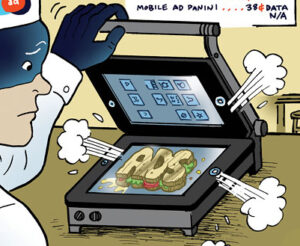
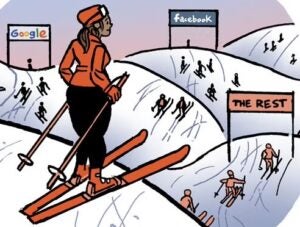
The growth of online media has upended the way media is bought and sold, and the traditional ad agency model is under greater pressure than ever before. On one side of the office are established account planners and media buyers; on the other side sits the trading desk. A group of media agency heads kicked off the third day at the 4A’s Transformation: The Idea Effect conference in New Orleans with a lively debate on the future of the business, including how to reconcile established creative and media businesses with the emerging programmatic one.
Moderating the panel was David Verklin, former CEO of Aegis Media Americas and current operating partner with investment firm Calera Capital. He asked GroupM Global Chairman Irwin Gotlieb how trading desks can be fair to clients.
Gotlieb responded, “Transparency is of the essence. Having said that, it doesn’t say in Genesis that everything we do has to be on a fully disclosed basis to clients. We compete with parties that are equity funded where profitability isn’t an issue. We must develop technology, create structures to exploit it for the benefit of our clients.”

That prompted a playful jab from Matt Seiler, Global CEO of IPG’s Mediabrands.
“I love that when Irwin said ‘transparent,’ he used air quotes,” Seiler said. “You don’t need air quotes. It’s either transparent or it’s not. We are totally transparent, there’s no arbitrage in our business. We often hear clients complain about agencies, ‘They think our money is their money.’ But that’s not what we believe in.”
Jack Klues, who announced his retirement as CEO of Publicis Groupe’s VivaKi back in December, spoke about a need to identify other models of remuneration in order to serve clients better. “The only way you can continue to be a vital business partner to your client is to explore alternative models,” he said. “Technological creativity and media is the future model. I believe that the new agency model must have open architecture and bring in new partners. But no one agency can do it all when it comes to a shift that the industry as a whole must make.”
Alan Cohen, CEO, OMD, US, predicted that over the next five years, the industry could evolve into more of a consulting and/or programmatic buying role, as opposed to the traditional model. “Everyone wants a base level of tonnage to get your business done if you’re a large client,” Cohen said. “If it doesn’t perform, it doesn’t get bought. And it’s as simple as that.”
Seiler expressed frustration with organizational structures that are built around focusing on RFP’s and siloing disciplines. “There are almost no good innovative ideas from organizations this size — how do you bring new ideas to your company?,” he asked. “We are complicated. We have so many P&L’s, and we all end up pretending digital is fully integrated. We have to do better in serving one P&L. Salespeople have to bring in ideas from a client and business building perspective.”
Bill Koenigsberg, president-CEO, Horizon Media, said his agency had made significant investments in tools, tech and talent. “That’s enormously expensive, but that’s what it takes to win today,” he said. “An agency needs a robust set of tools to lead in an age of convergence in media. People want to come to work in an experience, not just an office.”
Koenigsberg lamented the state of entry-level talent and retention, and worries that the future of the business will be hurt by the fact that so many have turned away from the big agency life to work on startups in ad tech or other fields. “The industry is on very thin ice in terms of the new people coming in — 30 to 40% turnover rates every two years are the average for people in the industry,” he said.
He ticked off the assorted reasons: abysmal entry level salaries, long work days, lack of diversity.
“We recruit from communications schools,” Gotlieb said. “To some extent, the way we service a client’s assignment must mirror that client’s own organization. They want a consistent global strategy and have a structure that allows for that. It allows us to do great global work for them. P&L responsibility sits in the local market for some clients. We cannot reshape clients into something they’re not. There is no one-size-fits-all solution to any of this.”
In the end, Verklin wanted to know: Since the media services revolution has ended and the media agency is now, in most cases, leading creative, rather than the other way around, the next generation media agency is about to be born. “Does it look more like AKQA, RG/A and Digitas? Or does it look like Martin, Goodby and BBDO?”
The answer remains to be seen.