
OPINION: Data-Driven Thinking
Apple’s Latest Privacy Move In iOS 27 Hits Different Than ATT
Apple’s latest Safari changes are stirring ATT-era concerns – but this time might be more disruptive for ad tech.

Apple’s latest Safari changes are stirring ATT-era concerns – but this time might be more disruptive for ad tech.
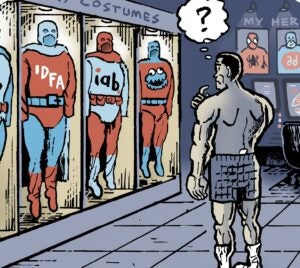
The ad industry added two new alternative IDs this week; Sony and Microsoft file patents that hint at new gaming ad ambitions; and OpenAI says its cookies are for analytics, not targeting.

Email targeting in CTV has a credibility problem as buyers and sellers question whether one-to-one identity even fits a channel built for broader reach.

Every conversation about addressability eventually lands on the same word: fragmentation. But the real symptom of that fragmentation isn’t just operational complexity; it’s also declining match rates. That single number explains why marketers are struggling to make their data work.

ID5 bought TrueData mainly to tackle what ID5 CEO Mathieu Roche calls the “massive fragmentation” of digital identity, which is a problem on the user side and the provider side.

When Google reversed its decision to deprecate third-party cookies, the first word in ID5 CEO Mathieu Roche’s mind was an expletive. But it doesn’t really matter what happens with cookies on Chrome anymore. “Most of the industry has moved past the notion that cookies were good enough to target and measure advertising on the web,” Roche says.

There’s a reason ad tech is no longer in a position to self regulate. Somewhere along the way, companies forgot to respect their consumers and so regulators stepped in.

If an alternative identifier is present in the bidstream, and no one transacts on it, does it make a sound? The availability of alt IDs in open auctions has steadily increased, but demand has yet to catch up with supply.

It’s been more than two months since Google said it would forego third-party cookie deprecation in favor of a user choice mechanism. But it hasn’t shared any details yet.

If Chrome imitates Apple, there may be a de facto deprecation of the third-party cookies, since potentially only a slim percentage of users would consent to tracking. In that case, advertisers would still have to primarily rely on cookie alternatives, including the Privacy Sandbox.

The Chrome Privacy Sandbox team is stuck within a Catch-22. Plus, why haven’t media buyers bought more into alternative currencies?

In today’s newsletter: Google’s cookie deprecation delay hurts Chrome Privacy Sandbox supporters; mall chains go for broke with their DTC efforts; Warner Bros. Discovery launches a first-party data product.
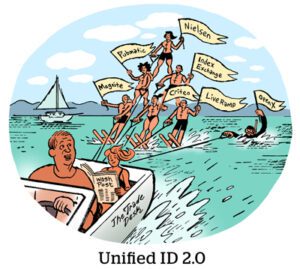
Bonbon gives users rewards – such as discounts or chances to win merchandise – for setting up email registrations with publishers. Now The Trade Desk’s OpenPass will include that same rewards functionality.

Only a small handful of identity solutions will still be standing within the next five years, according to ID5 CEO Mathieu Roche – and he intends ID5 to be one of them.

Out of the 15 features bundled in the Privacy Sandbox, 12 have the potential to stifle ad tech innovation and disrupt advertising use cases. Let’s take a closer look at two of these features: Fenced Frames and IP Protection.
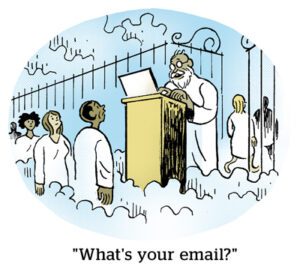
Bonbon, which officially launched on Monday – wants to reward people for their signups. The company, co-founded by two ad tech vets in July 2022, has a cross-site, single-sign-on service for the 30 publishers in its network.

Let’s make 2024 the year of data privacy as a differentiator. But let’s also make it happen way faster than the “year of mobile.” (That took, like, a decade.)

How would you describe the state of privacy in the ad tech industry? “In one word: fragmented,” says Tony Katsur, CEO of the IAB Tech Lab.

ID5 is integrating its ID graph into The Trade Desk’s Identity Alliance. And European publishers partnered with ID5 can apply EUID for logged-in traffic.

Despite their perilous position, some companies still aren’t preparing for the end of third-party cookies. But the lack of testing isn’t because they aren’t concerned.

UK-based publisher LADbible Group is testing post-cookie alternatives and building its contextual targeting capabilities. But the social-first publisher has yet to be convinced that any of these alternatives will be a truly viable replacement for the much-maligned – and yet still widely used – third-party cookie.
The Competition and Transparency in Digital Advertising Act, the American Data Privacy and Protection Act and efforts to change Google’s and Apple’s mobile advertising practices would force companies to adopt new practices and technologies to understand and act on consumer identity. Mathieu Roche, co-founder and CEO at ID5, dives into each initiative and its implications.

The emergence of large-scale data and identity resolution platforms with audience graphs across devices and households is a major step forward to helping reclaim control over reach and frequency. But there’s no single solution to the problem, writes Seraj Bharwani, chief strategy officer at AcuityAds.

When people decline tracking cookies or use already-cookieless browsers, such as Safari and Firefox, it can prevent brands from reaching potential customers who may be interested in seeing their ads. In an effort to tackle this addressability challenge, IBM recently ran a test campaign focused on retargeting B2B prospects across Safari and iOS in partnership with MediaMath and alternative identity provider ID5. IBM and MediaMath are longtime partners, but this test was the first time IBM worked with ID5.

What happens when your main monetization partner starts flagging your content as spam? Freecycle turned to header bidding to reduce its reliance on Google AdSense, but the company’s one-person engineering team had trouble managing the header-bidding system and the constant stream of Prebid updates on top of web development duties. So, after a 70% drop in ad revenue, Freecycle handed its digital ad business over to PubWise’s managed service.

The word “cookieless” crops up in virtually every conversation about the future of online identity. But what exactly do people mean when they say “cookieless”? Although the definition seems simple enough – the absence of cookies – it lacks the nuance to encompass the true complexity of signal loss. It’s also a misnomer.

“The Sell Sider” is a column written by the sell side of the digital media community. Today’s column is written by Bob Walczak, CEO, MadTech Advisors. The future is cookieless. This we all know. But the industry faces a long road ahead before cookieless audience targeting becomes the norm. Sure, context and cohort targeting provide […]

By Mathieu Roche, co-founder and CEO of ID5 This article is sponsored by ID5. Identity is making lots of headlines. What used to be a niche topic is getting a lot of attention now that the means to it are at risk. The good news is that, as the cookie panic subsides, it’s giving way […]

Here’s today’s AdExchanger.com news round-up… Want it by email? Sign up here. Vista Acquires TripleLift Stop me if you heard this one: Vista Equity Partners has acquired a majority stake in an ad tech firm. This time, it’s TripleLift. Read the release. Ronan Shields of Adweek claims Vista invested $1.4 billion, and the deal is expected […]

Proprietary cookieless identifiers – seems like everybody’s got one these days. “It’s obviously reactive to the impending demise of the cookie,” said Mark Connon, general manager of Experian-owned Tapad, which launched a product on Tuesday called Switchboard that aims to make the growing multitude of cookieless IDs interoperable with each other. Switchboard is a module that […]