
Turning The Comment Section Into A Gold Mine
Publisher comment sections remain an untapped source of intent-based data, according to Kelly Andresen, who recently left USA Today to head up comment monetization platform OpenWeb’s direct sales efforts.

Publisher comment sections remain an untapped source of intent-based data, according to Kelly Andresen, who recently left USA Today to head up comment monetization platform OpenWeb’s direct sales efforts.

Newsweek launches an AI-powered homepage to offset traffic losses from AI search; OpenAI pulls an emergency pivot back to focusing on ChatGPT; and copycats dilute the impact of Spotify Wrapped.

You can’t buy your way to the top of a large-language model. At least not yet. But there are things that brands can do to influence how – and if – they get mentioned, says Tracy Morrissey, SVP of media and performance at full-service agency Innocean USA.
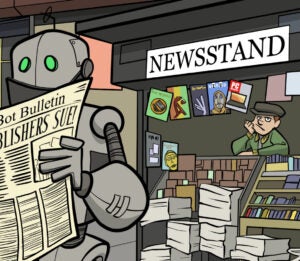
Adobe acquires SEO tech business Semrush; brands want to know what AI search engines think of them; and the LGBTQ community is an under-targeted audience.

There’s no magic bullet for AI search optimization; how kids’ media monetizes outside of YouTube; and hey, whatever happened to the TikTok ban?

Traffic-starved publishers are hopeful that their long-undervalued audience data will fuel advertising’s automated future – if only they can finally wrest control of the industry narrative away from ad tech middlemen.

While Reddit had plenty to crow about on the advertising front, it was less sanguine about the rise of generative AI search, which CEO Steve Huffman said is “not a traffic driver today.”
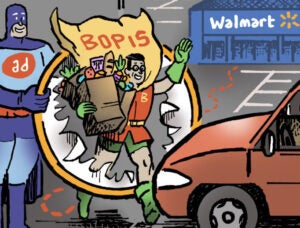
Walmart’s AI shopping deal with ChatGPT might ding its retail media biz; the MRC shares updates on which platforms won and lost accreditation; and kids’ sports streaming is becoming a real media channel.

The fate of the open web will be decided on who controls the data that drives monetization and the AI that determines distribution. Google controls both, and proposed remedies to its ad tech monopoly do not address this imbalance.

The layoffs reflect a strategic decision on People Inc.’s part to free up money to invest in growth areas, according to CEO Neil Vogel’s memo to employees.

Publishers must coalesce to gain a credible bargaining position and stop the bleeding caused by AI search. From there, we must put the processes in place to actually operate a licensing mechanism.

ChatGPT and others continued the fragmentation of the search journey, which today hops between platforms and intents. The funnel no longer exists. Here’s how to pivot your brand’s SEO/GEO strategy.

The fundamental shift from traditional search to AI chatbots has major implications for the entire marketing organization, says Bluefish CEO Alex Sherman. If brands want control over how they appear in AI search results, they must think about the content they feed to large language models.
Spotlight recently partnered with Cheil UK to help the agency give its clients better insights that they can use to stand out in AI search.

Human-made content will remain the most important source of information for consumers online. And our appreciation for human expression will only grow as we experience derivative outputs created by AI models.

Product review site HouseFresh bounced back from losing 91% of its Google traffic last year. Here’s how it’s pivoting in response to stiffer affiliate marketing competition and zero-click AI search.

As the quality of answer engines improves, people will click through to publisher websites less often. The solution isn’t to wage war against AI. It’s time to build a sustainable future for all stakeholders.

While Reddit’s ad business is ascendent, it’s still working on a strategy for getting the most out of its generative AI deals.

From one perspective, publishers are up a creek thanks to the rise of generative AI search; the impact on discoverability and traffic is palpable. But that doesn’t mean publishers can’t adapt and find new ways to make money, says Mediavine CRO Amanda Martin.

Enjoy this weekly comic from AdExchanger.com that highlights the digital advertising ecosystem …

AI app marketplace Dappier ensures that chatbot responses using Benzinga’s data link back to the original source, and it also shares revenue from ads placed in these responses.

With no-click generative AI search gaining steam, here’s how publishers can thrive when search traffic disappears.
Magnite’s SpringServe deal illustrates why SSPs need a video ad server; Google grapples with AI search’s impact on publisher traffic; and Anthropic’s AI assistant is a law enforcement snitch.
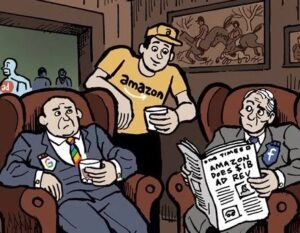
Oracle’s TikTok bid is a warmed-over Project Texas; Amazon’s ads biz has its sights set on Google; and gen AI search is a good traffic source for retailers, but bad for news pubs.

Taz Patel joined Perplexity in December as head of advertising, just a few weeks after the company began experimenting with ads on its platform.

YouTube advertisers prefer long-form videos to Shorts; Microsoft tests an ad-supported version of its Office suite; and Chegg sues Google over lost traffic from gen AI search.

For publishers, digital advertising is a lot like playing craps, says Aditude’s Justin Wohl. It’s all about tuning out the noise while placing safe bets that work for your monetization strategy.
Google’s AI search drops click-through rates for organic search results to 0.4%; Trump’s China tariffs put the squeeze on Temu; and how other brands could pull back ad spend due to tariffs.
The first half of this decade has left publishers reeling from a pandemic jab and an AI uppercut that rearranged our reality and knocked us to our knees. Here’s how pubs and their ad tech partners can punch back in the years ahead.
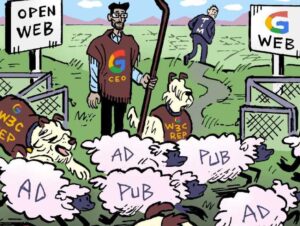
Rival browsers raise an objection to Google being forced to sell Chrome; ad agencies pivot to software and services; and people are turning to chatbots instead of search, with error-filled results.