
Judge Rules That Generative AI Violates Copyright; Can Snapchat Matter To SMBs?
US judge rules generative AI has no fair use claim; Snap sets its sights on SMBs; MMM comes to CTV; and Disney introduces ads in live TV, even for paid users.

US judge rules generative AI has no fair use claim; Snap sets its sights on SMBs; MMM comes to CTV; and Disney introduces ads in live TV, even for paid users.

Reddit’s ambitions to build its own AI-powered on-platform search business suggest even Google’s allies need to find ways to protect themselves from its influence – sometimes by copying its playbook.

AppLovin’s stock popped by more than 28% in after-hour’s trading Wednesday on the news that it plans to offload its entire apps business at a $900 million asking price by next quarter.

TVs are officially the most popular device for watching YouTube; Google’s lead generation comes under fire; Temu tests a “half custody” distribution model to counter import tariffs.

The Google Chrome team is getting closer to deciding on its cookie consent mechanism. And Paramount resolves its four-month standoff with Nielsen, as the mechanics behind currency change forever.

Meta quietly launched a product and loudly updated another. Plus, DeepSee.io’s naming and shaming which sellers it found monetizing stolen content.
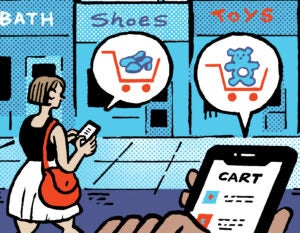
Pinterest reported $1.2 billion in Q4 revenue, an 18% year over year increase – and its first-ever billion-dollar quarter.

Longtime Google exec Stephen Yap on why he left after more than 17 years to become CRO of Perion Network: “There’s a better future out there, one that’s a lot more efficient.”

Google’s AI search drops click-through rates for organic search results to 0.4%; Trump’s China tariffs put the squeeze on Temu; and how other brands could pull back ad spend due to tariffs.

Publicis looks to capitalize on potential fallout from the Omnicom/IPG merger; Google Cloud is seeing an influx of ad sales talent; and Spotify advises investors to be patient with its growing programmatic ads biz.

Coinbase has acquired a blockchain-based advertising and attribution startup. Plus, is brand safety on social media a myth?
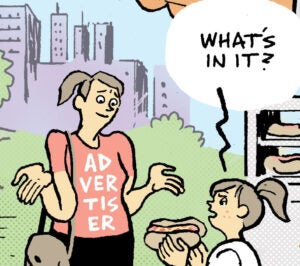
Chinese advertisers and ecommerce companies have become a force in American shopping. What happens now?
Google’s open-source MMM product goes live; Amazon Prime Video’s ad biz turns one; and teens don’t trust Big Tech and have doubts about AI.

Slap on your Ray-Ban smart glasses, ask Meta AI to remind you to post on Threads and then hop into Horizon Worlds. Welcome to the near future, according to Meta.

Meta and Mozilla’s new browser-based attribution system for web ads appears to solve an interesting math problem. But if applied to real-world advertising, it will increase privacy risks for users, writes Raptive’s Don Marti.

The IAB predicts what privacy laws might be passed by the new congress; AI-generated newsletters are competing with local news; and the IAB Tech Lab ramps up production of new OpenRTB specs.
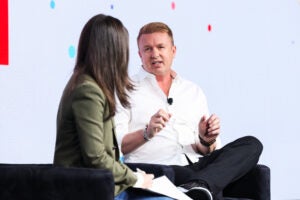
Jeff Green, CEO of The Trade Desk, calls it like he sees it. And he doesn’t see a future for Google monetizing the open internet via its SSP and ad server business.

Sen. Ron Wyden shared his stance on a federal privacy law, consumer data brokers and, for good measure, his thoughts on Meta CEO Mark Zuckerberg cozying up to President Trump. (“I thought it was god awful,” he said.)

At long last, brands on Threads can buy ads. Plus, Meta is also trying to copy-and-paste an alternative to CapCut.

For many advertisers and agencies, returning to TikTok this week felt a bit like remote working through a natural disaster: Business as usual, except not really.

The first half of this decade has left publishers reeling from a pandemic jab and an AI uppercut that rearranged our reality and knocked us to our knees. Here’s how pubs and their ad tech partners can punch back in the years ahead.
TikTok was granted a 75-day stay of execution this week. We discuss what’s next for the social media platform, why it was classified as a threat to national security and how advertisers are responding.
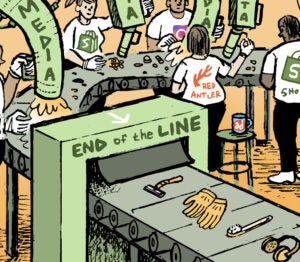
P&G pumps the brakes on paid media and turns to product innovation to drive growth; with TikTok’s fate unclear, Snap and Reddit offer credits for new advertisers; and brands are following news audiences and journalists to Substack.
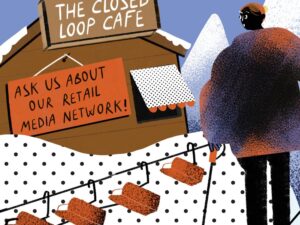
Retail media might not ruin retail, but the strikes are adding up. Plus, TikTok throws its support behind Trump.
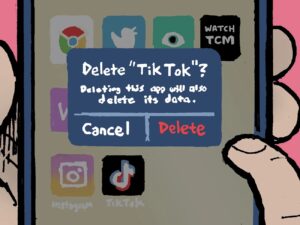
As a brand, the social media platform TikTok has only existed for about seven or eight years. Yet during that short time, it’s completely taken over the minds of users, business owners, advertisers, and, most notably, elected officials. And now, despite generating billions of dollars in annual revenue, it might be on its way out.
AI-generated slop content is growing exponentially online. Plus, publishers and new organizations are strategizing for a post-TikTok future.
M&A started off with a bang in 2025. T-Mobile bought Vistar Media, and The Trade Desk bought Sincera. With a special guest from LUMA Partners, Conor McKenna, we explore the rationale for these ad tech acquisitions.
AI chatbots entice users into subscriptions with free trials; non-pornographic content creators are raking in ad bucks on PornHub; and the US TikTok ban has Americans flocking to other China-based apps.
Nielsen’s Matt Devitt, head of advertisers and agencies, discusses the biggest changes in how advertisers and agencies are buying TV.

Pinterest’s main focus is making it easier for users to buy through its platform. “We’re all in on shopping,” CRO Bill Watkins told AdExchanger.

Most brands and businesses are trying to figure out how to improve their metrics when it comes to AI – and also what those metrics even are.

Minerva wants to turn fragmented customer data into something marketers can use, with AI agents doing the work behind the scenes.

VideoAmp is competing in the measurement space by sharpening its focus on TV audience data, ad performance and, of course, AI. The company is also making strategic hires and promoting from within.


The Prebid Summit in New York City on Tuesday exceeded the event’s reputation for liveliness.

The ad industry has become a community of people who say things like “This is going to sound relatable” and follow it up with a sentence that may as well be Martian to 99% of America.

LG home screen inventory is now available through agentic buying, opening up a premium TV placement to faster, more automated campaign setup.