
Here’s today’s AdExchanger.com news round-up… Want it by email? Sign up here.
Pwnership
Funimation, a Sony-owned online anime show library, has described itself as a way to hold onto harder-to-find content “forever, but there are some restrictions.”
Users are finding out what “some restrictions” means, writes Ars Technica.
In 2021, Sony acquired Crunchyroll, a larger anime streaming library. Now, Sony isn’t interested in carrying competing anime libraries, when it can instead consolidate Funimation users to Crunchyroll.
Except, people purchased and collected content in Funimation libraries, which now go poof.
The situation is a useful reminder of how ownership has changed as possessions shift online.
You don’t own your iTunes music and movies, like you own books or DVDs. You don’t own the games you buy on your Microsoft cloud service. The same is true of things you “buy” on Amazon or Google.

Online customers license the right to see/read/play content on those platforms.
The same issue will raise tougher questions with larger purchases, too. Imagine if someone is delinquent on a Tesla, say, and the company that has the car has the legal right and technical ability to self-return to the dealer.
No Politics At The Table
Meta cemented its politics-lite approach with the announcement that Instagram and Threads, its Twitter clone, will no longer “proactively” recommend political content on the apps, TechCrunch reports.
It’s only a slight surprise, because Threads has been going right for Twitter’s user base, which is heavy on news and politics. Facebook had already turned down political sharing after the 2016 and 2020 elections blew up in their face. Its blog post from Friday is actually titled “Continuing our Approach to Political Content on Instagram and Threads.”
Meta’s about-face on political content is a problem for political fundraisers and advertisers. But it’s a tougher blow to the news industry (which always draws the short straw).
For Google or Facebook, the quadrennial rush of dollars from political advertisers is a pittance compared to the PR, regulatory, legal and user backlash. It’s a no-brainer to cut the whole thing loose.
But companies like The New York Times, Washington Post and many other digital or newspaper publishers really do need that springtide of political advertising and subscription generation.
Victory Royale
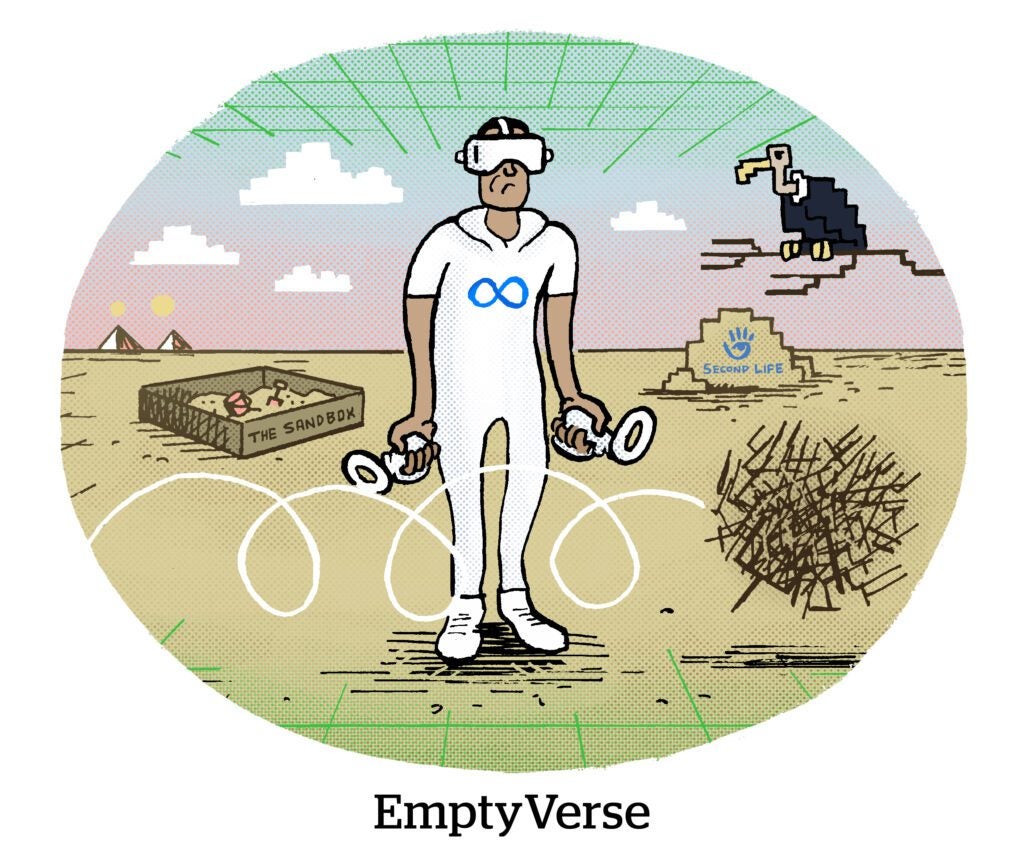
The metaverse is dead. Long live the metaverse.
Facebook (wait, what was it again?) didn’t figure out the metaverse. But Fortnite may have, The Verge reports.
Look no further than Disney’s $1.5 billion investment in Fortnite last week.
Disney launched its own metaverse initiative in 2022, with former CEO Bob Chapek declaring it “the next great storytelling frontier.” But Disney quickly shuttered the division amid mass layoffs. Now, the House of Mouse is outsourcing the task to Fortnite.
Because Fortnite parent Epic Games is winning the metaverse by having a virtual world people actually frequent.
Whereas other metaverse companies tried to build a serious alternative to the workaday internet from scratch, Fortnite built its world on top of what already existed: a somewhat silly online game that attracts millions of players.
That built-in audience is what made Fortnite’s virtual concerts and deals with major brands like Lego possible – not the promise of a new online paradigm.
“All we’re doing really,” says Epic EVP Saxs Persson, “is doubling down on the things that we know are successful today.”
But Wait, There’s More!
Meta and TikTok sue the EU over its methodology for calculating content moderation fees under the Digital Services Act. [Bloomberg]
MLB commissioner pegs 2025 target for a half-league streaming package. [The Athletic]
The goal for this year’s Super Bowl ads: Don’t offend anyone. [WSJ]
Influencers say Slack is now a ‘gold mine’ for brand deals. [Business Insider]
Super Bowl advertisers aim for mainstream appeal with AI-focused ads. [Digiday]








