Traffic! At The Disco
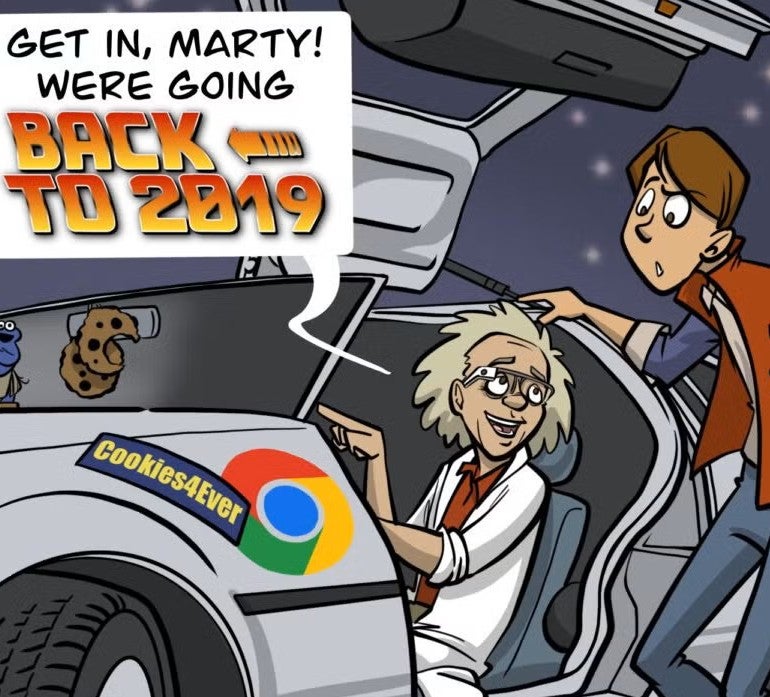
Tired: Google possibly divesting its Chrome browser. Wired: Google launching a new browser entirely.
The Google Chrome team has built a generative AI-infused browser called Disco, The Verge reports. Disco takes a user prompt and opens a series of browser tabs related to that query. It can also build apps to handle certain tasks.
Say you’re planning a trip to Japan. The browser can open tabs with recommendations for places to visit and offer to create an interactive trip-planning app.

Naturally, the Chrome team denies that Disco replaces Chrome in any way. And, according to Chrome team leader Parisa Tabriz, Disco isn’t a general-purpose browser. It’s just an experiment that came out of a company hackathon.
However, Google Search Labs is exploring ways to integrate Disco’s features – including the tab-opening feature, which it calls GenTabs – into general web browsing. Which could be bad news for those who already have trouble keeping their vast quantity of open tabs in check.
But it could be good news for publishers that are losing traffic to generative AI search. Rather than summarizing sites like Google’s AI Overviews, GenTabs may encourage site visits, because it opens a bunch of tabs for each prompt.
When You Wish Upon A Slop
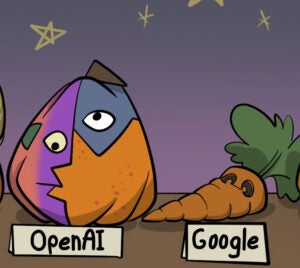
Disney is officially getting into Sora. Meaning the AI app, unfortunately, not the “Kingdom Hearts” protagonist.
On Thursday, Disney and OpenAI announced a three-year licensing agreement that will allow for over 200 Disney-owned characters (not including any actor likenesses or voices) to be featured in the Sora app.
Per the press release, some “fan-inspired Sora short film videos” will even be available to stream on Disney+, fulfilling the promise that CEO Bob Iger recently made to introduce more generative AI content to the platform.
Iger also tells CNBC that Disney’s new OpenAI partnership creates a way for the company to profit from the consumer AI boom, “as opposed to being harmed” by it.
The deal “does not in any way represent a threat to the creators,” he adds. Which may be true, technically speaking, considering many such creators weren’t getting proper royalty payments to begin with.
Disney’s royalty payment issues don’t extend to OpenAI, though, which also receives a $1 billion investment stake from Disney as part of the deal.
Meanwhile, Disney’s copyright infringement lawsuit against Midjourney is still pending, and Disney also just filed a similar cease-and-desist order against Google for appropriating its IP without proper licensing.
AI Min (Not Max) For Search
Agency ad buyers are scrutinizing Google’s AI Max for Search, the company’s AI-based product for search campaigns, which launched in May.
The feedback so far is a resounding “meh,” reports Digiday.
The main rationale for advertisers to adopt AI Max for Search is that it expands the horizon of targetable search terms and audiences. The AI identifies pockets of lucrative intent and interest that human operators might overlook. At least, that’s the idea.
“It’s not delivering what it’s supposed to deliver,” says one practitioner. “That is, long tail queries matched to the right copy and matched to the right landing. I’m not seeing the smartness in the AI as yet.”
Sam Clarke, head of search at Crossmedia, says the firm has “produced good results” on AI Max for Search campaigns, although only when all the AI features that can be toggled off are indeed disabled by the advertiser.
However, AI Max for Search can afford to be Performance “Min,” so to speak, for now at least. That’s because it’s the on-ramp for advertisers to test ads in Google Search AI Overviews and AI Mode – so they’re hooked regardless.
But Wait! There’s More
As of October, Meta has removed or restricted more than 50 accounts belonging to reproductive health organizations and queer community groups. [The Guardian]
Days after Omnicom completed its merger of IPG, the latter’s remaining employees were super bummed to discover that the benefits and perks at their new gig are a major downgrade. [Adweek]
More news publishers are trying out Substack newsletters. [Digiday]
As apparent retaliation against the EU for levying a $140 million fine against X, the Trump administration may revoke the visas of two prominent X critics: former EU commissioner Thierry Breton and Imran Ahmed, CEO of the Center for Countering Digital Hate. [Zeteo]
You’re Hired!
Market research company MarketCast hires Lana Busignani as CEO, Paul Shortley as CRO and former GumGum exec Kerel Cooper as CMO. [release]
Outside Interactive hires Christopher Jerard as chief brand officer and former Roblox VP Claus Moberg as GM for mapping. [release]
Here’s today’s AdExchanger.com news round-up… Want it by email? Sign up here.