

Diageo has an internal mantra: “Responsible media performs.”
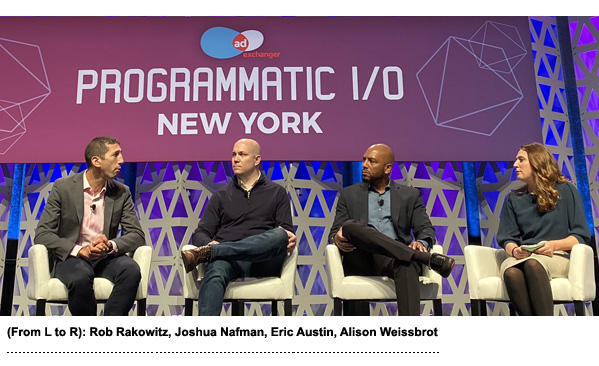
“When was the last time irresponsibly sourced media was good for anybody?” said Joshua Nafman, head of global media buying and operations at Diageo, on stage at AdExchanger’s Programmatic I/O conference in New York on Wednesday.
Yet, ad buyers hunting for scale have spent years avoiding the hard questions.
While it couldn’t be easier to spend an ad budget like a drunken sailor buying rum before shipping out, funneling budget to suitable environments doesn’t happen without effort and self reflection.
“It does take work and it does take picking up stones,” said Rob Rakowitz, initiative lead for the WFA’s Global Alliance for Responsible Media, and former head of global media at Mars.
When media buyers have their feet to the fire on reach and GRPs, YouTube always ends up on the media plan.

“But it can’t simply go that way,” Rakowitz said. “Putting aside the politics issues, antitrust, privacy, we’ve got to start saying that the dollar that’s invested is going toward a creator we actually want to be associated with.”
The Global Alliance for Responsible Media, a consortium of brands, agencies, industry groups and platforms, is designed to facilitate an open conversation about what needs to be done so buyers can keep their ad budgets away from fake, hateful or downright crappy content.
The group held its first meeting at the Cannes Lions festival in June. Membership includes Diageo, Procter & Gamble, Unilever, Mars, Facebook, Google, GroupM, Publicis and Omnicom.
It’s important to have everyone at the table, said Eric Austin, associate director of global brand building and media innovation at P&G, and it’s important to be honest about the challenges.
“We communicate what our values are,” Austin said. “We’re holding the walled gardens accountable for the content they have on their platforms – they feel the pressure externally, and we have a very vocal voice in the marketplace that sets the North Star that’s pushing the platforms in the right direction, to be a source for good.”
At the very least that means Tide ads not showing up next to videos of people eating Tide PODS. But more than that, it’s about prioritizing the customer experience, and ensuring it’s not at risk, Austin said.
Although P&G is careful to balance its media mix so that it’s not too reliant on the walled gardens, including by spending a lot on programmatic media, “we do need them,” Austin said.
“We’ve got some pretty big brands that have some pretty big reach objectives, and it takes a lot to move the needle,” he said. “We need their platforms and they have some unique capabilities we leverage, but it’s the message that we are not solely dependent.”
Although the platforms don’t want to be playgrounds for bad actors, Rakowitz said, the fact is, they often are. They’re finally starting to take some responsibility, but it’s a process.
“Monetization is a right,” Rakowitz said, and like trust, it needs to be earned over time.









