

Direct-to-consumer brands have just as much to learn about retail as traditional retail brands can learn from DTCs.
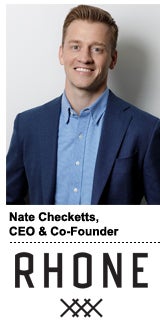
“DTC founders make the mistake of thinking we know everything, just because we were able to scale and build our businesses faster,” said Nate Checketts, CEO and co-founder of Rhone, a men’s sports apparel startup founded in 2014.
“We’re just a segment of the population that was the right age at the right time with access to capital which gave us the opportunity to go into a new category and learn as we grew,” he added. “This generation of entrepreneurs isn’t more brilliant than the last, and ego can be just as much of an impediment as anything else.”
Where the DTC set has excelled, however, is in prioritizing the customer relationship. Selling directly to customers isn’t a new concept, but using data to improve every aspect of the customer experience is where digitally native DTC brands shine.
Beyond its ecommerce site, today Rhone has four retail stores (three in New York City and one in Connecticut, where Checketts is from) and sells athletic wear wholesale and through partnerships with Equinox and Peloton.
AdExchanger caught up with Checketts to talk about why Rhone’s first hire was a performance marketer, the need for “healthy friction” between brand and performance and why selling on Amazon is a necessary evil.

AdExchanger: The first person you hired at Rhone, beyond the founding team, was someone to handle performance marketing. Why?
NATE CHECKETTS: When we started, our primary channel – our only channel, really – was a website, and we had no marketing budget whatsoever. Anytime I would travel somewhere or if I was talking to someone, I’d say, “Hey, check out our website.” I was posting on my own social channels and I’d email my family. I’ve got 60 first cousins.
At one point, I was bragging to someone about the fact that we didn’t spend a dollar on advertising, and the person just said, “That’s dumb.” I realized that if we’re going to grow and scale this channel, the most important person we need is someone who knows how to do that in a big way. We started to invest in performance, not just product, as a core part of the business.
Does everything need to be measurable, and how do you think about performance vs. brand building?
It’s never made sense to me to say, “This is DR over here and that is our brand ad over there.” Why do you have to choose? It’s more powerful to marry beautiful branding together with DR platforms. The good news is that consumers have made this easier. They’re more discerning today than they used to be, and they actually want to know the story behind a brand.
How do you put that blending into practice?
We have a team that runs brand marketing and we have a performance marketing team, and I love it when they fight. But it’s a very healthy friction. The performance team will take a piece of brand creative, chop it up a hundred different ways, test it and see what’s working. The brand team is very involved in that process. There might be one ad that performs really well, for example, but the creative team doesn’t like how it looks and they’ll push the performance team to let them tweak it so that it both looks good and gets results.
This same sort of healthy tension exists in our merchandising and product teams too.
Do you buy programmatically?
We do some programmatic. The challenge is attribution. We always joke that no matter what you do, Facebook will take credit for it.
Retargeting gets an unfair level of credit, which is something that advertisers and retailers are waking up to. But the fact is that retargeting is wildly effective, because it’s all about capturing intent and driving people through the purchase funnel.
Do you work with agencies?
We use agencies to scale, but for anything we view as a long-term core competency we try to have someone in house, even if we also work with an outside agency.
Do you sell on Amazon, and why yes or no?
We do, but in a very limited way, and that’s because even if you don’t sell on Amazon … you do. We work with Amazon to put a few SKUs up so we can control the customer journey and the customer experience, but it’s a very small channel for us.
How do you think about the women in your audience who might be shopping for men?
We get a lot of feedback from women who have purchased something for their significant other, brother, son or dad. We’ll hear, “I love the way he looks now” or “My boyfriend doesn’t smell anymore!” Our clothes come with odor prevention. But, surprisingly, even though women control most of the household spending, only about 20% of our purchases are made by women.
One of the fastest-growing segments for ecommerce is men’s fashion. It’s actually growing faster than women’s fashion. There’s always been the stigma that men don’t like to shop, but the fact is that men do like to shop, they just do it in a different way than women, and ecommerce allows them to lean into shopping behavior.







