
Earlier this year, Yahoo made a big bet on Taboola.
After shutting down its supply-side platform and Gemini, its self-serve marketplace for native and mobile search ads, Yahoo transferred the entirety of that business to content recommendation platform Taboola.
Although industry watchers were caught off guard by Yahoo’s rather abrupt closure of its SSP, it’s not surprising that Taboola was the beneficiary. Taboola gave Yahoo a 25% stake in the company late last year in exchange for becoming its exclusive partner for native ad sales.
What struck some as odd, however, is the length of the deal, which is set to last for 30 years – an awfully long time considering the rapid rate of technological change.
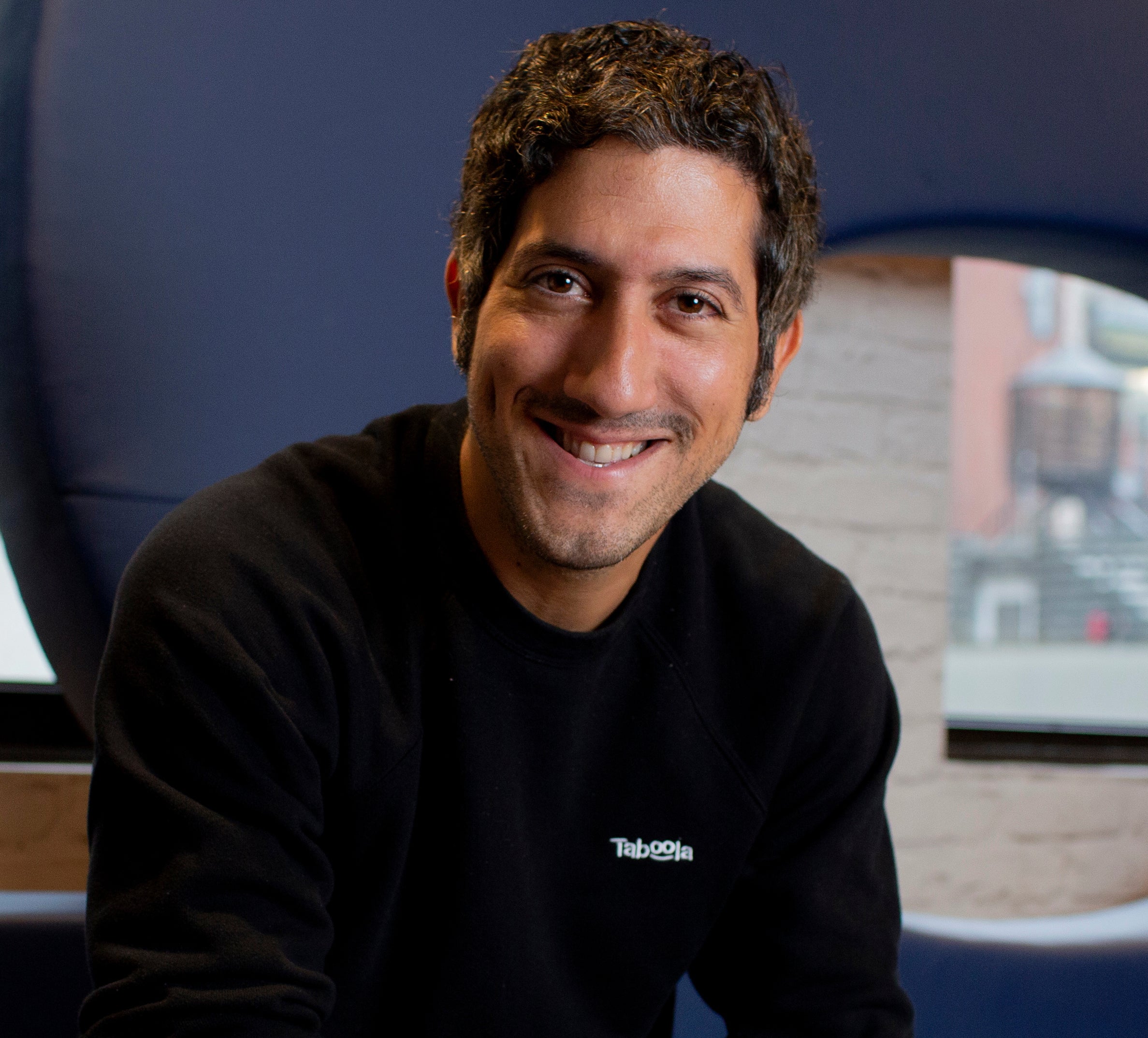
But that’s the point, says Taboola CEO and Founder Adam Singolda, speaking on this week’s episode of AdExchanger Talks.

“This was so strategic for both of us, [and] we wanted to form a relationship that feels like forever,” says Singolda, noting that Yahoo was founded in 1994, which makes a 30-year deal almost like an homage to the next three decades.
But one man’s “native advertising” is another man’s clickbait.
Content recommendation has garnered a reputation for facilitating the distribution of low-quality content, including made-for-advertising websites.
Singolda says Taboola uses a combination of AI and human review to weed out harmful content, including misinformation. It’s got around 100 people dedicated to that task, but it’s not Taboola’s job to decide what should or shouldn’t be considered quality content – because that, he says, is subjective.
“I would argue that it’s very dangerous to start blocking blogs … because we think it’s not high-quality enough,” Singolda says. “If you live in a world where only The New York Times exists, I think that’s a bad future.”
Also in this episode: The confluence of content and commerce, why the Taboola/Outbrain merger didn’t happen, what the name “Taboola” refers to and the company’s origin story after Singolda finished his service with the Israel Defense Forces in 2007.
For more articles featuring Adam Singolda, click here.