YouTube won the race to be the web’s desktop video destination. Then it won the race for smartphone video consumption across its apps. YouTube even, seemingly without trying, became the go-to spot for podcasters to post video episodes.
Not long ago, YouTube entered a new race. Some say it’s to be the big screen on the wall or to win the living room. But what they mean is television.
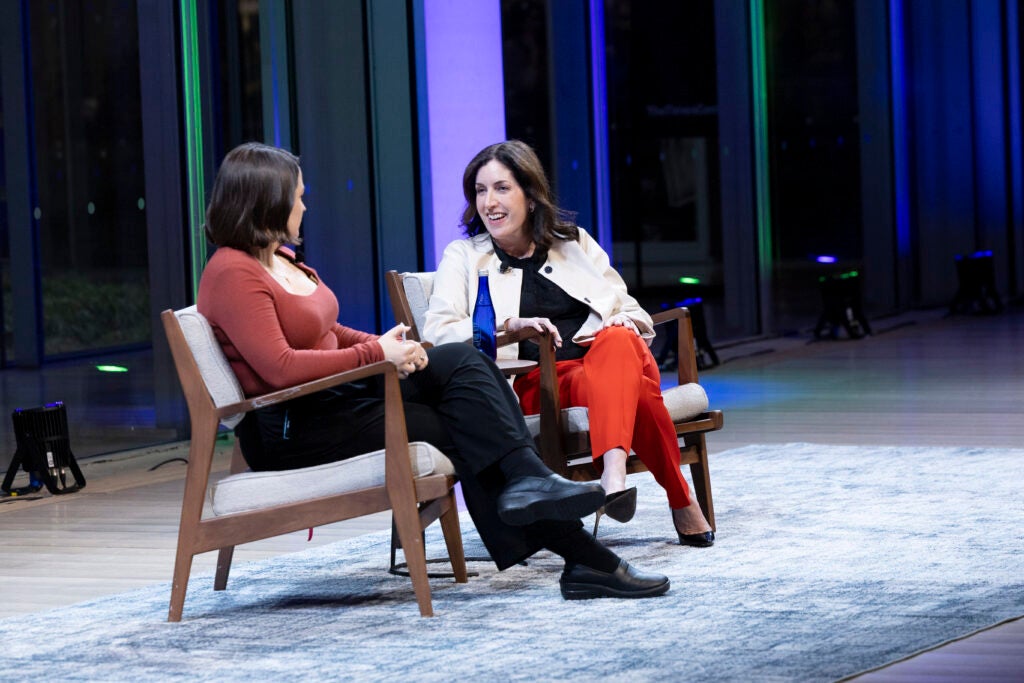
“We are focused on being where the world watches video,” Tara Walpert Levy, YouTube’s VP, Americas, told AdExchanger’s Victoria McNally on stage at the Convergent TV conference in New York City on Thursday. “And to us that now is TV.”
YouTube has grown as a force in people’s living rooms – not just the YouTube smart TV app but the YouTube TV pay-TV package and YouTube Premium subscription.
“But does the video platform still need to prove itself to advertisers at this point?” McNally asked.
“That’s really funny,” Walpert Levy responded, “because this has come up again for the first time in what feels like about a decade.”

Back then, she said, advertisers were figuring out where YouTube fit in the overall media picture and asking baseline questions about how to measure a campaign and value an impression. Now, “most major advertisers are pretty major investors in YouTube, and the ROI is well documented.”
But what advertisers are adjusting to nowadays is “the depth and the ecosystem” of YouTube, she said, compared to typical TV streamers and broadcasters.
One such brand that’s publicly enumerated its new creator-first approach is Unilever. “I can name their name,” Walpert Levy joked, because the new CEO said last year that the company is shifting its marketing approach to make influencer marketing as much as half of its budget this year.
Unilever has hired and trained staff particularly for the strategy, she said. And rather than differences between types of companies or advertiser verticals, the big difference with brands that are most aggressive when it comes to YouTube or creator marketing are those with one or more leaders who “sponsor inside the company itself.”
When creator-led or YouTube campaigns have gone wrong, it tends to be because the marketers are unwilling to give the creator(s) the room to operate and freedom to produce what they think is right for their audience, she said.
And measurement holds other exciting opportunities for YouTube. For instance, YouTube creators are trusted for product reviews in a way that’s “next to impossible to come by these days,” according to Walpert Levy.
For one thing, YouTube is not the “fly in a mobile minute” type content, as she put it, that might blip or even go viral on social feeds but isn’t part of a content library that accrues views for months or years.
She said YouTube was led to create its own shopping ads product primarily because creators needed those services, as they were already organically driving shopper traffic to sites and stores.
“Especially if you think about a competitor that I won’t name, where some of you might buy things because you feel like they just really know you,” Walpert Levy said. She was presumably alluding to Amazon’s growth in streaming TV and video on the back of its shopper attribution data.
“I think measurement is still a little bit wild west across the whole industry,” she said earlier in the talk. But figuring out how to “sew all the pieces together” will preface a big change in TV advertising, “because we know that creator ads outperform traditional ads.”