Getting Lost In The Protocols At NRF’s Big Show 2026
Retail’s Big Show, the annual NRF event in New York City, was big on agentic commerce, unsurprisingly, as well as influencer and creator marketing, which was an eye-opener.
Human-made creative is in again; The Atlantic accuses Google of (another) monopoly; and it turns out brands like to have a say in their sponsorships.
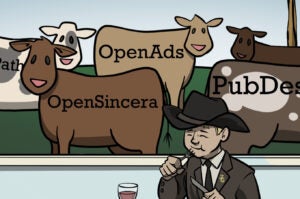
Agentic Alphabet Soup Another day, another attempt at making sense of agentic AI. On Tuesday, the IAB Tech Lab released its Agentic Roadmap, a framework designed to help the industry scale agentic buying and selling without rewiring existing workflows. Tech Lab CEO Anthony Katsur says the new road map will minimize fragmentation and confusion across […]
Inside Coca-Cola’s pivot from TV advertising to influencer marketing; Netflix inks another exclusive video podcast deal with iHeartMedia; and Madison & Wall predicts slow US ad spend growth in 2026.
Almost everything in AI feels big. But are you looking at the next Gangnam Style or the birth of a new industry? Here’s how to assess whether an AI vendor is likely to matter in two years.
With its latest funding, Agentio plans to expand its team and to establish creator marketing as part of every advertiser’s media plan.
Omnicom revamps its revenue reporting; Amazon will now charge for access to its Selling Partner API; and brands seek sponsorship deals with all sorts of social creators.
“You’ve got to really evaluate your [media] mix almost every day, but particularly when you’re on shelves and on Amazon,” AG1 CMO Paulie Dery, who joined in August 2024, told AdExchanger.
The number and scope of U.S. laws that require advertisers to disclose the use of AI are limited. But there are some restrictions and guidelines that advertisers must follow to ensure their compliance.
Marketing has long struggled to prove itself as a growth engine. What if agentic AI isn’t the threat many fear but the breakthrough marketing always needed?
Morgan Stanley downgrades The Trade Desk; Warner Bros. Discovery and Nielsen announce a new deal; and brands aren’t sold on virtual influencers.
Google’s search antitrust trial ends with a whimper; the pitfalls of agency-owned SSPs; Perplexity axes its ads business; and brands are still building big-ticket metaverse experiences.
Straddling the line between content creator and content-conscious mother offers a fresh perspective on the importance of media literacy and advertisers’ role in the online ecosystem.
Agentio’s AI connects advertisers with relevant content creators through an automated bidding process, similar to the programmatic system.
Ride-hailing app company Curb Mobility is bringing TikTok’s user-generated content to Taxi TV, its network of more than 15,000 in-taxi screens across 65 US markets.
Brands spend millions activating around Coachella. Then they spend the next three months trying to figure out if any of it actually worked. It’s a reflection of our industry’s broken approach to measuring media effectiveness.
Marketing zippers is harder than you think; What should the new SEO be called? And TV-era consumer brands are all-in on influencers.
The Trade Desk makes the S&P 500, triggering a stock price rebound; Estée Lauder is the latest big legacy brand to embrace influencers; and CMOs are trying to measure their return on AI, but it’s tricky.
Enjoy this weekly comic from AdExchanger.com that highlights the digital advertising ecosystem …
After a reenergizing week at the Cannes Lions festival, here are six observations on how our industry is changing to meet its new challenges.
Sabrina Sierant joined Mondelez more than 12 years ago, which seems like a prior age in shopping terms. In December 2019, she took on marketing for the US Chips Ahoy business, as Mondelez orchestrated a major rebrand and reinvestment in its cookie brand.
While advertisers’ interest in gaming may be growing, their spending commitments seem stuck on pause, judging by Tuesday’s IAB PlayFronts event.
Does AI kill authenticity? Or is it just another evolution of content creation? And does it even matter? After all, consumers say they care about authenticity, but their actions don’t always match their words.
Meta introduces new ad placements, promo opportunities and AI prompts; an influencer campaign prompts right-wing influencers to oppose RFK Jr.’s soda crackdown; and transcription platform Otter launches an AI assistant.
A class-action lawsuit takes Office Depot to task for deceptive pricing and ads; YouTube is taking over TV, but brands may be missing out; and advertisers weigh in on which marketing trends are worth the hype.
Success with Gen Z isn’t about the stories brands want to tell – it’s about tapping into their stories and aligning with how they live and express themselves. That’s where the PPCCs framework comes in.
Google holds court with bloggers bumped from its search algorithm; a backlash is brewing as the online recommendation engine goes into overdrive; and X pushes conservative politics to accounts with nonpartisan interests.
With the growing number of social media users paying for a premium and often ad-free service, how can marketers engage these audiences?
Ally’s newest Fortnite game, “Tee Time Speedrun,” launched last week to promote its sponsorship of the USGA and LGPA. The game ties into Ally’s goal of reaching gender parity in its sports sponsorships.
In today’s newsletter: Meta’s growing “other” revenue; charting the depths of Reddit and Google’s new partnership; and TikTok’s ecommerce biz doubles down on influencers.