
Don’t Let These Privacy Shifts Blindside You In 2026
What’s one data privacy shift or regulation that will most reshape digital advertising in 2026 – and who will be most unprepared for it?

What’s one data privacy shift or regulation that will most reshape digital advertising in 2026 – and who will be most unprepared for it?

Marketers having to justify their budgets is nothing new, but macroeconomic anxiety is making the stakes feel higher.
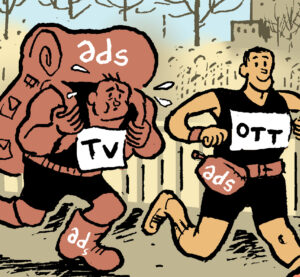
Sports sponsorships can play well for small brands; Perplexity was first to AI search ads, but advertisers waited for Google; and GroupM officially rebrands to WPP Media.

Agency leaders cite inefficient processes as the biggest challenge currently facing their organizations, ahead of all other pain points, according to a recent survey. Clunky planning workflows, scattered data sources, bloated tech stacks and siloed platforms are just a few of the symptoms.

After adopting OpenPath, Freestar pubs now see 3x higher inventory fill rate from The Trade Desk demand and 27% higher programmatic revenue from these buyers.

Basis Technologies introduced Unify, a new feature in its DSP that facilitates data access and campaign planning across a brand’s in-house departments and external teams.

AdExchanger reached out to a number of major DSPs to gauge the current state of adoption of the IAB Tech Lab’s new video ad standard.

DSPs have been slow to adopt the Tech Lab’s new signal for classifying online video, causing confusion about which placement signal should be prioritized.
While there are plenty of reasons for political ad buyers to be cautious about CTV, streaming media has one major selling point: programmatic targeting.

ID bridging isn’t the problem. Buyers are objecting to unexpected, undisclosed manipulation of critical data in bid requests by sellers.

If Chrome imitates Apple, there may be a de facto deprecation of the third-party cookies, since potentially only a slim percentage of users would consent to tracking. In that case, advertisers would still have to primarily rely on cookie alternatives, including the Privacy Sandbox.

For companies testing the Chrome Privacy Sandbox, another delay was starting to feel inevitable, even before Google shifted its deprecation deadline.

We asked the experts what marketers and media buyers should do to prepare for a possible ban of TikTok in the US.

Despite the backlash against MFA websites, there is still no industry standard to define MFA. So the 4A’s is hosting monthly meetings between buyers and sellers to nail down more explicit criteria for what constitutes MFA.

Omnichannel advertising workflow platform Frequence claims it has a new way for audio companies to court advertisers. On Tuesday, Frequence announced an integration with iHeartMedia-owned Triton Digital, a streaming audio and podcast tech company.
Of course, the misappropriation of a publisher’s audience data would be unethical. But this is not what contextual providers do.
Here’s today’s AdExchanger.com news round-up… Want it by email? Sign up here. Snapped For Cash Snap is beta testing an ad revenue-sharing program with creators, Insider reports. Since competing creator programs on social media platforms have been falling flat, Snap’s got a fresh influx of influencer demand on its hands. For example, creators complain that […]

Meta’s wide reach and success around low-funnel objectives can be worth it. CPMs might be high, but if a brand’s cost per order has remained stable, it’s likely a worthwhile investment. For advertisers focused on higher funnel objectives like awareness or reach, however, there are alternatives, writes Amy Rumpler, SVP of paid search and social media at Basis Technologies.

Here’s today’s AdExchanger.com news round-up… Want it by email? Sign up here. AdExchanger’s daily news round-up will return on Monday. Enjoy your holiday, and may all your online orders arrive on time. A Little Bit Lauder Now Estée Lauder wasn’t a first mover on TikTok – but it was a very fast follower. The Estée Lauder […]

The 2022 midterm elections are expected to see a record amount of political ad spend going to streaming, even compared to the 2020 presidential cycle. Almost all marketers love CTV for the granular audience buying it supports, but CTV wouldn’t have the political clout it has today if not for the media’s roots in legacy television.
Ad tech must quit its addiction to user IDs and instead start focusing on how we can innovate in other areas: audience targeting, managing frequency and improving measurement (especially conversion attribution). Meanwhile, contextual and geo-based targeting are a great way to reach an audience and get better than expected ROI on campaigns, writes Ian Trider, VP of RTB platform operations at Basis Technologies.

Ad agencies are understaffed and their clients – small businesses in particular – often don’t have the time or the technical background to sift through reams of campaign data. And so, increasingly, they’re turning to automation to cut down on the more tedious and time-consuming aspects of account management. Tag, an independent agency based in Iowa, uses a suite of automated reporting tools, including from Basis Technologies, to communicate cross-platform campaign metrics to its clients.