
CTV Still Has A Fraud Problem
A lot of F-bombs got dropped on stage at the Coalition for Innovative Media Measurement’s (CIMM) summit in New York City earlier this week. And no, probably not the F-bomb you’re thinking of.

A lot of F-bombs got dropped on stage at the Coalition for Innovative Media Measurement’s (CIMM) summit in New York City earlier this week. And no, probably not the F-bomb you’re thinking of.

WPP shares dipped to a four-year low on after posting its 2024 earnings results. Plus: How brands are courting virality.

Google says it plans to stop restricting fingerprinting because of two shifts in the advertising ecosystem: the rise of connected TV and the rise of privacy-enhancing technologies.

Starting on February 16, Google said it will no longer prohibit fingerprinting for companies that use its advertising products. Oh, how times have changed.

During CES, Comcast debuted a plan to expand its reach among small business and regional advertisers with a new offering called Universal Ads.

2024’s most popular guest columns offer a snapshot of an industry in flux – and one that’s grown cynical due to repeated promises of unrealized change.

As the ad industry awaits Judge Leonie Brinkema’s decision in US v. Google (ad tech edition), get up to speed quick with AdExchanger’s in-depth coverage.

Just three weeks after it began, the Google ad tech antitrust trial in Virginia is over. The court will now take a nearly two-month break before reconvening for closing arguments right before Thanksgiving.

The decision by WFA leadership to succumb to Elon Musk’s pressure is disappointing and dangerous – but it presents an opportunity to rethink our industry’s broken approach to brand safety, writes Arielle Garcia.

It is time to evolve beyond the addiction to addressable targeting and deterministic attribution, driven not by fear and doubt but by a commitment to rediscover how the empirically proven fundamentals of marketing effectiveness can be applied to the digital media era.

Equativ (formerly known as Smart AdServer) announced its acquisition of Sharethrough, an SSP with a specialty in native advertising.
Garcia made waves last year when she publicly resigned her role as UM Worldwide’s chief privacy and responsibility officer.

If you weren’t able to tune in to the FTC’s PrivacyCon event last week – it was a seven-hour affair, after all – then worry not. We gotchoo.

“Standard advertising services” shouldn’t include recording intimate patient-doctor conversations to help drug companies guide doctors on how to push opioids.

From clear-eyed looks at the industry’s shortcomings and conflicts of interest to prognostications that presage the next batch of conference panel talking points, you can count on these astute industry voices to drive the conversation.

How would you describe the state of privacy in the ad tech industry? “In one word: fragmented,” says Tony Katsur, CEO of the IAB Tech Lab.

“It’s an open secret that the industry has challenges, and not just the challenges people talk about publicly,” says Joshua Lowcock, who recently left IPG’s UM for a role at Quad Media.

IPG is floundering. The agency holding company was roughed up in the first two quarters of 2023, and its organic revenue growth declined by 0.4%, with a 1.2% decrease in the US, according to an earnings report on Friday.

Here’s today’s AdExchanger.com news round-up… Want it by email? Sign up here. The Ad-tagonists Joshua Lowcock, a longtime leader at agency UM Worldwide, where he most recently served as global chief media officer, exited on Friday. His departure comes only a few weeks after UM’s chief privacy and responsibility officer, Arielle Garcia, left the agency, […]

When the MRC revoked its seal of approval for Nielsen’s TV ratings in 2021, it spurred a hunt for alternatives. Now, media and tech companies are debating whether MRC accreditation is even necessary.

The widening “trust gap” between consumers and the ad industry is enough to make a chief privacy officer quit. So Arielle Garcia did. She explains why.
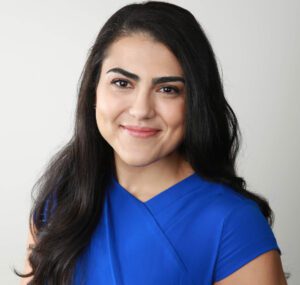
Arielle Garcia, UM’s former chief privacy and responsibility officer, explains why she decided to leave the large agency holding company model – a model that is rife with competing interests and conflicting loyalties, shackled to the industry status quo by “dysfunctional interdependencies.”

There are certain privacy-related phrases companies use when they’re talking about their products that should make your antennae twitch. If you hear them, it’s a signal to ask questions.

Regulators have made it clear that they have their eye on how data flows between first parties and their partners – and that first parties are responsible for what happens when the data they collect is shared with others.

Businesses should be asking themselves whether their data usage is fair beyond simply getting an opt-in, said Arielle Garcia, chief privacy officer of IPG-owned agency UM Worldwide, speaking at AdExchanger’s Industry Preview in New York City on Tuesday.
When it comes to privacy compliance, who you work with matters. Verification startup Neutronian just released a new score for ranking whether a company – and potential partner – has a kosher approach to privacy.