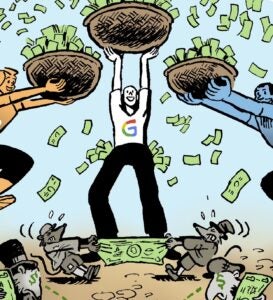
On Wednesday, Omnicom reported its first earnings since closing its $13.5 billion acquisition of IPG, and guess what?
AI will be a key growth driver for the combined company. (Uh, duh.)
Executives framed the deal as a “data-led AI transformation,” highlighting plans to use AI for targeting, measurement and creative testing through Omni, Omnicom’s centralized identity and analytics service.
Omni is now integrated with Acxiom’s Real ID, Flywheel’s Commerce Cloud and Omnicom’s first‑party data, which strengthens Omnicom’s overall position in data, identity and AI, the holdco’s CEO and Chairman John Wren told investors.

L’AI-offs
That shift is most obvious in how campaigns get built.
In the past, said Omnicom CTO Paolo Yuvienco, creative teams would bring two or three concepts to a client. But now, he said, creatives can use AI tools to generate 20 or even 50 ideas.
“They can test them synthetically so we can understand the impact before we spend a single dollar on media,” Yuvienco said.
Investors appear to be on board.
Omnicom reported $5.5 billion in Q4 revenue and $17.5 billion for the full year. Its stock was up around 2.6% in after-hours trading, which also likely had a lot to do with Omnicom announcing that it now expects $1.5 billion in cost savings over the next 30 months as a result of the merger with IPG – double its original target for the deal.
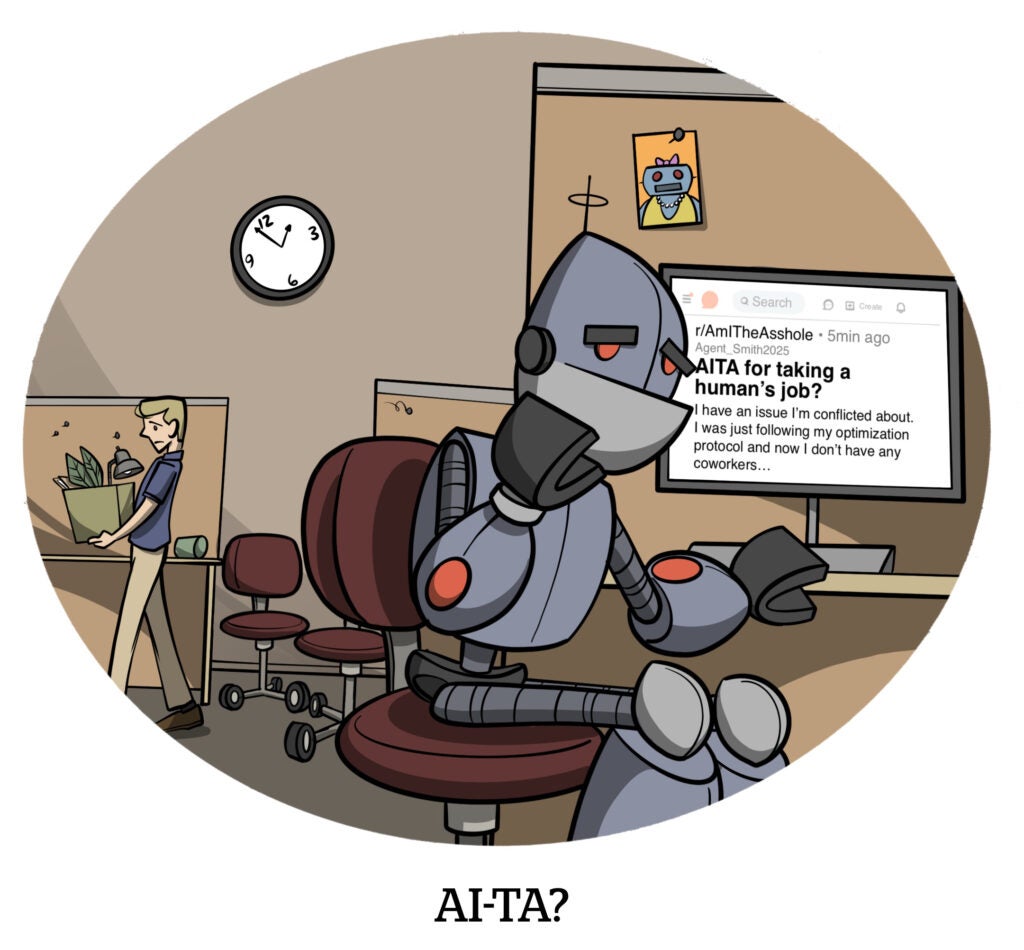
Most of those savings will come from restructuring, including streamlining its regional, country and brand structure, leaning more on outsourcing and offshoring while eliminating duplicative corporate and operational roles, aka layoffs.
IPG has already cut thousands of jobs in the run-up to the merger. Last year alone, IPG reduced its workforce by roughly 3,200 employees as part of a restructuring explicitly tied to the then still-pending Omnicom deal. Omnicom, meanwhile, has said it plans to further eliminate around 4,000 roles as well as fold or combine legacy agency brands as it continues to integrate IPG’s operations.
AI, but show me the money
Against that backdrop, it’s only natural that one analyst asked whether Omnicom still expects clients to reinvest AI‑driven savings into marketing, instead of just spending less with the holding company.
It’s been Omnicom’s position that the former is true.
Wren didn’t walk that back, but he acknowledged that his “position evolves every day, just as generative AI is evolving constantly.”
For now, Omnicom is testing a mix of tools. Some are for clients and some are to help its own people work faster and automate tasks that used to be done manually – changes that could improve margins and, eventually, replace certain roles.
But Yuvienco pushed back on the idea that the only point of AI is to do the same work with fewer people.
“AI and generative AI [are] allowing us to do … more than we’ve ever been able to do,” he said, “and, more importantly, it’s allowing us to do things that we haven’t been able to do in the past.”
And then Wren closed the call with a minor mic drop. Better results, he said, not cheaper execution, will decide how much clients pay.
“If our ideas generate lots of money,” Wren said, “we’ll be expecting to get paid for that.”