Preach To The Converted
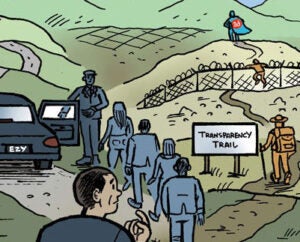
There are dozens if not hundreds of scaled, credible retail media or first-party data players that boast of their closed-loop attribution capabilities and shoppable media.
So why is attribution still an absolute mess?
Purchase attribution partnerships like those between OpenAI and Target, Pinterest and Albertsons and Paypal and Ulta, to name a few, should improve matters. But with these deals, “attribution only gets muddier,” Digiday writes.

Years ago, back when multitouch attribution looked like the future of marketing measurement, the challenge was that many genuine conversions couldn’t be tracked at all – they simply disappeared into the river of time. A marketer had to make do with third-party cookie tracking and metrics like views or clicks because they had little else to work with.
Nowadays, the problem is that transactions are being attributed by too many advertising and data companies. Everyone’s taking credit.
Marketers are drowning in a sea of self-credited conversions and it’s hard to separate genuine business results from inflated metrics. So many different players – from credit card companies, telcos, retailers and mobile apps to hardware manufacturers, web-tracking platforms, data brokers and Big Tech – all want to claim the same conversions as their own.
In the end, everyone’s measuring, but marketers don’t know what really counts.
Now You See Me
Video podcasts are taking off. But ads in video podcasts? Not so much.
Although YouTube is now the most popular podcast platform in the US (having surpassed Spotify in 2024), host-read ads on YouTube are “up to 25% less effective at driving purchases than in audio-only environments,” The Wall Street Journal reports.
While looking at a screen, there are “other options competing for your attention,” so ads need to pull an audience in almost immediately, says Giles Martin, EVP of strategy at podcast advertising agency Oxford Road.
Plus, podcast listeners tend to deliberately select shows to consume, whereas YouTube audiences often find new content via algorithmic recommendations, he added.
But this doesn’t mean that video podcast ads can’t work.
For identity security company 1Password, for example, putting an emphasis on visual storytelling has made “all the difference,” according to CMO Melton Littlepage.
“It does take a moment of time to forge that personal relationship with the host,” Littlepage says, “but when they deliver a message about a sponsored product authentically in the tone and style of the podcast, audiences don’t click off.”
Amateur Hour?
Four years have passed since NCAA student athletes were first allowed to start signing NIL (name, age, likeness) deals with advertisers.
In that short time, the changes to American non-pro sports have been staggering.
For example, this week, Italian sportswear brand Diadora and footwear retailer Marathon Sports announced a $40,000 NIL deal for the first high school boy to break a four-minute mile and the first girl to run a mile in 4:35 – provided they race in Diadora’s Mezzofondo spikes, of course. (Last year, three boys and two girls beat those marks.)
For universities, NIL money, not to mention cash from school rev-share agreements, is now so much a part of team building that coaches construct lineups not unlike pro teams. Rather than target top recruits, colleges invest in positions to fill.
Universities are also expanding to owned brands that can be marketed. This week, Auburn announced “War Eagle Mobile,” a T-Mobile-powered phone plan for students, alumni and fans. And there’s a growing market now, too, in whitelabeling beer lines to specific universities, per an NPR report.
Against that backdrop of aggressive experimentation, the University of Kentucky, a basketball powerhouse, is in an uproar over anonymous reports that its relatively strict NIL ad deal rules are why it’s not been able to sign a single top basketball recruit for 2026.
And all of this has happened in just the past couple of days.
But Wait! There’s More
Disney’s licensing deal with OpenAI’s Sora video-generating app will be paid entirely in stock, not cash. [Bloomberg]
Warner Bros. Discovery formally rejected Paramount’s hostile takeover bid, sticking with Netflix’s original offer. [The Information]
Hackers are threatening to expose the data of PornHub Premium users – including email addresses and videos watched – following a breach of mobile analytics provider Mixpanel. [TechCrunch]
The Oscars, which have aired live on ABC since the 1970s, will move to YouTube starting in 2029. [Variety]
Meanwhile, the video versions of Barstool Sports podcasts “Pardon My Take,” “Spittin’ Chiclets” and “The Ryen Russillo Show” will stream exclusively on Netflix in 2026. [Awful Announcing]
You’re Hired!
Indie media agency Mile Marker hires Neil Smith as EVP of growth and Emilie Vasu as VP of business development. [release]
Native search ad company adMarketplace hires John Nitti as global chief business officer and former Google, Amazon and IAS exec Sam Cox as chief product officer. [release]
Here’s today’s AdExchanger.com news round-up… Want it by email? Sign up here.