Yet Another Battle
The movie “One Battle After Another” is just finishing its opening box office weekend.
And it’s being considered a test case for Warner Bros., which has revamped its marketing department and squeezed out a string of hits. Its playbook relies heavily on quick social media reactions, influencer campaigns and video game activations like Fortnite. Gone are the spray-and-pray TV commercials and out-of-home billboards.

The big question is if this approach will work for an auteur movie with a $70 million marketing budget on top of a $130 million production budget, The New York Times reports.
Director Paul Thomas Anderson’s prior biggest draw was “There Will Be Blood,” which did $76 million worldwide (on a $40 million budget).
But, also, Anderson doesn’t do publicity. And his big-name stars in this film, Leonardo DiCaprio, Sean Penn, Benicio del Toro and Regina Hall, are nonparticipants of social media and other new engagement channels.
The movie also breaks many rules of modern studio filmmaking. It’s almost three hours long and is at heart political, with what the Times refers to as “things to say” about immigration and white supremacy.
“Warners’ battle for the public’s attention is happening as movie marketing is as challenged as ever,” according to the story.
Under A Cloud
One painful reality for the online ad industry is that to ride the generative AI wave, companies must invest massively and house proprietary data with their biggest competitors – Google or Amazon.
For example, The Information reports that Meta signed a licensing deal with Google to use its Gemini AI models for the Meta ad platform. That followed a commitment to spend $10 billion on Google cloud services over the next six years.
Meta will stop using Google’s AI models once its own models are workable, according to The Information.
It is no surprise, nor a coincidence, that ad tech companies like Index Exchange, Magnite and PubMatic see the value of private cloud networks (i.e., their own servers and cloud data hardware setups). In cloud tech parlance, this is the “on-prem” infrastructure choice.
As another example, Walmart notoriously requires its tech vendors not to use Amazon Web Services (AWS) for any work they do on the Walmart account.
Ad tech companies have other rationales for private clouds, like dialing bandwidth up and down more flexibly and cost-effectively than with a public cloud (the term for cloud services like Google Cloud Platform or AWS).
But no business wants to commit a large, fixed percentage of its entire revenue to a rival. Especially when that rival is Google, and it’s already taking a healthy portion of search and ad budgets.
Bot vs. Brand
For better or worse, the bots are launching culture wars.
Remember the recent Cracker Barrel backlash? Well, it didn’t come from comfort food loyalists. Seventy percent of the accounts calling for a boycott used duplicate messages – a telltale sign of bots, Molly Dwyer, director of insights at PeakMetrics, tells The Wall Street Journal.
If you’re wondering why bots are doing this, well, PeakMetrics is, too. They conclude that the most likely explanation is – you guessed it – money.
As bots operators savvy up to new social user behaviors, it’s easier to sustain “‘grassroots-looking’ campaigns around incendiary or divisive issues,” says Emilio Ferrara, computer science and communications professor at the University of Southern California. And it’s now harder to identify bot activity.
For marketers, a new problem is advertising to bots. “If you’re the CMO of the brand, what the hell do you do?” Cyabra CMO Rafi Mendelsohn bemoans to the WSJ.
In the end, the trend should make marketers suspicious of engaging directly with bots, or assuming every complaint is from a real person.
Not that this is a get out of jail free card – human complaints do still matter.
But Wait! There’s More!
Both Nexstar and Sinclair have officially backed down and returned “Jimmy Kimmel Live!” to their affiliate stations on Friday. [NPR]
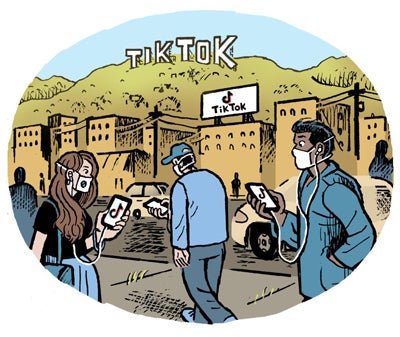
Investors are shocked that the US-China TikTok deal might go for $14 billion, significantly less than the $40 billion the company was once valued at. [Bloomberg]
Facebook and Instagram are officially launching paid, ad-free subscription tiers in the UK. [The Guardian]
Meanwhile, Meta launches yet another platform: Vibes, a shortform AI video app that’s already full of slop. [TechCrunch]
Retail media’s rise leads to turf wars between sales and marketing within the brand org. [Ad Age]
Why has mobile gaming grown so exponentially in the last decade? [Variety]