Welcome back to AdExchanger’s Commerce Media Newsletter.
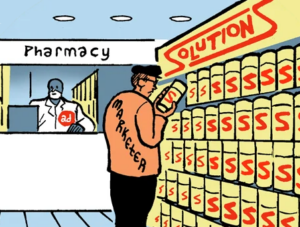
Some sad news to start. Pour one out for the ecommerce brand founders who’ve been putting their marketing budgets on a corporate (or even a personal) credit card. Meta has confirmed rumors that next month it will begin requiring advertisers to pay by invoice, no more credit cards.
The secret cashback and rewards loophole, whereby founder-marketer types earned credit card points on their marketing spend, is collateral damage in Meta’s much larger fight against fraud and misuse of its ad platform. Bad actors prefer the ease and secrecy of a credit card – even sometimes using stolen credit cards for ad platform buys – to being forced into a banking connection.
But back to some happier news. Which is happier news only in the most 2026 sense of the word – as in, the news itself verges on dystopian.
And that’s because Sallie, the major issuer of US education loans, is getting into the retail media network business.

Backpack Media, as its new ad business is called, brings a “unique combination of education and financial signals that allows us to project [students’] future trajectories,” Marco Steinsieck, Sallie’s managing VP and head of advertising, told AdExchanger.
Sallie is, if anything, late to the game here. With Backpack Media, the company will begin serving ads on its sites and properties, including sponsorship pages, “thank you” pages, the homepage and other owned locations. Steinsieck also said Sallie is working with DSP and SSP partners who can bring the omnichannel gamut: audio, CTV, online video, digital out-of-home, etc.
However, the campaigns will be managed service. An advertiser can’t just take a Sallie audience segment and use it to target on The Trade Desk, for instance. “The audience stays within our closed ecosystem,” he said.
Now is also a compelling time for Sallie to enter the RMN market, according to Steinsieck, who previously was head of the Sephora Media Network and was GM of the Staples Media Network before that. So he’s familiar with the market for large-but-mid-level RMNs.
For one thing, he said, the retail media market has focused primarily on the past. What was recently purchased? And what data can be tied to a customer who made the transaction?
“The closed loop is going to be become the lazy loop” in retail media, he said.
Sallie doesn’t do closed-loop transaction attribution, he said, but the idea is to create audiences with insights about future purchases.
Who is about to graduate, and what did they study? Where did they go to school? Who’s likely moving into their first solo apartment in the next year?
These are segmentable audiences based on Sallie’s data set, according to Steinsieck.
Although, not all advertisers will be sanctioned. He said the company has a suppression list for brands in the alcohol category or sports gambling apps, say, which might wish to target 20-something-year-old men.
Still, that leaves plenty of financial services, insurance, retail and CPG businesses that might find useful targeting segments within Sallie’s graph of current and former students.
“It’s probably wise for me not to get too deep into our specific audience data at this moment,” Steinsieck said, when prompted for more detail on how an advertiser might analyze or package audiences within Backpack Media. “But you can imagine the type of data that we have, right?”