AI startups are a bit like podcasts. Which is to say, everyone seems to have one.
So how does an AI startup stand out amid so much noise?
There’s no simple formula for standing out. But, for many founders, the key is a personal connection to the problem their startup aims to solve. That and a belief that humans should stay at the steering wheel, even when the systems run agentically.

AdExchanger spoke with six AI startup founders, whose companies run the gamut from creative optimization to customized brand algorithms, to hear what inspired them to take the leap and what their journey looked like.
Aubriana Lopez – Agnitio.ai 
How does one get into ad tech by accident?
For Aubriana Lopez, the path involved studying sport management in college, accepting what became a disillusioning job at a sports agency, deciding to leave said sports agency, networking like crazy and finally ending up running operations for a small tech startup.
Simple.
Once Lopez entered the tech world, she never left. She spent the next nine years at IP intelligence company Digital Element focused on location-based data and mobile. While there, she helped build Gathr Lab, a location intelligence division designed to reach audiences at scale.
From 2020 until earlier this year, Lopez was the head of data and global product marketing at Samsung Ads, which is where she was when an old colleague, Eric Shaffer, reached out and asked if she wanted to join the board of 4-eyes.ai (now Delivr.ai), a new AI data platform.
Shaffer sold the company to Delivr earlier this year. But he and Lopez, along with engineer Sagiv Ben Yakov, decided to found a new venture together, which they named Agnitio, to address one of the biggest problems they saw in advertising: fragmentation.
Agnitio is an agentic AI platform that unifies the “disparate tools and platforms” marketers use by integrating them with its own APIs and agents. In addition to automating the entire ad journey, from audience curation to media allocation to measurement, the platform also consolidates all of a brand’s data in one place, Lopez said.
The platform is LLM-agnostic, she said, and uses a constantly evolving mix of foundational models, domain-specific models and proprietary agent frameworks.
In the past, it could take marketers weeks or even months to launch a new campaign or get an insights report.
But “this should not be the case,” Lopez said, adding that marketers today should “have the ability to make faster choices” based on their data thanks to advances in AI and machine learning.
The purpose of AI is not to step on anyone’s toes, Lopez said, but rather to help solve a human problem. In addition to reducing the amount of time humans spend on manual tasks and staring at screens, automation allows advertisers to “garner key insights” before they’ve even launched a campaign. She hopes those insights become “talking points” for advertisers to connect directly with customers.
“I want to give people a purpose,” she said, “and I don’t think that anybody’s purpose was to be brick layers or paper pushers. We really were meant to be creative and strategists, and we’re supposed to connect.”
Ali Manning – Chalice
Like many great ideas, Chalice was born out of frustration with Google.
Okay, that might be a slight exaggeration. But only sort of.
During her time from 2008 to 2016 running Google’s strategy and operations team, Ali Manning, now co-founder and COO of custom algorithms startup Chalice, says Google’s message to advertisers was pretty much “No, we’re not going to customize anything for you.”
Not a very satisfying answer.
A brand’s first-party data tends to give much better insights into future business outcomes than the data stored by a third-party platform, said Manning.
After leaving Google, Manning spent two years working on global strategy and operations at Snap and bringing new products to market – which was helpful experience for launching with her own product.
She and her co-founder Adam Heimlich, who was working at an ad agency at the time, believed that with the right algorithm, a company could “really deliver brands what they wanted,” said Manning. The two brought their shared insights together to found Chalice in 2020.
Chalice deploys custom AI models into an advertiser’s media buy to predict the value of a given impression.
Without custom algorithms, brands are “beholden to the platforms,” said Manning. For instance, Claritin, one of Chalice’s early clients, could access third-party data and tap into predetermined audiences of people who suffer from allergies. But Chalice’s model is able to predict who is most likely to be a Claritin shopper, and when their allergy symptoms are likely to peak based on past user data.
By processing all of an advertiser’s first- and third-party data and running it through over 20 homegrown models, Chalice can produce what Manning referred to as a “kind of uber-model” that predicts everything from the price of a given impression to available inventory.
Five years in, Chalice now works across multiple DSPs and social platforms and also has direct integrations into publishers.
Unlike many so-called AI startups out there, Chalice has been AI native since its founding, Manning said, “before AI was a huge global trend.” And, she added, only roughly 2% of venture funding goes to female founders, making Chalice a statistical anomaly in more ways than one.
The company now has two years of profitability under its belt.
Maybe more startups should start drinking whatever Kool-Aid is in that chalice.
Kevin Wassong – mktg.ai
Twenty-five years ago, Kevin Wassong came up with an idea to reduce fragmentation in marketing and pitched it to the board of WPP.
WPP passed on the idea at the time, but Wassong’s vision – marketing teams that are constantly evolving by tracking patterns from their past campaigns and performance – never lost its relevance. In 2023, he created mktg.ai, a more technically advanced version of the pitch he gave two decades prior.
Mktg.ai aggregates all of a marketer’s data into a performance dashboard, where they can sort assets by campaign, format or platform for easy comparisons. The AI tools color code each asset in shades of green, yellow and red according to how successful they were based on attributes like cost and click-through rate.
According to Wassong, the advertising industry “has become myopically focused on impressions” rather than what makes the impression work: the creative.
Seventy percent of an ad’s success comes from the creative, he said, but the industry has “created a sea of crap,” not helped by AI tools that don’t always adhere to brand guidelines.
The mktg.ai platform gathers data from relevant marketing channels and DSPs via APIs and normalizes it so marketers aren’t dealing with inconsistent performance metrics across channels. It also sends AI-generated alerts with real-time updates on which ads are and aren’t working, including clickthrough and conversation rates.
But human beings are still making the final decisions on what ads to run and how to reallocate spending if needed. “We’re not disintermediating the marketing ecosystem,” said Wassong. There are still “hands on keyboards,” he said, but now they have access to more immediate insights.
What mktg.ai doesn’t apparently have access to – like many other tech companies these days – are vowels. But Wassong insists removing the vowels from “mktg” wasn’t his choice.
“I was in the queue to buy marketing.ai spelled out,” he said, but someone else snatched up the domain name before he could.
“I’m a fan of vowels,” Wassong said. He simply “couldn’t afford” them – a very Wheel of Fortune-esque predicament.
Lindsay Hong – SmartAssets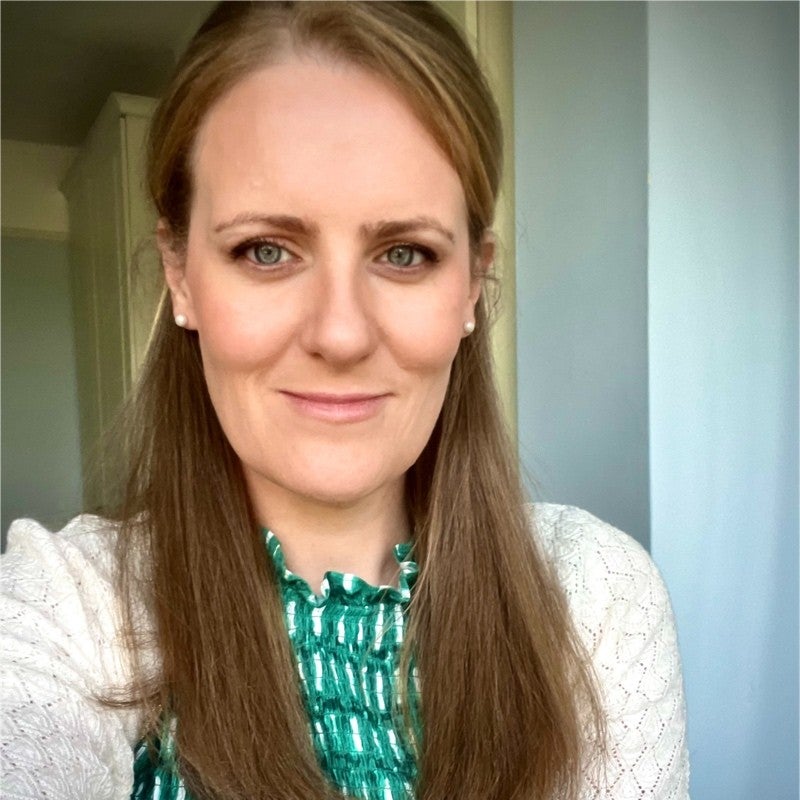
Lindsay Hong thinks of herself as a translator at heart.
Before co-founding creative effectiveness platform SmartAssets in 2023, she spent eight years at multilingual content agency Locaria (which Stagwell acquired in 2017), which helps brands understand how ad copy choices impact customer engagement.
Founding SmartAssets felt like a “natural evolution” – applying the same analytical lens to ad creative that she once used for language. Her co-founders, Eric Walzthöny Kreutzberg and Vitaly Boitelet, also came from Locaria, on data science and product, respectively.
(If you find yourself misreading the name as “SmartAsses,” that’s no mistake. The company riffs on its name and is always excited to hire “a new smartass to the team,” said Hong.)
SmartAssets launched after winning Stagwell’s annual innovation competition – the first time the award went to a female founder – which came with $1 million in funding and an acquisition by Stagwell.
SmartAssets was born to try and answer a deceptively simple question: How do you create effective media assets?
To do that, the company amasses as much of a brand’s historical data as possible and runs it through its AI model.
As part of Stagwell, SmartAssets has enterprise agreements with several leading LLMs, including Gemini, Hong said, but switches out models depending on what’s performing best. It made sense to “keep our options open,” she said, since the models are evolving so fast that humans can barely keep up with them.
SmartAssets integrates LLMs into its platform to determine what creative features showed up on a brand’s best performing ads, measured via KPIs like click-through rate and view time.
Often, the reason an ad isn’t getting much engagement is simple, Hong said, like if a brand’s logo appears under the “skip ad” button or a video waits too long to explain what the product is.
But the AI can also track less obvious insights that the human eye may not catch.
For instance, the model might determine that ads with a dog in them or a certain color background tend to perform better. But there are hundreds of creative elements that impact cost-per-lead, Hong said, so advertisers should focus on the ones with the greatest impact.
“It’s picking your battles, but in a super data-informed way,” she said.
Once SmartAssets suggests revisions, advertisers can either make the changes themselves, which takes the simple click of a button, or pass the changes on to their creative team.
Making sure there’s a human eye on the changes is crucial, Hong said, comparing AI-powered marketing to early-stage satellite navigation. She recalls stories about people “mindlessly” following GPS directions to their detriment and urges AI users not to make the same mistake.
Don’t let it “drive you off a cliff,” she said.
Al Kallel – Nativeads.ai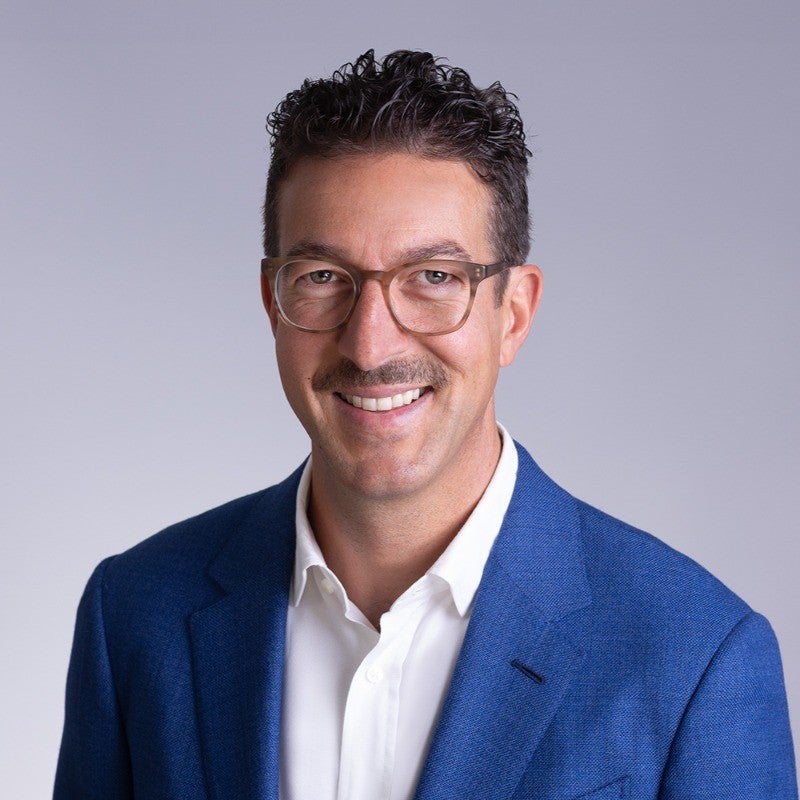
LLMs might be good at finding patterns and tracking averages, but where they fall short, according to Nativeads.ai CEO and Co-Founder Al Kallel, is in their understanding of “brand essence.”
And so Nativeads.ai set out to build a solution that lets AI models generate brand-specific creative that captures what Kallel calls “brand soul,” from accurate color schemes and product placements to hyper-realistic details like shadows.
The platform trains its models on a brand’s campaign assets, including creative brief and product images, to generate assets and optimize for the best-performing content.
It costs billions of dollars to build an LLM from scratch, Kallel said, so Nativeads.ai made the “strategic decision” to build its own software on top of whichever preexisting models are performing best – a lineup that can change week to week.
Kallel likened the company’s offering to dynamic creative optimization “on steroids,” with creative generation and DCO tools built on the same tech stack to form a unified feedback loop that continually refines ads based on performance.
He said the goal is to “strike the balance between ad monetization and customer experience” by producing ads that resonate and aren’t disruptive.The other reason he founded Nativeads.ai is more personal. Kallel says he tries to follow what he calls “the regret minimization framework,” a guiding principle that involves taking a chance on big ideas and just seeing where they go.
Or, as the poet Jack Gilbert put it, “anything worth doing is worth doing badly.”
(One way to tell poets and ad tech execs apart is the latter’s tendency to call everything a “framework.” We’re looking at you, IAB Tech Lab.)
But Kallel’s (and Gilbert’s) framework is one that we could all probably learn from.
“I don’t want to regret later on that I didn’t do something,” Kallel said.
Adam Chandler and Tanuj Joshi – Eulerity 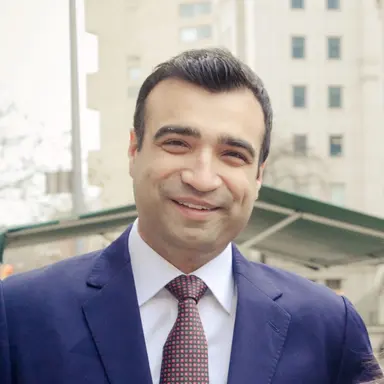
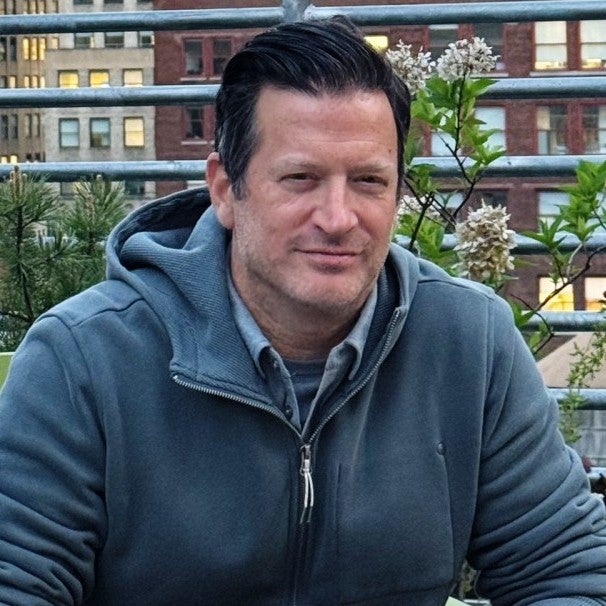
Can somebody with no advertising experience operate on “a level playing field with the big guys”? That’s the idea behind AI marketing and operations platform Eulerity, according to CEO and Co-Founder Tanuj Joshi.
Eulerity has a unique client base. Its users are the smaller, regional outposts of larger corporations with a need for localized advertising. Think franchised restaurants or local bank branches.
Local advertising is challenging for SMBs with smaller budgets, said COO Adam Chandler, who co-founded the company alongside Joshi and CTO Joe Ciaramitaro. Eulerity automates campaign creation to make it more affordable and helps smaller advertisers develop region-specific offers and messaging.
The platform uses a mix of Hugging Face models and custom-trained Google Gemini models to automate every step of the media process, from ad creation and media planning to measurement and responding to customer reviews.
Eulerity was incubated in 2018 and reached profitability shortly after launching in 2019. But adoption really took off after ChatGPT hit in late 2022.
Before LLMs started to become a part of most people’s personal lives, AI was an abstract, half-understood term, like that friend whose job title you know but you can’t quite explain what they do. When ChatGPT “consumerized AI,” said Chandler, marketers became more eager to experiment with AI software like Eulerity.
The company was named after Swiss mathematician and physicist Leonhard Euler, who is credited with developing “the most beautiful and simple” mathematical equation in history, Joshi said, a formula that elegantly connects several esoteric mathematical concepts. Eulerity, similarly, is trying to unify “esoteric advertising concepts” into a straightforward, AI-powered platform, said Joshi, who, no coincidence, studied math in college.
But if he and his co-founders could start over, he said, they’d opt for a different name.
“Eulerity” is more complex than what they’d pick today, Joshi said, but the naming process happens when “you’re young, hungry and foolish.”