


Consumer packaged goods brands like Campbell’s Soup are the epitome of content and commerce.
The company ladles up recipes and cooking tips through an online community, app and email newsletter called Campbell’s Kitchen. But socially distributed content increasingly is its main ingredient for success.
To boost content engagement across its owned-and-operated site and social channels, Campbell’s is beta testing a new tool called Muse developed by Pinterest marketing platform Ahalogy. Muse taps Facebook topic data through a partnership with DataSift and combines it with Ahalogy’s bank of category-level Pinterest data.
“Campbell’s Kitchen’s biggest audience is on Facebook right now, but Pinterest users tend to be younger and early adopters of new cooking methods,” said Sheila Miller, a senior manager for Campbell’s Kitchen.
Campbell’s is using Muse to flag emerging trends across paid, earned and owned media channels. For instance, if the brand sees a big spike in searches for jambalaya in the weeks leading up to Lent, it may want to invest more creative and media resources in Mardi Gras recipes.
Although early social marketing platforms helped tackle that problem, many were intended to tame the Twitter fire hose and started and stopped at measuring hashtags.
“Early social listening tools told you who was talking about your brand, but we heard from clients that they needed category-level insights that helped them grow their business,” said Bob Gilbreath, co-founder and CEO of Ahalogy.

In other words, beyond telling a brand like Breyers how well it’s doing in social, an ice cream company might want to know when the number of people pinning peanut butter cups is peaking.
“The more we know and understand using data, the better content we can create,” Campbell’s Miller added.
And the better content it creates, the more soup it can potentially sell.
“If sales says we have a big spike in beef broth, we look into what’s going on on Pinterest and Facebook that month to figure out what contributed to that spike,” Miller said.
Miller’s role at Campbell’s Kitchen sits within Campbell’s Soup US marketing. Beyond the qualitative insights contributing to sales, it’s her job to feed intel about how consumers use Campbell’s Soup in recipes back to product development.
“Thanksgiving is the most important food holiday of the year to Campbell’s, and broths and condensed soups are really big for side dish behaviors,” Wilson said.
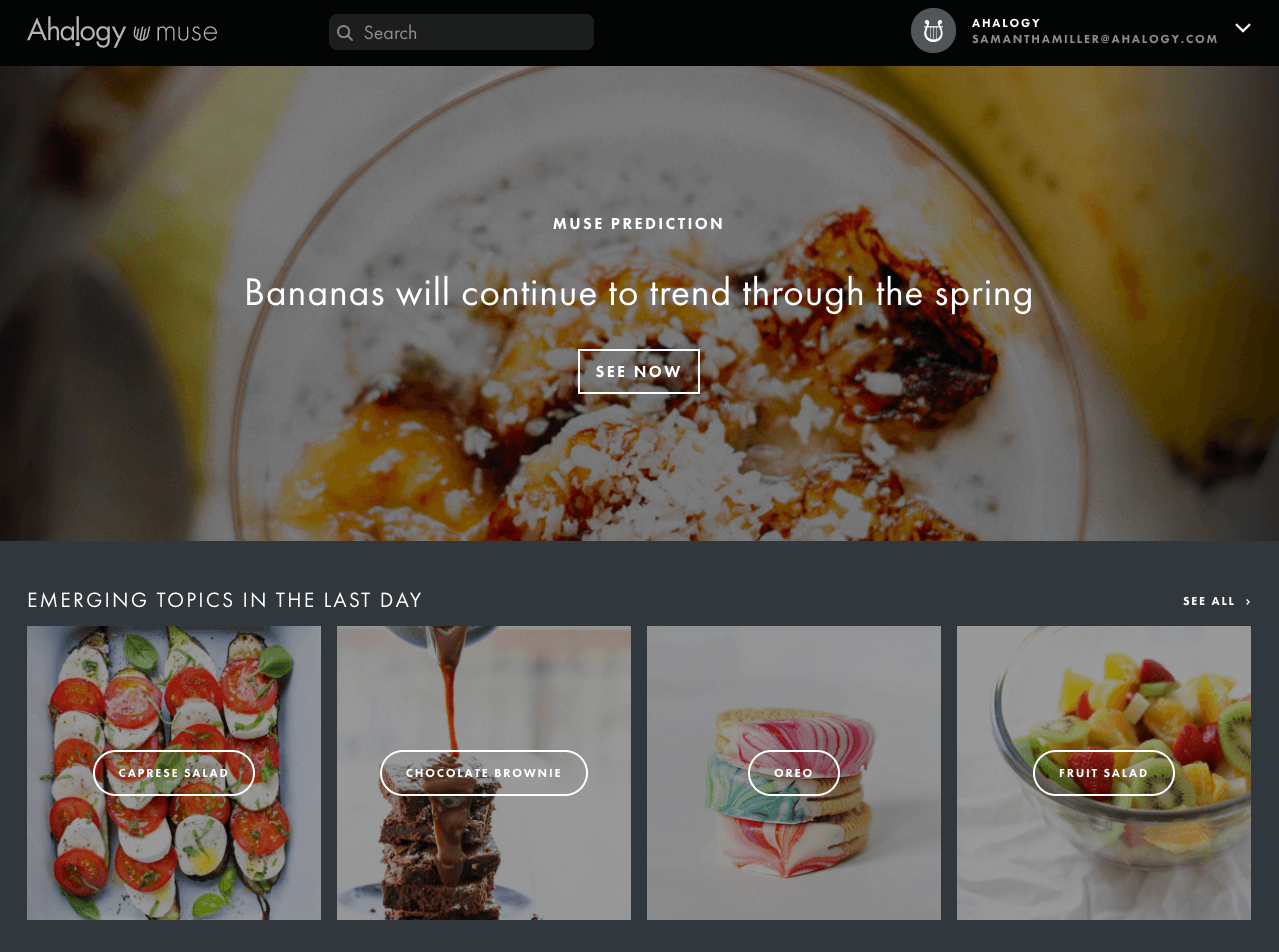 Using Muse, Campbell’s determined that slow-cooker side dishes were a thing after it found several Pinterest users pinned slow-cooker recipes for mashed potatoes and stuffing.
Pinterest naturally performs well for Campbell’s since food and recipes are par for the course on the platform, but Campbell’s can take those insights and also apply them to Facebook or Instagram posts and ads.
Campbell’s is also combining the weekly and daily social trending data it gathers from Muse, including demographic and geographic information, with other channels like search.
Search and social give Campbell’s a lens into what’s popular now, which influences its product and marketing decisions.
For instance, ramen noodle houses ranked high in Campbell’s SEO results. Ramen, however, might not be the right category for Campbell’s or its Swanson broth brand to play full-time.
“We’re looking at how we can be a part of that trend and resonate without launching a product around it,” Miller said. “So maybe we’d take Swanson and show how you take our broth and elevate it by creating those ramen noodle house bowls at home with a recipe.”
Although Campbell’s creates a lot of content for its owned-and-operated kitchen and recipe guides, off-platform is equally important.
“We have a lot of publisher partners through our paid media plan,” Miller said. “So while we might create a lot of content for our own newsletters or site, we collaborate with Allrecipes and we collaborate with Martha Stewart Living on Swanson’s. Our goal is to be efficient and create a piece of content that we can maximize in multiple channels.”








