
Billions of engaged consumers with disposable income spend hours of their lives playing mobile games. But, for some reason, marketers are still only dipping a toe.
And that’s been the case for years.
“It’s been quite a long time that ad spend in gaming isn’t commensurate with time spent in gaming,” says Gabrielle Heyman, Zynga’s VP of global brand sales and partnerships, on this week’s episode of AdExchanger Talks.
“There are 3.2-ish billion gamers worldwide,” adds Heyman, and most of them don’t fit the prevailing stereotype of teen boys in the basement.

The average age of mobile gamers “is way older than people think,” she says.
The majority are in their mid-to-late 30s, and when you zero in on casual games – easy-to-play, mass-market games with short play sessions – the breakdown is roughly 75% female.
Millennial and Gen X women are “a powerhouse of the economy,” Heyman says. They make most of the household buying decisions – “that’s common in most countries,” she says – and they’re buying for everyone: their kids, spouses, partners, friends and also themselves.
On top of that, women make most of the health care decisions for their families, and the majority of enrolled college students in the US are female.
“Women play a really vital role for advertisers,” Heyman says.
So what will finally get marketers to spend more on gaming?
To be fair, momentum is building. More brands are experimenting with game-based media and recognizing entertainment is an omnichannel experience. Second-screening is a great example.
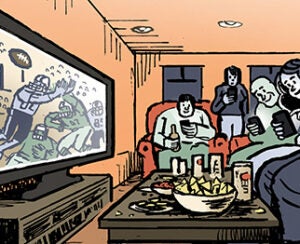
“When you’re sitting watching TV, you have your phone right next to you and, a lot of the time, you’re playing your game while you’re watching,” Heyman says. “There’s a way to make the two complementary … it’s not us or them; it’s both really.”
But despite the optimism, the persistent gap between ad spend in gaming and audience attention remains a puzzle to be solved.
“That’s the question of the millennia, right?” Heyman says.
Also in this episode: The need for high-quality ads that enhance the gaming experience rather than disrupt it, measuring ad effectiveness in “non-clickable” environments and why Zynga sold its mobile monetization Chartboost last year. Also: Heyman’s experience playing guitar and singing in an LA-based band called The Hussies.