 Since launching “programmatic guaranteed” at the 2015 DoubleClick Leadership summit, Google says demand for programmatic execution of direct deals has skyrocketed.
In the last 10 months alone it has quadrupled the number of video impressions served on a programmatic guaranteed basis.
More recently, it opened this mode of buying to a wider set of customers, adding third-party support for programmatic direct buys. What will that mean for advertisers and publishers?
The point of programmatic guaranteed is to eliminate much of the back and forth between buyers and sellers during a direct deal setup.
In this case, a buyer can pre-negotiate deal terms and lock in a spend, delivery or volume commitment with an end publisher using Google’s DoubleClick for Publishers (DFP) ad server.
The reservation process goes something like this: A publisher sets a line item in DFP indicating its targeting parameters and deal priority. Deal types are either reservation or sponsorship; deal terms are either based on a quantity goal or a certain percentage (or 100%) of traffic.
On the flip side, Google’s Marketplace feature (available to DoubleClick Bid Manager buyers and other AdX seat holders) is designed for deal discovery. This is where buyers can find, negotiate, manage and run reports on different (preferred and private auctions) publisher deal types.
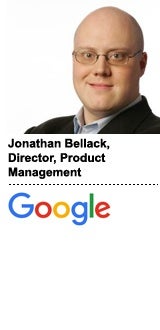
Beyond DBM, third-party DSPs like MediaMath and The Trade Desk were given the green light to set up programmatic guaranteed deals through AdX, “but we’re more than happy to work with anyone,” added Jonathan Bellack, head of product management for Google. “Our hope is, eventually, any programmatic [buyer] should be able to access these deals directly from any DFP publisher.”

From the publisher’s point of view, activating a direct selling relationship only requires indicating which programmatic buyer can receive the impressions within its Marketplace up front. Automating that part of the process is an improvement over copying and pasting an ad tag into DFP from an advertiser, which creates workflow challenges and discrepancies.
Once the DFP ad server determines it should deliver a “guaranteed” ad, it leverages existing RTB pipes to expose that impression to the buyer’s DSP, allowing it to fine-tune its targeting.
“In the core of the technology, simply being able to have the end of ad tags is another really big piece of the automation,” Bellack said. “We see the traditional IO, tag-based deal evolving into programmatic deal-making across the board.”
From the buyer’s point of view, after the DSP opts for a publisher deal at a specific price, it ensures creative assets are completely compliant with the selected publisher policies before delivery.
“We then work with the buyer on a special codex we developed to set up programmatic guaranteed campaigns for Google,” according to Tanuj Joshi, VP of global media partnerships for MediaMath. “This codex includes educating the buyer on best practices for these deals like correct bid prices, right pacing and frequency settings.”
 While Google’s first iteration of programmatic guaranteed was about mechanics and automating a buyer and seller’s workflow, it is now emphasizing audience forecasting and guarantees.
“The publisher can run a forecast in DFP using the buyer’s user list without any extra steps or risk of data leakage from the buyer to the seller,” Bellack said. “They can find out what the availability is and then book a guaranteed reservation where we use the buyer’s audience list to decide which impressions go to that buyer.”
Bellack called that degree of granularity in deal reservation “impossible” prior to programmatic guaranteed. He said it’s a win-win for publishers who are looking for revenue assurance beyond standard preferred deals or private auctions, which don’t always perform well for publishers.
For advertisers, programmatic guaranteed is about locking in pre-negotiated rates against an audience that might be hard to find otherwise.
For instance, Luisa Via Roma, a luxury Italian-based ecommerce brand, is exploring programmatic guaranteed deals on Google’s AdX via MediaMath’s DSP. The brand is willing to make bigger commitments with premium fashion pubs in exchange for contextual guarantees against the right users for branding campaigns, according to Véronique Franzen, programmatic marketing manager for the brand.
Sentiments like that one suggest programmatic guaranteed could help publishers (and Google) capture more TV dollars as traditional TV buyers focus more on audience rather than buying against programming content and broad demographics alone.
“Advertisers have a lot of expectations carrying over from TV, where it’s important for broadcasters to enforce restrictions like Coke and Pepsi not appearing in the same ad break,” said Will Weingarten, video product manager for Google. “Programmatic guaranteed makes that possible by combining automation [of rules] with the logic of the core video ad server.”