 When Xaxis released its proprietary data-management platform (DMP) last week, competitors backhanded the WPP-owned tech shop with compliments.
On the one hand, $25 million is an impressive figure for a company to invest in technological innovation. On the other hand, what good is this technology if clients are scared off by Xaxis’ opaque business model?
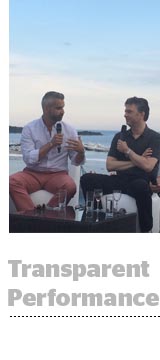
This debate played out in full, ferocious fashion during a Tuesday panel at Cannes, hosted by Jay Sears, SVP at Rubicon Project. It was triggered when Xaxis CEO Brian Lesser spoke about the benefits of private exchanges, saying, “Our publishers make 30% more on a CPM basis than if they were to use an exchange or open auction.”
Stephan Beringer, chief growth officer and president of Publicis Groupe’s Audience on Demand (AOD) at VivaKi, used this comment to segue into a discussion about Xaxis’ controversial business model. “I find it so strange how you argue, Brian,” Beringer said. “Because everything I’m getting from our clients is they’re running away from Xaxis because of this transparency issue.”
Lesser said that Xaxis doesn’t reveal the intricacies of its business model, such as the price it pays for media, because it needs to make continuous investments in data, inventory and technology. “In order to provide value, you need to invest in the business,” he explained. “And it’s awfully difficult to invest the way we invest with a disclosed model.”

He asserted that, because of this opacity, Xaxis’ clients see return on their investment.
However, Beringer said this lack of transparency puts clients at risk – for instance, paying for inventory that doesn’t exist and is therefore worthless.
“With us, you see what (the inventory) is,” Beringer said. “We have quality standards and control the stuff…”
“And in many cases, it’s not performing,” Lesser snapped, before adding a further warning to Beringer: “Be careful where you throw this mud. Because you may disclose your media prices. But do you disclose all the rebates you get from technology vendors?”
Lesser’s implication is that simply revealing media prices isn’t indicative of transparency, since agencies might receive discounts from technology partners – but those discounts aren’t passed over to clients. He added that clients who sign on with Xaxis are perfectly aware of how it makes money. In effect, Xaxis is transparent about its lack of transparency, and clients that sign contracts with the company aren’t bothered by this.
Beringer was skeptical. “Yeah, I’ve seen your contracts,” he said, though he didn’t elaborate further as the conversation devolved into shouting.
Lesser was clearly weary of the accusations Beringer leveled against his company.
“It’s sort of the playbook of how Publicis argues against Xaxis, and it’s all very messy,” he said. “It’s around transparency, disclosure and fraud. But at the end of the day, we perform.”
The panel’s full transcript will be published later Wednesday.