The programmatic ecosystem’s maturation into the television industry happened slowly before speeding up rapidly.
Dataxu is a fitting example of the trend.
The longstanding demand-side platform (DSP) has reshaped its business and client mix in the past two years. Once a pure-play DSP, dataxu now has supply-side deals that put it in the tech stacks of programmers like Viacom and Sky TV. Dataxu is also the default targeting and measurement solution for OpenAP, a TV data consortium backed by Fox, Viacom and NBCUniversal.
In the past year, TV advertising has become dataxu’s majority revenue stream.
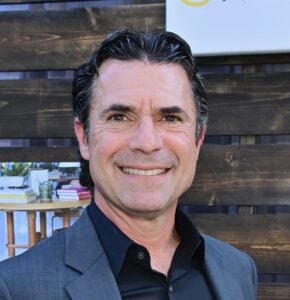
The TV industry is notoriously difficult to crack, but there are areas of opportunity, said dataxu CEO Mike Baker.
“Nielsen ratings are plodding along like nothing is happening with consumers,” he said.
And digital-native players like dataxu stand to gain as new go-to sources for TV measurement and audience data.
AdExchanger caught up with Baker about dataxu’s evolution into the land of TV and the supply side of the tech ecosystem.

AdExchanger: How has the revenue picture changed for dataxu as part of this transition?
MIKE BAKER: What’s driving the majority of revenue is still the DSP touchpoint. But now 80% of DSP customers are agencies.
We were known historically as a direct-to-brand DSP. But we’ve focused on agencies because they’re more self-service and involve less handholding than brands. Dataxu used to have a thicker service layer to go direct to brand. To really scale the company though we invested in the tech, so we don’t need the service.
The majority of revenue comes from TV. Not just digital video, either, advanced TV and CTV campaigns.
How does transitioning to the world of television and TV ad margins impact the business?
Margins in TV are lower than in banner display campaigns. It’s tough for some DSPs too, because more deals occur directly between the advertiser and the programmer. So there’s a smaller cut of the campaign.
Also, in TV you get far fewer impressions for the same budget. That’s fewer transactions to have fees. That’s why we sell OneView (dataxu’s cross-device and identity product) like a DMP, with an annual subscription rate that operates independently of media spend.
But we think if you can be a value-add on both sides of the exchange in advanced TV, that’s going to be a lucrative position. For instance, in 2017 and 2018, we made changes to our business and investments in TV that required us to be unprofitable for a stretch. But we’re back in the black this year.
It seems like there’s more focus on the supply side for dataxu than people would expect from a DSP.
That’s true.
We have a hypothesis, which is to do converged TV you need a handshake relationship with programmer or distributor and advertiser.
By having embedded relationships with programmers, we can provide technology on both sides of the equation that can transact on audiences in lieu of a Nielsen or other linear TV currency.
We’re not a TV currency ourselves, but that world is gone. The currency now is your dot-com data, your TV viewership data and brand data running together for the purposes of attribution.
Is TV being bought on that data-driven model or is it still primarily on linear currencies?
Nielsen ratings are still plodding along, but data and attribution will be the prevalent mode soon. The conundrum for programmers is how to transition without cannibalizing the legacy revenue stream or just opening the door to Google and Amazon to wipe you off the face of the Earth.
Converged TV buys are gaining though.
In the United Kingdom, for instance, we work with Sky to do data-matching services between the broadcaster and agency holding companies. That’s a stronger, people-based form of measurement than panel-based currencies.
What’s driving that change most I think is DTC brands. They have the data and can connect it to digital data to have something more like Facebook-style targeting and measurement. They won’t try a new channel, even TV, if they can’t demonstrate that it works.
We had one DTC customer cancel an order with a programmer because they wanted to buy across CTV apps but also wanted data returns like digital media, which the programmer wouldn’t make available. We’re able to do data-matching between the brand and the programmer, so that that campaign can be restarted.
For that DTC brand, a Nielsen rating is just a laughable proxy.
Will TV advertising turn into something more like the programmatic buying online buyers are accustomed to?
I don’t think TV turns into open exchange programmatic. Some DSPs view the world fitting into that mold.
A lot of these TV execs are allergic to the word “programmatic.” They want automation and advanced analytics. They just don’t use the P-word.
Follow James Hercher (@JamesHercher) and AdExchanger (@adexchanger) on Twitter